Blog

  • Why Are My Child’s Teeth Coming Late? Understanding Delayed Tooth Eruption Dentition

    Is your child the only one in class whose teeth have not come in yet? Are other children already losing baby teeth while your child still has all of theirs? It is completely natural to compare and worry.

    Many parents search this because they want one clear answer. Is this normal? Or is something wrong?

    In many children, a slight delay in tooth eruption is normal. Every child grows at a different pace. However, when the delay goes far beyond the usual age range, or when other signs appear, it is important to get it checked.

    This blog is written by the dentists at Elite Dental Studio to explain delayed dentition causes and the possible consequences of late teeth eruption in simple language. By the end, you will know whether to relax, monitor, or book a dental visit.

    What Is the Normal Tooth Eruption Timeline in Children?

    Most children follow a general pattern, but small differences are common.

    When do baby teeth usually erupt?

    Baby teeth usually start appearing around six months of age. By three years, most children have all twenty baby teeth.

    When do permanent teeth usually come in?

    Permanent teeth usually begin around six years of age. This continues gradually until early teenage years.

    How much delay is still considered normal?

    A few months of delay is usually not a concern. Even a difference of up to a year can be normal in some families. What matters is whether the teeth are developing properly under the gums.

    elite dental studio normal tooth eruption timeline

    What Is Delayed Dentition?

    Delayed dentition means your child’s teeth are erupting much later than expected for their age.

    It does not mean something is automatically wrong. It simply means the timing is outside the usual range.

    Dentists consider it delayed when:

    • No baby teeth appear well past expected age
    • Permanent teeth do not erupt long after baby teeth fall out
    • One side erupts while the other side stays unchanged

    The key question is not just “Are they late?” but “Are they developing normally?”

    What Are the Common Delayed Dentition Causes?

    Delayed dentition causes can be simple or medical. In many children, the reason is harmless.

    • Genetic timing – If parents had late teeth, children often follow the same pattern.
    • Nutritional factors – Low levels of vitamin D or calcium may slow development.
    • Blocked eruption path – Sometimes a baby tooth does not fall out on time. In other cases, there may not be enough space for the new tooth to come in.
    • Hormonal or medical conditions – Certain health conditions can influence growth, including tooth development.

    Understanding delayed dentition causes helps decide whether your child only needs monitoring or active treatment.

    What Are the Consequences of Late Teeth Eruption?

    The consequences of late teeth eruption depend on the reason behind the delay and how long it continues.

    • Chewing and speech – If teeth are missing for long periods, chewing efficiency can reduce. In rare cases, speech may be affected.
    • Jaw development – Teeth guide jaw growth. Long delays can sometimes influence spacing or alignment.
    • Crowding and alignment – Late eruption may change the order in which teeth come in. This can increase the chances of crowding later.
    • Emotional impact – Children sometimes feel self conscious if their smile looks different from friends.

    Knowing the consequences of late teeth eruption allows parents to act early instead of reacting later.

    When Should Parents Be Concerned?

    You should consider a dental visit if:

    • No teeth appear long after expected age
    • One side erupts while the other does not
    • Baby teeth remain long after permanent teeth should appear
    • There is pain, swelling, or discomfort

    If your child seems comfortable and development appears steady, simple monitoring may be enough.

    How Do Dentists Check Delayed Tooth Eruption?

    A dental evaluation is simple and painless.

    We check:

    • Gum thickness
    • Available space for teeth
    • Development stage under the gums

    Sometimes an X ray is needed to see whether the tooth is forming normally. In many cases, we simply monitor growth. Not every delay needs treatment.

    How Is Delayed Dentition Managed?

    Treatment depends on the cause.

    Some children only need:

    • Observation
    • Periodic follow up visits

    In other cases, we may:

    • Remove a baby tooth blocking eruption
    • Create space if crowding is present
    • Coordinate with a pediatrician if medical factors are suspected

    The goal is always to guide natural growth, not rush it.

    How Can Elite Dental Studio Help in Calicut and Kochi?

    If you are searching for the best dental clinic in Calicut or the best dental clinic in Kochi for child dental concerns, experience in growth assessment makes the difference.

    At Elite Dental Studio, we:

    • Evaluate tooth development carefully
    • Explain everything in simple terms
    • Separate normal delay from real concern
    • Plan treatment only when needed

    Parents looking for the best dental clinic in Calicut or the best dental clinic in Kochi usually want clarity, not complicated explanations. That is exactly what we provide.

    Book a Child Dental Evaluation at Elite Dental Studio

    If you are unsure whether your child’s late tooth eruption is normal, the safest next step is a simple dental check.

    We will assess development, explain delayed dentition causes clearly, and tell you whether monitoring or treatment is needed.

    • Calicut: Phone: +91 9745 072 555 | Landline: 0495 3552 555
    • Kochi: Phone: +91 9567 124 888 | Landline: 0484 4024 888

    FAQs

    At what age should I worry about delayed dentition?

    If baby teeth have not appeared well beyond the usual age or permanent teeth are delayed more than a year after baby teeth fall, consult a dentist.

    Can nutrition cause late teeth eruption?

    Yes, certain nutrient deficiencies can slow development. A dentist can guide you on whether diet changes are needed.

    Does delayed dentition mean my child will need braces?

    Not necessarily. Many mild delays correct naturally. Braces are only considered if alignment issues develop later.

    Can delayed eruption fix itself?

    Yes. Many children catch up naturally without treatment.

    Are dental X rays safe for children?

    Yes. Modern dental X rays use very low radiation and are safe when proper precautions are taken.

    Is delayed dentition linked to overall growth problems?

    In most children, it is not. If other growth delays are present, further medical evaluation may be advised.

  • Amelogenesis Imperfecta, Symptoms, Causes, and Treatment

    Does your teeth look yellow or brown, chip easily or feel sensitive after proper oral care? If you’re wondering whether this is a stain problem or a dental issue that demands dentist’s intervention, this blog will guide you.

    Amelogenesis imperfecta is a condition where the tooth enamel does not develop properly. Enamel is the outer protective layer of the tooth. When it is weak or uneven, teeth can look different, feel sensitive, and wear down faster.

    This blog, written by our expert dentists at Elite Dental Studio, the best dental clinic in Kochi and Calicut, explains what Amelogenesis Imperfecta is, its causes, symptoms and treatment.

    We at Elite Dental Studio focus on accurate diagnosis, stage wise dental treatment planning, and natural looking restorations that protect teeth for the long term. Whether you’re looking for the best dental clinic in Calicut or for the best treatment for Ameleogenesis Inperfecta, you’re on the right page.

    How Amelogenesis imperfecta Affects Teeth

    What Is Amelogenesis Imperfecta?

    Amelogenesis imperfecta is a condition that affects enamel formation. It is not a stain that brushing can remove. It is also not something you caused by eating habits or poor care.

    When enamel does not form well, teeth may:

    • Look discoloured,
    • Feel sensitive,
    • Chip or wear down faster than normal.

    Some people have mild changes. Others have enamel that breaks down quickly. That is why the same condition can look different from one person to another.

    What Are the Common Symptoms of Amelogenesis Imperfecta?

    Common signs of amelogenesis imperfecta

    Amelogenesis symptoms usually show up as changes in how teeth look, how they feel, and how well they hold up to daily chewing.You may notice one or more of these signs:

    • Teeth look yellow, brown, or grey from the start,
    • The surface looks rough, patchy, or uneven,
    • Teeth look smaller, shorter, or more worn than expected,
    • Edges chip easily.

    These changes often affect many teeth, not just one.

    Does Amelogenesis Cause Pain Or Sensitivity?

    It can. Weak enamel does not protect the inner tooth well, so you may feel:

    • Sharp sensitivity with cold water, hot tea, or sweets,
    • Discomfort while brushing,
    • Pain while chewing if teeth have worn down a lot.

    Can Amelogenesis Symptoms Vary From Person To Person?

    Yes. In one person, the main issue may be appearance. In another, the main issue may be sensitivity and rapid wear. Even siblings can have different severity. This is why a dentist should check enamel strength and tooth wear before choosing treatment.

    Book your appointment at the best dental clinic in Kochi now for the evaluation.

    What Causes Amelogenesis Imperfecta?

    Amelogenesis causes are usually genetic. That means the instructions the body uses to form enamel do not work as they should while teeth are developing.

    Is Amelogenesis Imperfecta Inherited?

    Often, yes. Amelogenesis imperfecta can run in families. It may pass from parent to child, or appear across generations in different ways.

    Can It Occur Without Family History?

    Yes. A person can have it even if no one else in the family has been diagnosed. This can happen when a genetic change occurs for the first time in that person.

    Does Diet Or Oral Hygiene Cause This Condition?

    No. Food choices and brushing habits do not create this condition. That said, once enamel is weak, teeth can collect plaque more easily, and the risk of decay can go up. Good daily care still matters because it protects the tooth surface that you do have.

    Does Amelogenesis Imperfecta Get Worse Over Time?

    If teeth are left unprotected, they can wear down faster. That is because weak enamel cannot handle chewing forces the same way normal enamel can. Over time, this can lead to:

    • More chipping,
    • Higher sensitivity,
    • Faster flattening of biting surfaces,
    • A higher chance of cavities in vulnerable areas.

    Early treatment does not just improve appearance. It helps prevent avoidable damage. If you’re also dealing with chipped tooth, tooth sensitivity or cavities, call our team of expert dentists at best dental clinic in Calicut now.

    How Is Amelogenesis Imperfecta Diagnosed?

    A dentist can usually diagnose this by combining what we see in the mouth with what we learn from your history. A clear diagnosis often includes:

    • A close exam of colour, texture, and enamel strength,
    • Questions about when the problem started and whether other family members have similar teeth,
    • X rays to check enamel thickness and tooth structure.

    This matters because treatment is not one size fits all. At Elite Dental Studio, our dental treatment plan changes based on age, how much enamel is present, and how much wear has already happened.

    What Are the Treatment Options for Amelogenesis Imperfecta?

    The goal is always the same: protect the teeth, reduce sensitivity, restore function, and improve appearance in a natural way. Treatment is planned in steps. We choose what gives the best protection with the least tooth cutting.

    What Are The Amelogenesis Treatment Options For Children?

    For children, the priority is protection and comfort while teeth and jaws are still growing. Common treatment options include:

    • Tooth coloured bonding to cover weak areas and reduce sensitivity
    • Protective restorations on teeth that are wearing quickly
    • Crowns on back teeth when chewing surfaces are breaking down
    • Dentist guided support for sensitivity and decay prevention

    A well timed plan in childhood can save tooth structure and reduce bigger procedures later.

    What Are The Amelogenesis Treatment Options For Adults?

    For adults, the plan usually balances long term strength with appearance. Options may include:

    • Bonding for chipped edges and smaller defects
    • Veneers in selected cases where improving colour and shape is the main goal
    • Crowns when teeth need full coverage because enamel loss is advanced

    Adults often need a plan that also protects the bite, especially if teeth have already worn down.

    Are Crowns Or Veneers Always Required?

    No. Some people do very well with bonding and targeted restorations. Crowns or veneers are recommended when protection is not possible with smaller treatments, or when teeth are wearing down quickly.

    The decision depends on:

    • How strong the remaining tooth structure is,
    • How much sensitivity is present,
    • How much wear has already happened,
    • Whether appearance concerns are mild or significant.

    When Should You See a Dentist for Amelogenesis Imperfecta?

    You should not wait if you notice any of the following:

    • Teeth that chip repeatedly,
    • Sensitivity that affects eating or brushing,
    • Teeth that look rough, patchy, or unusually discoloured from early on,
    • A child’s new teeth that look abnormal soon after they come in.

    If you suspect amelogenesis symptoms, an early dental visit helps you protect teeth before damage becomes harder to manage.

    How Can Elite Dental Studio Help With Amelogenesis Imperfecta in Calicut and Kochi?


    If you are comparing clinics and searching for the best dental clinic in Calicut or the best dental clinic in Kochi, here is what actually matters for this condition.

    Choose a clinic that can:

    • Confirm the diagnosis clearly, without confusing terms,
    • Explain what is happening and why, in simple language,
    • Plan treatment in stages based on age and severity,
    • Offer the right restoration choice, bonding, veneers, or crowns, when needed,
    • Focus on comfort, function, and a natural look.

    At Elite Dental Studio, our dentists plan care around real life needs: eating comfortably, brushing without pain, preventing further wear, and improving smile confidence. If you want support in either city, we guide you from diagnosis to a step by step plan.

    Many patients who search for the best dental clinic in Calicut or the best dental clinic in Kochi are really asking for one thing: a clinic that can explain the problem clearly and treat it safely. That is exactly how we approach amelogenesis imperfecta care.

    Book a Consultation With Elite Dental Studio! 

    If you suspect amelogenesis causes may be behind tooth discolouration, enamel chipping, or long term sensitivity, the best next step is a dental evaluation. At Elite Dental Studio, we will:

    • Confirm whether this is amelogenesis imperfecta or another enamel issue,
    • Explain the condition in plain language,
    • Share a staged plan that fits your age, tooth strength, and smile goals.

    If you are looking for the best dental clinic in Calicut or the best dental clinic in Kochi for enamel related concerns, book an appointment with Elite Dental Studio for a clear diagnosis and a treatment plan you can trust. Call Us at:

    • Calicut – Phone : +91 9745 072 555 | Landline : 0495 3552 555
    • Kochi – Phone : +91 9567 124 888 | Landline : 0484 4024 888

    FAQs

    Is amelogenesis imperfecta curable?

    Enamel development cannot be reversed after teeth form. Treatment can still protect teeth, reduce sensitivity, and improve appearance in a stable, long term way.

    Are amelogenesis symptoms the same as cavities?

    No. Cavities happen when bacteria damage the tooth. Amelogenesis symptoms happen because enamel did not form properly, though weak enamel can make cavities more likely.

    Can children get treatment for this condition?

    Yes. Early care helps protect teeth from wear and sensitivity and can reduce the need for bigger procedures later.

    Is this condition only about looks?

    No. Appearance is one part. Function and comfort matter too, especially sensitivity and rapid wear.

    Will teeth keep chipping if we do nothing?

    They can. When enamel is weak, teeth often wear down faster over time. Early protection reduces chipping, sensitivity, and avoidable damage.

    Can a dentist confirm amelogenesis causes without genetic testing?

    In many cases, yes. A dentist can diagnose it based on tooth appearance, history, and X rays. Genetic testing is not required for most treatment plans.

  • How To Keep Dental Implant Clean And Hygienic?

    Dental implants are built to last, but most patients worry about hygiene. They ask, “How do I clean it properly?” or “Will food get stuck?” or “Can the gums get infected?” If you searched teeth implants near me, you likely want an implant that stays comfortable, clean, and problem-free for years.

    Here is the direct answer. You keep a dental implant clean and hygienic by brushing twice daily, cleaning between teeth every day, rinsing correctly when advised, and attending regular professional implant cleanings. This routine protects the gums and bone around the implant.

    At Elite Dental Studio, Calicut, we follow a structured implant hygiene protocol that covers home care, professional implant-cleaning, and a recall-schedule to protect gum-health and long-term implant-survival. This guide explains what to do daily, what tools help most, what habits to avoid, and when to book a maintenance visit at the best dental implant clinic in Calicut.

    daily-implant-hygiene-checklist

    What Should You Know About Implant Hygiene Before You Start Cleaning?

    Dental Implants: What You Should Know is simple. An implant cannot get cavities, but the gums and bone around it can get inflamed or infected if plaque stays near the gum-line. That is why implant hygiene focuses on two things: clean implant-surfaces and healthy gums.

    A clean-looking crown is not enough. Real hygiene means consistent plaque-removal and biofilm-control around the implant and the surrounding teeth.

    How Dentists Plan An Implant Hygiene Routine For You?

    At Elite Dental Studio, your implant hygiene plan is tailored based on how easy it is for you to clean around the implant. We check the gum-line health, implant position, and whether you have tight-contacts that trap food-debris.

    We also assess plaque-accumulation risk and recommend tools that match your access, such as an interdental-brush, proxy-brush, or water-flosser for stronger biofilm-control. This step-by-step planning keeps the routine realistic, so patient-responsibility stays consistent long term.

    What Daily Routine Keeps A Dental Implant Clean And Hygienic?

    Daily care keeps implant-surfaces clean and prevents plaque buildup at the gum-line. A strong routine has two anchors: morning-routine and night-brushing. Most hygiene problems happen when patients clean only the crown and skip the areas around the gum-line.

    Morning routine

    • Use a soft-bristle brush and keep pressure-control steady.
    • Brush with gentle-circles and no-scrubbing along the gum-line.
    • Focus on crown-cleaning and the edges where the crown meets the gum.
    • Use fluoride-toothpaste that is low-abrasive.
    • Add a post-meal-rinse later in the day when brushing is not possible.

    Night routine

    Night is where results are protected.

    • Do twice-daily brushing, and make night-brushing the more detailed one.
    • Clean between teeth and around the implant with once-daily interdental cleaning.
    • If you have tight-contact, take extra time to reach each space with the right tool.

    This is the same habit set we teach patients who come to us after searching for teeth implants near me and want long-term implant safety.

    Which Toothbrush And Toothpaste Are Best For Dental Implants?

    A brush that cleans well without irritating the gums is the goal. A soft-bristle brush works for most patients. An electric-toothbrush can help if your brushing is inconsistent or if you struggle to reach back teeth.

    Choose a low-abrasive toothpaste. It keeps cleaning effective without harsh rubbing. Fluoride-toothpaste is a safe daily option for overall oral health, especially for natural teeth around implants.

    For precision cleaning, your dentist may recommend:

    • single-tuft-brush for corners and hard-to-reach areas.
    • tapered-brush for better access behind the implant crown.
    • rubber-tip-stimulator to massage the gum margin gently, if advised.

    Always maintain pressure-control. Avoid no-scrubbing habits that can injure gums. Gentle, consistent plaque-removal is the priority.

    How Should You Floss And Clean Between Teeth With An Implant?

    Interdental cleaning removes hidden food-debris and supports gum-health around implants. Daily-flossing is one of the biggest differences between implants that stay healthy and implants that develop gum problems. This is especially important for people who searched teeth implants near me and want long-term confidence in their implant.

    Best Flossing And Interdental Tools

    • Floss-threader to guide floss around implant areas.
    • Super-floss for better grip and control.
    • Bridge-threader when access is tight under bridges.
    • Interdental-brush or proxy-brush for wider spaces.
    • Proxybrush for quick cleaning when recommended.
    • Floss-pick-alternative only if it reaches the correct zone without snapping on gums.

    Water-Based Tools

    • Water-flosser or oral-irrigator to flush food-debris.
    • Waterpik is a common option for home use.
    • Cordless-flosser for convenience.
    • Portable-irrigator or travel-flosser when you travel.
    • Home-irrigation can support biofilm-control when used consistently.

    How To Clean The Key Areas

    • Focus on abutment-cleaning where the crown meets the gums.
    • Clean sub-gingival areas gently only if instructed.
    • Use angle-access behind the implant crown where plaque builds faster.
    • Do night-floss so the area stays cleaner overnight.
    • Keep the goal once-daily interdental cleaning, even on busy days.

    Should You Use Mouthwash After Dental Implants?

    Rinses support bacteria control when used correctly and only for the right duration. Mouthwash is not a substitute for brushing or flossing, but it can support gum-health in specific situations.

    What Works And What To Avoid! 

    • Antimicrobial-rinse can be useful when recommended.
    • Chlorhexidine or CHX-gluconate may be prescribed for short-term use.
    • Saltwater-rinse can support comfort and cleanliness.
    • Choose no-alcohol options to avoid dryness and irritation.
    • Use post-meal-rinse when brushing is not possible.

    Do not self-use diluted-bleach or strong mixtures. Use a therapeutic-rinse only when your dentist advises it.

    What Food And Habits Keep Implants Hygienic And Safe?

    Food choices matter because trapped debris and hard bites can irritate tissues and increase plaque-accumulation.

    Diet tips

    • Follow a soft-diet if tenderness is present.
    • Choose no-hard-foods during sensitive periods.
    • Avoid-ice to prevent sudden stress.
    • No-nutshells to avoid cracking restorations.
    • Crunchy-avoid if food repeatedly sticks.
    • Limit sticky-foods that cling near the gum margin.
    • Maintain hydration.
    • Follow sugar-control to support gum stability.

    Habits that protect implant hygiene

    • no-smoking is one of the strongest protectors of implant-survival.
    • Stay tobacco-free to reduce mucositis and peri-implantitis risk.

    What Professional Care Keeps Implants Healthy Long Term?

    Professional checks catch early inflammation and protect the bone around the implant. Even if home care is excellent, professional maintenance ensures long-term stability and reduces the risk of hygiene-failure.

    What Happens During Professional Visits

    • 6-month-check to assess gum status and implant health.
    • Prophy and implant-cleaning using specialized-tools.
    • Air-polishing where appropriate.
    • Debridement and scaling when plaque or tartar-buildup is present.
    • X-ray-review when needed to monitor bone levels.
    • Maintenance-visit planning and perio-monitoring.

    These visits help with early-detection and reduce the chance of bone-loss over time.

    What Are The Warning Signs That Your Implant Needs A Dentist Visit?

    Early signs around implants should be treated early to prevent peri-implantitis and bone-loss. Book a visit if you notice:

    • bleeding-gums around the implant.
    • pus-discharge or bad taste.
    • infection-signs such as swelling or ongoing tenderness.
    • mucositis that does not settle.
    • plaque-accumulation and tartar-buildup that returns quickly.
    • loose-implant feeling or mobility-warning.
    • discomfort while chewing.

    Overload-prevent planning is also important. If your bite feels off, get it checked early.

    How Long Can Implants Last If Hygiene Is Consistent?

    With consistent-habits and a stable hygiene-routine, many implants function well for 10-15-years and beyond. Many cases report outcomes close to 95-percent-success with proper maintenance.

    Long-term success depends on compliance-key habits and a dentist-partnership. The best results come from lifetime-care, a clear recall-schedule, and patient-responsibility for daily cleaning.

    Why Choose Elite Dental Studio For Implant Hygiene Support In Calicut?

    If you are searching for teeth implants near me, you are not only looking for placement. You want a clinic that supports hygiene, follow-up, and long-term implant stability.

    At Elite Dental Studio, we create practical implant care routines based on your gum-line health, implant position, and cleaning access. Our team focuses on prevention, early-detection, and longevity-tips so your implant stays stable and comfortable. For patients looking for the best dental implant clinic in calicut, our approach includes professional implant-cleaning, structured maintenance visits, and guidance that makes Dental Implants: What You Should Know easy to apply in daily life.

    Book Your Appointment at Elite Dental Studio, Calicut! 

    Elite Dental Studio, Calicut offers implant maintenance visits, professional cleaning, and hygiene guidance for long-term implant safety.

    If you have an implant already, or you are planning one and want a clean long-term routine, book an implant hygiene check at Elite Dental Studio, Calicut.

    Call +91 97450-72555 to schedule your visit.

    FAQs

    How do I keep my dental implant clean daily?
    Brush twice-daily and clean between teeth once daily, focusing on the gum-line around the implant.

    Is flossing necessary for implants?
    Yes. daily-flossing removes food-debris and plaque from areas a toothbrush cannot reach.

    Can implants get infected even if the crown looks clean?
    Yes. plaque-accumulation at the gum-line can cause mucositis and progress to peri-implantitis if ignored.

    What mouthwash should I use after implants?
    Use rinses only as advised. Some patients may need chlorhexidine or CHX-gluconate for short-term support.

    How often should implants be professionally cleaned?
    Most patients benefit from a 6-month-check and regular maintenance-visit planning based on perio-monitoring.

  • All About Implant Healing Stages

    Dental implants are a long-term solution, but most patients worry about the healing time. They want to know what is normal after surgery, how healing progresses week by week, and when the final tooth will be placed. If you searched dental implant healing stages, you are likely planning treatment or you already had implant surgery.

    Dental implant healing usually takes 3 to 6 months. During this time, the implant bonds with the jawbone, the gums heal, and the foundation becomes strong enough to support a permanent crown.

    Implant healing follows a clear timeline. Your bone and gums repair step by step until the implant becomes stable and functional. At Elite Dental Studio, we guide patients who search for teeth implants near me and dental implants near me through every stage with planned follow-ups. This guide explains the healing stages, what you may feel at each phase, and how to protect your results.

    what-are-implant-healing-stages

    What Are Implant Healing Stages?

    Dental Implant healing stages are the natural healing-stages your body follows after implant surgery. The goal is osseointegration, where the implant bonds with bone through bone-integration and titanium-fusion. Healing happens in phases, and each phase builds on the previous one.

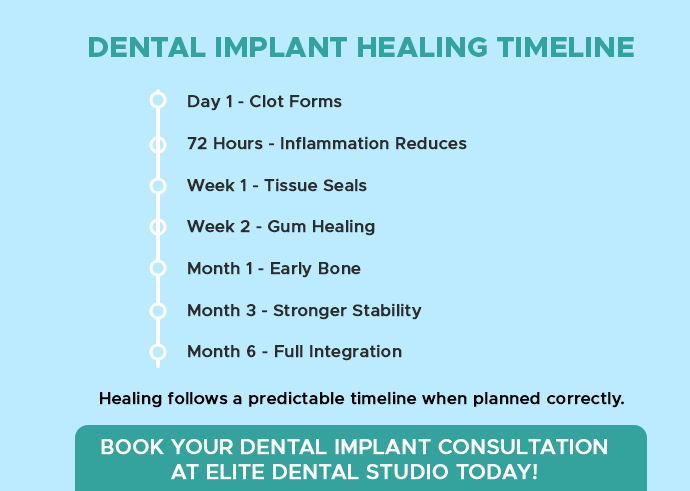
    Implant Healing Timeline At A Glance

    Time What Happens What You Should Do
    Day-1 Blood clot forms, inflammation phase begins Rest, ice compress, soft food
    72 Hours Swelling reduces, early repair starts Follow hygiene protocol, avoid smoking
    Week-1 Incision site seals, sutures may stay Gentle cleaning, follow-up
    Week-2 Gingival healing improves, tissue closure Saltwater rinse, chlorhexidine if advised
    Month-1 Early bone repair starts Chew carefully, keep area clean
    Month-3 Stronger bone forms, stability increases Attend recall visits, follow loading plan
    Month-6 Full integration and maturation Permanent crown planning, long-term care

    This dental implant timeline helps patients looking for the best dental implant clinic in Kannur understand what to expect.

    What Happens On Surgery Day?

    On surgery-day, the implant is placed under a sterile-field. The dentist creates an incision-site and places the implant. A cover-screw or healing-collar may be used. The gums are closed with flap-closure using a tension-free approach. This reduces surgical-trauma.

    The implant’s first strength is called primary-stability. It comes from how firmly the implant sits in the bone at placement.

    What Happens In The First 72 Hours After Dental Implant?

    The first 72-hours is the immediate-healing window. A blood-clot forms around the implant. This supports clot-stabilization. Mild swelling or hematoma can occur.

    What helps most in this stage:

    • ice-compress during the first day, as advised.
    • soft-food and plenty of fluids.
    • no-smoking, as smoking increases failure-risk.
    • follow post-op-care instructions carefully.

    This is also the phase where vascularization begins, meaning blood supply starts building around the implant-interface.

    What Changes In Week 1 And Week 2 After Dental Implants?

    During week-1 and week-2, soft tissues repair quickly.

    You may notice:

    • reduced swelling.
    • improved comfort.
    • better gum closure.

    Inside the gums, fibroblast-activity supports repair. Gingival-healing progresses and epithelial-attachment forms. This creates a protective mucosal-seal.

    Care tips for 2-weeks:

    • follow hygiene-protocols.
    • use chlorhexidine only if prescribed.
    • use saltwater-rinse gently.
    • do not disturb the area with hard brushing.
    • attend follow-up appointments.

    What Happens Between Month 1 And Month 3 After Dental Implants?

    This is the key bone healing window. The body starts building woven-bone around the implant. Mineral-deposition increases as osteoblast-activity forms new bone. At the same time, osteoclast-resorption clears damaged bone.

    This stage supports bone-density improvement and a stronger implant-interface.

    Clinics may check stability using:

    • resonance-frequency tools.
    • ISQ-measurement for stability tracking.
    • torque-value if required.

    As healing progresses, stability shifts from primary-stability to secondary-stability. Secondary-stability comes from biological bonding, not mechanical grip.

    What Happens Between Month 3 And Month 6 After Dental Implant?

    Between month-3 and month-6, woven-bone changes into stronger lamellar-bone through bone-remodeling and bone-integration. This is the maturation-phase, where the implant moves toward full-integration.

    If you needed bone-grafting, ridge-preservation, or sinus-augmentation, graft-remodeling continues during this time.

    This stage is also where your dentist decides the safest loading-protocol:

    • conventional-load or delayed-loading for many cases.
    • immediate-load only for selected cases with excellent stability.

    When Does The Crown Go On The Implant?

    The crown is placed during the final-loading stage, after the implant is stable in bone. Treatment often includes a provisional-phase first, then a permanent-phase restoration.

    At this stage, the dentist may do:

    • abutment-connection.
    • tissue-shaping to build a natural emergence-profile.
    • support for sulcus-formation and papilla-regrowth.

    A healthy mucosal-seal and good keratinized-gingiva help keep the implant clean and stable long term.

    What Can Delay Healing Or Increase Risk?

    Healing can slow down due to:

    • Infection.
    • micromotion or overload from chewing too early.
    • poor oral hygiene.
    • smoking.
    • uncontrolled diabetes-impact.
    • osteoporosis.
    • medication-effects, including bisphosphonates.

    Possible complications include mucositis, peri-implantitis, mobility, bone-resorption, early-failure, or late-failure.

    How Do You Protect Implant Healing At Home?

    These habits support a better success-rate:

    • follow post-op-care exactly.
    • stick to soft-food initially.
    • avoid smoking completely.
    • keep the area clean as per hygiene-protocol.
    • attend recall-visits and follow-up reviews.
    • follow the planned loading-protocol.

    With proper planning and maintenance, many implant cases report a 95-percent long-term success-rate.

    Why Choose Elite Dental Studio For Implants In Kannur?

    If you are searching for teeth implants near me or dental implants near me, you want a clinic that manages the full healing journey, not just the surgery. At Elite Dental Studio, we plan each stage carefully and track healing so your implant stays stable and functional.

    For patients seeking the best dental implant clinic in Kannur, our team focuses on predictable healing, safe loading decisions, and long-term-care.

    Book Your Appointment at Elite Dental Studio, Kannur

    Want a clear implant plan with timeline-based guidance? Visit Elite Dental Studio, Kannur to understand your implant healing stages and expected recovery.

    Call +91 96458 74777 to book your appointment.

    FAQs

    How long do dental implants take to heal?
    Many patients heal in 3 to 6 months. The exact time depends on bone health and loading plan.

    Is swelling normal after implant surgery?
    Yes, swelling can occur in the first few days and usually reduces within a week.

    When can I chew normally?
    Chewing returns gradually. Your dentist will guide you based on healing and stability.

    What is osseointegration in simple words?
    It is the process where the implant bonds with the jawbone and becomes stable.

    How do I reduce implant failure risk?
    Avoid smoking, keep strong oral hygiene, and attend follow-up and recall-visits.

  • Brushing Too Hard: Can It Damage My Child’s Teeth?

    Brushing is the first step to keeping your child’s smile healthy. But did you know that children brushing teeth too hard can actually cause damage to teeth and gums. Many parents think that brushing harder cleans better, but this common mistake can wear down enamel, hurt gums, make teeth sensitive and may lead to permanent damage over time.

    At Elite Dental Studio, we help parents understand the risks of brushing and kid’s oral health, spot the warning signs, and teach simple solutions to protect your child’s teeth. Read on to learn how to prevent damage to your kids’ oral health, correct brushing habits, and keep your child’s smile strong and happy.

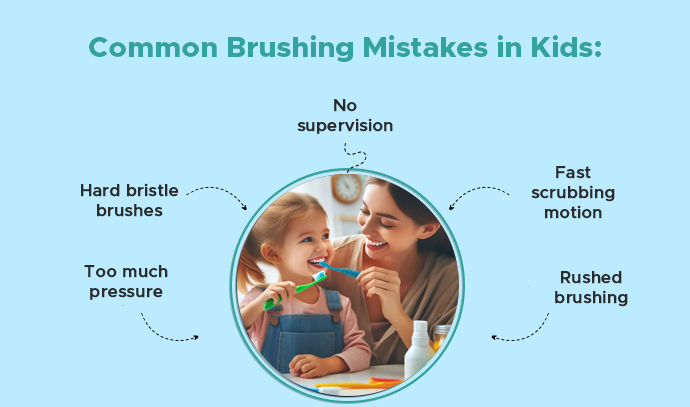
    common-brushing-mistakes-in-kids

    Why Brushing Too Hard Is Harmful for Children?

    Children’s teeth are not as strong as adult teeth. The enamel of the outer protective layer is thinner and more vulnerable. Brushing too aggressively can:

    • Wear Down Enamel: Over time, harsh brushing erodes enamel, leaving teeth more prone to sensitivity and cavities.
    • Damage Gums: Forceful brushing can cause gum recession, exposing tooth roots and increasing the risk of decay.
    • Cause Sensitivity: Exposed enamel or roots can lead to pain with hot, cold, or sweet foods.
    • Affect Tooth Development: In primary teeth, enamel damage or gum recession can influence how permanent teeth grow in.

    Even though children brush daily, improper technique can slowly create long-term dental problems.

    Signs That Your Child Is Brushing Too Hard

    Recognizing the problem early can prevent irreversible damage. Watch for these warning signs:

    • Sore or bleeding gums after brushing,
    • Tooth sensitivity to hot, cold, or sweet foods,
    • Flattened or grooved tooth surfaces,
    • Rapidly fraying toothbrush bristles,
    • Visible gum recession around certain teeth.

    If your child shows any of these signs, it is time to adjust brushing habits and consult a pediatric dentist near me.

    Common Reasons Children Brush Too Hard

    Understanding why children apply too much pressure helps in correcting the habit:

    • Belief that harder brushing cleans better,
    • Imitating adults who brush aggressively,
    • Using medium or hard bristle toothbrushes,
    • Rushing to finish brushing quickly,
    • Lack of supervision,
    • Anxiety or discomfort while brushing.

    Addressing these causes early ensures safer brushing and healthier teeth.

    The Correct Brushing Technique for Children

    Proper technique is more important than pressure. Parents should teach and supervise children until the habit is established.

    1. Choose a Soft Bristled Toothbrush: Soft bristles are gentle on enamel and gums, reducing the risk of damage.
    2. Use a Pea-Sized Amount of Toothpaste: Too much toothpaste can create excessive foam, tempting children to brush harder.
    3. Hold the Brush Like a Pencil: This naturally limits the pressure applied to teeth.
    4. Use Gentle Circular Motions: Instead of scrubbing back and forth, use small circles to remove plaque effectively.
    5. Brush All Surfaces for 2 Minutes: Divide time evenly for outer, inner, and chewing surfaces.
    6. Lightly Brush the Tongue: Removes bacteria without applying force on sensitive tissues.

    Step-by-Step Brushing Routine for Kids

    A simple routine helps children brush correctly without damaging teeth:

    1. Wet the toothbrush and apply a pea-sized amount of fluoride toothpaste,
    2. Position the brush at a 45-degree angle to the gumline,
    3. Move in gentle, small circular motions,
    4. Spend 30 seconds on each quadrant of the mouth,
    5. Brush chewing surfaces with soft strokes,
    6. Brush the inner surfaces gently,
    7. Lightly brush the tongue to remove bacteria,
    8. Rinse the mouth and inspect in the mirror for missed spots.

    This routine ensures teeth are clean without the risks associated with excessive pressure.

    Toothbrushes and Apps That Help Prevent Hard Brushing

    Modern tools can train children to brush gently:

    • Soft-bristled toothbrushes designed for kids,
    • Electric toothbrushes with pressure sensors that alert when brushing too hard,
    • Color-changing toothbrushes to show wear and encourage replacement,
    • Timer-based brushing apps to ensure the recommended two-minute brushing.

    Using these tools makes brushing safe and fun for children.

    Correcting Damage from Overbrushing

    If overbrushing has already caused harm, early intervention is key:

    • Fluoride Applications: Strengthen enamel and reduce sensitivity,
    • Desensitizing Toothpaste: Provides relief for mild sensitivity,
    • Composite Fillings: Restore grooves or worn areas on teeth,
    • Gum Care: Proper brushing technique and gentle care can reverse early gum recession,
    • Regular Checkups: Monitoring by a pediatric dentist in Calicut ensures early detection and management.

    Prompt action prevents further damage and preserves the child’s dental health.

    Age-Based Brushing Guidelines

    • Ages 2–5: Parents should supervise brushing and guide gentle movements.
    • Ages 6–9: Children can brush independently but need reminders for correct pressure.
    • Ages 10+: Kids understand pressure better, but supervision ensures they maintain proper habits.

    When to See a Pediatric Dentist?

    Parents should seek professional help for their kids if:

    • Tooth sensitivity persists,
    • Enamel appears worn or grooved,
    • Gums are sore or receding,
    • Toothbrush bristles fray quickly,
    • Bleeding occurs after brushing.

    Early consultation with a pediatric dentist near me ensures that minor issues do not become long-term problems.

    Why Choose Elite Dental Studio for Pediatric Care?

    A specialised pediatric dentist understands children’s unique dental needs and guides them with patience. Elite Dental Studio offers:

    • Child-friendly environment and gentle treatment techniques,
    • Advanced tools for monitoring enamel and gum health,
    • Experienced pediatric dentists in Calicut for early detection and preventive guidance.

    Choosing the right pediatric dentist ensures that children brushing teeth too hard receive expert advice and safe treatment. Brushing too hard can silently damage your child’s teeth, causing sensitivity, enamel wear, and gum problems. The good news is that proper technique, gentle brushing, and early intervention prevent long-term issues.

    If your child shows signs of overbrushing or discomfort, schedule a visit with a pediatric dentist near me today. Start preventive care, correct brushing habits, and protect your child’s smile for a lifetime. Call Elite Dental Studio at +91 9048 611 911 now to book your consultation and ensure healthy, happy teeth for your child.

    Frequently Asked Questions:

    Can brushing too hard really damage my child’s teeth?

    Ans. Yes. Children brushing teeth too hard can wear down enamel, cause gum recession, and lead to tooth sensitivity. Proper technique and gentle pressure are essential to prevent long-term dental issues.

    What are the signs that my child is brushing too hard?

    Ans. Look for sore or bleeding gums, flattened or grooved tooth surfaces, sensitivity to hot or cold foods, and fraying toothbrush bristles. These are clear indicators that brushing pressure may be too high.

    How can I help my child brush correctly?

    Ans. Use a soft-bristled toothbrush, apply a pea-sized amount of toothpaste, and teach gentle circular brushing motions. Holding the toothbrush like a pencil and supervising brushing helps children maintain safe pressure.

    When should I visit a pediatric dentist for hard brushing issues?

    Ans. If your child experiences persistent sensitivity, worn enamel, sore gums, or bleeding while brushing, it’s time to consult a pediatric dentist in Calicut or search for a kids dentist near me for evaluation and early intervention.

    Can overbrushing be reversed or treated?

    Ans. Yes. Early intervention can help. Treatments may include fluoride applications, desensitizing toothpaste, minor restorative procedures, and guidance from a pediatric dentist near me to correct brushing habits and protect teeth.


  • Can You Wear Invisible Braces with Crowns or Caps?

    If you have crowns or caps and are considering Invisalign or invisible braces, you’re not alone. Many adults seeking a straighter smile already have dental restorations, and the good news is that Invisalign can still be a safe and effective option in many cases. At Elite Dental Studio in Kochi, we regularly treat patients with crowns, caps, veneers, and bridges using clear aligner systems.

    Invisible braces have become a preferred way to straighten teeth because they are comfortable, removable, and discreet. Our team evaluates each case carefully to ensure safe and effective treatment, helping you understand the best path forward for your smile. This guide explains everything simply and clearly, so you can make an informed decision about Invisalign with dental restorations.

    key facts about invisalign with dental crowns

    Can You Wear Invisible Braces with Crowns or Caps?

    The simple answer is yes. You can wear Invisalign even if you have crowns or caps. However, the success of treatment depends on:

    • The type of tooth with the crown (front or back);
    • Location and strength of the crown;
    • The quality of bonding and cement;
    • Your bite and alignment needs.

    Clear aligners move teeth by applying gentle pressure. If the crown is well-fitted and stable, it can usually withstand these forces.

    When Invisalign Works Well with Crowns? 

    In most cases, Invisalign works smoothly if:

    • The crown is on a front tooth;
    • The crown is relatively new and strong;
    • The tooth underneath is healthy;
    • The movement needed is mild to moderate.

    Invisalign with Dental Crowns: When Special Precautions Are Needed?

    Your dentist may need to adapt the treatment if:

    • The crown is old or loose;
    • The bite forces are very strong;
    • The tooth requires rotation or complex movement;
    • Attachments need to be placed on the crown surface.

    Elite Dental Studio uses advanced digital planning tools to ensure safe tooth movement even with restorations.

    How Invisalign Moves Teeth with Crowns?

    Invisalign aligners gently push teeth into new positions using controlled pressure. Crowns are treated like natural teeth, but your dentist makes careful adjustments to protect them.

    Step-by-Step Process:

    1. Digital Scans: A precise 3D scan maps your teeth, showing crown position and the underlying tooth.
    2. Movement Planning: Tooth movements are planned so crowns are not overloaded. Front crowns move more easily; back crowns may need slower adjustments.
    3. Custom Aligner Design: Aligners are engineered to distribute force safely on all teeth, including restored ones.
    4. Attachments (If Needed): Small, tooth-colored attachments can be bonded to crowns to help aligners grip effectively.
    5. Regular Checkups: Crown stability and tooth movement are monitored; any discomfort is addressed promptly.

    Do Crowns Make Invisalign Less Effective?

    Not generally. Crowns are usually strong enough to handle aligner pressure. However, certain movements may be slower or require specialized planning.

    Simple Movements

    • Closing gaps.
    • Minor crowding.
    • Mild bite correction.

    These usually proceed like normal, even with crowns.

    Complex Movements

    • Rotations of crowned teeth.
    • Deep bite correction.
    • Major bite adjustments.

    These may require additional precision, attachments, or modified aligners.

    At Elite Dental Studio, our aligner planning is fully digital and customized for each patient, making treatment predictable even with dental caps.

    Will Invisalign Damage My Crown or Cap?

    Clear aligners are gentler than metal braces, which means the risk of damaging a crown is very low.
    However, risk increases if:

    • The crown is loose,
    • The tooth has weak bonding,
    • The crown is old or cracked,
    • You frequently bite hard foods.

    Dentists at Elite Dental Studio always check the stability of your crown before designing your Invisalign treatment plan. If needed, they may recommend replacing an old cap before starting treatment.

    What If My Crown Comes Off During Invisalign Treatment?

    This is rare, but if it happens:

    1. Stop wearing your aligners temporarily;
    2. Visit your dentist immediately;
    3. The crown will be re-bonded or replaced;
    4. Your aligner set may need to be updated or re-scanned.

    Most patients continue treatment without delay after minor adjustments.

    Can You Get a New Crown After Invisalign?

    Yes. Many patients choose to replace old or discolored crowns after alignment is complete.
    Advantages of doing crowns after Invisalign include:

    • Perfect bite before designing the crown;
    • Better smile aesthetics;
    • Accuracy in crown positioning;
    • Improved long-term stability.

    Dentists often prefer restoring teeth after orthodontic movement for the best results.

    Can You Start Invisalign After Getting a Crown?

    Yes. If you recently got a crown, most dentists may recommend waiting a few days before starting aligner treatment. The cement needs time to set completely.

    Crowns made with modern zirconia or ceramic materials are very stable and work well with aligners.

    Benefits of Choosing Invisalign When You Already Have Crowns

    If you already have dental crowns, Invisalign offers several unique advantages that make straightening your teeth safer, more comfortable, and aesthetically pleasing.

    1. No Metal Pressure: Avoids brackets that can chip crowns.
    2. Easier Cleaning: Remove aligners to brush and floss, keeping crowns healthy.
    3. Gentle Forces: Controlled pressure protects restored teeth.
    4. Better Aesthetics: Maintains your smile’s appearance during treatment.
    5. Lower Risk of Damage: Crowns remain intact since adhesives are rarely applied.

    These benefits make Invisalign an ideal choice for patients with restorations, allowing you to achieve a beautifully aligned smile without compromising your existing crowns.

    Step-by-Step Process. Invisalign Treatment with Dental Crowns at Elite Dental Studio

    Here’s what you can expect during your Invisalign journey at Elite Dental Studio when you have crowns or caps, from the initial consultation to your final smile.

    • Consultation & Oral Examination: Crown stability, bite, gum health, and movement possibilities are assessed.
    • Digital 3D Scanning: Precise digital map of your teeth.
    • Treatment Simulation: See a digital preview of your future smile.
    • Crown Evaluation: Any weak or poorly fitted crowns are corrected before treatment.
    • Custom Aligner Design: Aligners are made to fit safely around crowns.
    • Wearing Aligners: 20-22 hours per day, removed for eating or cleaning.
    • Regular Reviews: Crown stability and alignment progress monitored every few weeks.
    • Completion & Retainers: Retainers maintain results and protect crowns.

    Invisalign Cost and Duration for Patients with Crowns

    The cost of Invisalign varies depending on the complexity of the case and the number of aligners needed.

    Average Duration

    • Mild cases: 6 to 8 months.
    • Moderate cases: 10 to 14 months.
    • Complex bite cases: 14 to 20 months.

    Average Cost in India

    Invisalign cost generally ranges between ₹80,000 to ₹2,50,000.

    The cost of Invisalign further depends on the following factors.

    • Number of crowns
    • Tooth movement complexity
    • Type of aligners
    • Number of refinements

    What Is Included in the Cost of Invisalign Treatment?

    Now that you know the average cost you will have to pay for the Invisalign treatment, here are the following inclusions in the overall cost.

    • Digital scans,
    • Treatment planning,
    • All aligner sets,
    • Attachments if needed,
    • Refinements,
    • Retainers at the end,
    • Periodic reviews.

    Patients in Kochi often search for Invisalign treatment near me, and want transparent pricing. Elite Dental Studio provides complete cost breakdowns and treatment timelines during the consultation.

    Why Many Patients in Kochi Choose Invisalign Over Other Options?

    Invisible braces are particularly popular among working professionals, students, and adults who prefer a discreet option. Here are the list of benefits why Invisalign works better than other options.

    • No food restrictions,
    • No poking wires or brackets,
    • Easier maintenance and cleaning,
    • Less frequent clinic visits,
    • Predictable, comfortable results.

    Crowns do not prevent patients from enjoying these benefits.

    Why Choose Elite Dental Studio for Invisalign Treatment in Kochi? 

    Choosing the right dental clinic is crucial, especially when crowns or caps are involved.
    Elite Dental Studio stands out because of:

    1. Expertise in Complex Cases: Extensive experience with crowns, caps, veneers, and bridges.
    2. Advanced Digital Technology: 3D scanners and digital planning ensure precise movements.
    3. Patient-Centric Care: Transparent pricing and personalized treatment plans.
    4. Comfortable, Modern Clinic Setup: Stress-free visits.
    5. Safety-Focused Approach: Crown stability checked at every stage with aligners adjusted as needed.

    Straightening your teeth when you already have crowns or caps is completely possible with Invisalign. With the right planning, stable crowns, and expert supervision, you can enjoy a healthier, more confident smile without affecting your existing dental work. Elite Dental Studio in Kochi provides advanced Invisalign treatment with personalized care that focuses on long-term comfort, safety, and aesthetics.

    If you are ready to start your smile journey, book a consultation today at +91 86065 95555. Your path to straighter teeth begins with Elite Dental Studio.

    Frequently Asked Questions: 

    Can I get Invisalign if I already have dental crowns?

    Ans. It is possible to use Invisalign even if you have dental crowns or caps. Transparent aligners are compatible with stable, well-fitting crowns and therefore you can get your teeth straightened without the need of a new restoration of your existing teeth. The specialist at Elite Dental Studio in Kochi customizes treatment plans to ensure that your crowns stay protected during the process.

    Will Invisalign damage my crowns or caps?

    Ans. The danger is highly minimal as Invisalign is gentle and uses controlled forces rather than metal brackets. Aligner pressure can be easily tolerated by secure and healthy crowns. Prior to treatment, your dentist will check the stability of the crown and if the condition is not good, he may advise you to replace the old or loose ones.

    Can Invisalign align teeth with root canal treated teeth or bridges?

    Ans. Invisalign is a safe method for root canal treated teeth as the tooth is without nerves and gentle forces are applied. On the other hand, bridges cannot be moved as they join several teeth. The remaining teeth around them can be aligned as well but it should be done carefully with proper planning.

    Where can I find Invisalign treatment near me in Kochi?

    Ans. Elite Dental Studio in Kochi is the place where you can get an advanced Invisalign treatment even if you have crowns, caps, veneers or bridges. The clinic offers digital scans, tailor-made aligners and regular checkups for safe, comfortable, and effective results.


  • Gingival Hyperplasia – Symptoms, Causes, Treatment

    If your gums look bigger than usual, feel puffy or start creeping over your teeth it’s not something to ignore. This could be a condition called Gingival Hyperplasia where the gums grow more than they should. It can make brushing difficult, affect the way you eat and even change how your smile appears.

    In simple words, Gingival Hyperplasia means your gum tissue is growing too much. The gums may look thick, uneven or swollen. With time, they may even begin covering parts of your teeth which makes cleaning your mouth harder and may lead to discomfort or confidence issues.  

    Normally, gums sit tight and close around each tooth. But when this condition develops then you may notice:

    • Trouble brushing or flossing
    • Food getting trapped near the gums
    • A bulky or uneven gum line

    Knowing the Gingival Hyperplasia Symptoms along with the causes behind it and the best Gingival Hyperplasia Treatment options can help you avoid future problems. With proper care at Elite Dental Studio patients can get their gum health back on track in the most gentle and comfortable way.

    Gingival Hyperplasia

    Gingival Hyperplasia Symptoms You Should Watch For! 

    The earlier you notice the gingival hyperplasia symptoms, the easier the treatment is. Some common symptoms include:

    • Gums that look swollen or unusually thick
    • Bleeding while brushing or flossing
    • Soreness or sensitivity in the gums
    • Gum color turning darker red or even purple
    • Gums covering parts of the teeth
    • Difficulty keeping the mouth clean

    If these signs stay for a while it’s best to book a check-up at a trusted dental clinic in kannur or best dental clinic in calicut for the right evaluation. 

    Gingival Hyperplasia Causes

    Many things can make the gums overgrow. Once the gingival hyperplasia causes is identified then your dentist can suggest the best solution.

    1. Side Effects of Certain Medications

    Some medicines can cause gum enlargement, such as:

    • Anti-seizure medicines
    • Blood pressure medicines (like amlodipine or nifedipine)
    • Immunosuppressant drugs

    How much the gums grow depends on the dosage or the time you’ve been taking the medicine and your daily oral hygiene.

    2. Poor Brushing Habits

    If plaque collects near the gum line because of irregular brushing or flossing it can irritate the gums and make them grow more than needed.

    3. Hormonal Changes 

    During puberty, pregnancy or menstrual cycles gums may become extra sensitive and swollen. These changes are usually temporary but still need dental supervision.

    4. Genetics

    Some people inherit a condition where gums naturally overgrow over time. This is known as Hereditary Gingival Fibromatosis.

    5. Medical Conditions

    Issues like hormonal disorders or leukemia can also cause gum enlargement. These conditions require both dental and medical treatment.

    Types of Gingival Hyperplasia

    This gum condition usually falls under these categories:

    • Inflammatory: caused by plaque buildup
    • Drug-Induced: triggered by medications
    • Hereditary: runs in families
    • Systemic Disease-Related: linked to underlying health issues

    Each type can affect gum health and appearance if not treated early.

    What Happens If You Ignore?

    Leaving Gingival Hyperplasia untreated may lead to:

    • Gum infections
    • Tooth decay
    • Persistent bad breath
    • Trouble chewing or speaking
    • Bone loss in severe cases

    When Should You Visit a Dentist?

    See a professional if you notice:

    • Gum swelling that doesn’t go away
    • Frequent gum bleeding
    • Gums covering your teeth
    • Trouble cleaning your mouth

    The sooner you act the better the results.

    Why Do You Need Professional Dental Help? 

    Home remedies can give temporary relief but cannot stop gum overgrowth. A professional dentist can:

    • Find the exact cause
    • Create a treatment plan personalized for you
    • Use safe, modern techniques for gum correction

    At Elite Dental Studio, one of the most trusted clinics for people searching for the best dental hospital in kannur or a best dental clinic in Calicut patients receive expert care, modern tools and a hygiene-first approach for long-lasting gum health.

    Gingival Hyperplasia Treatment at Elite Dental Studio

    Treatment depends on what’s causing the gum overgrowth and how severe it is. At Elite Dental Studio, known as the best dental clinic in Calicut for many patients the focus is on comfort, precision and long-lasting results.

    1. Professional Dental Cleaning

    Deep cleaning removes plaque and tartar so your gums can heal and shrink naturally.

    2. Medicine Review

    If your medication is causing the issue your dentist may work with your doctor to adjust it. Never stop medication on your own.

    3. Better Daily Oral Care

    A good routine helps control swelling:

    • Brush twice daily with a soft brush
    • Floss once a day
    • Use a dentist-approved mouthwash

    4. Surgical or Laser Gum Shaping

    If the gum growth is severe then removing extra tissue may be needed:

    • Gingivectomy: trims and reshapes extra gum
    • Laser Gum Treatment: gentle quick healing and highly precise

    Elite Dental Studio uses advanced laser technology for painless and accurate gum correction.

    5. Managing Health Conditions

    If hormonal imbalance or medical issues are involved your dentist may work with a specialist to treat the root cause.

    Get Healthy Gums & a Confident Smile at Elite Dental Studio! 

    Gingival Hyperplasia might look like a simple swelling but often points to deeper gum problems. Acting early helps you avoid discomfort and keeps your smile healthy.

    If you notice gum overgrowth or swelling visit Elite Dental Studio which is a preferred choice for many looking for the best dental clinic in Calicut. Their caring and experienced team will help you get back healthy gums and a confident fresh smile.

    Frequently Asked Questions: 

    ‍​‌‍​‍‌​‍​‌‍​‍‌ What Is Gingival Hyperplasia and Why Do My Gums Look So Big?

    Ans. Gingival Hyperplasia means your gums grew beyond what is normal and hence started looking swollen or even very large. Such a regain can be caused by drugs, inefficient brushing of teeth, or some pathological conditions. If you observe your gums changing, it is of utmost importance to have a dental check-up in Kannur or Calicut.

    What Should I Think of If I Only Suspect Gingival Hyperplasia?

    Ans. The main symptoms of this disease are bleeding during brushing, swelling of the gums, bad breath and the covering of the teeth by gums for a longer period. In most cases these signs mean that professional help is unavoidable.

    How Do Dentists Come Up With Solutions for Gingival Hyperplasia?

    Ans. The initial stage for a dentist would be to perform a thorough cleaning of the teeth in order to remove both the plaque and the cause of the irritation. If drugs are determined to be the root cause, the doctor may consult your physician for other options. Laser or surgical gum contouring is performed to get rid of the extra tissue in a safe way for the advanced cases.

    Is It Possible for Gingival Hyperplasia to Disappear Without Any Intervention?

    Ans. On rare occasions, a minor swelling of the gums can be solved by good brushing and professional cleaning, but in most cases of true Gingival Hyperplasia, dental treatment is necessary. If you gamble with it, then the risk is not only growth of the gums but also losing your smile or the ability to chew.

    I Have Gum Swelling. When Should I Go to the Dentist?

    Ans. Gum swelling which is accompanied with bleeding or pain and is more than a week old should be taken to a dentist’s office. If any inconvenience or pain in the area occurs due to brushing, then also a dental visit is necessary. Timely support from the best dental clinic in Calicut or a dentist who is good and trustworthy in Kannur will assist you in keeping away the risk of major ​‍​‌‍​‍‌​‍​‌‍​‍‌problems.


  • Dental Granuloma – Symptoms, Causes, Treatment

    Dental problems often start silently and one such hidden condition is a dental granuloma. It may not hurt initially but it can gradually damage the tooth structure and surrounding bone if left untreated. Understanding dental granuloma symptoms, causes and treatment options helps you act early and choose the right dental support. Whether you are searching for clarity as a patient or exploring the best dental care at the best dental clinic in Calicut or the best dental clinic in Kochi, this guide gives you everything you need to know in a simple and patient friendly way.

    Keep reading to understand what a dental granuloma is, how it develops and the treatment choices that can protect your oral health.

    Dental Granuloma

    What Is a Dental Granuloma and Why Should You Care

    A dental granuloma is a small, chronic inflammation that forms at the tip of a tooth’s root. It is usually caused by a long-standing infection inside the tooth. When bacteria enter the pulp then the body tries to defend itself by creating a pocket of infected tissue known as a granuloma. Even though it is small it can slowly grow and damage the surrounding areas. Many patients do not feel symptoms at the beginning which makes timely dental checkups extremely important.

    This condition is often discovered during routine dental X rays especially when a patient reports mild discomfort or previous dental trauma. If ignored it can expand and lead to more severe infections.

    Common Dental Granuloma Symptoms You Should Watch Closely

    Identifying dental granuloma symptoms early is the best way to prevent complications. While the condition may start quietly the following signs are commonly reported.

    Persistent Toothache

    A constant or on and off toothache is one of the earliest dental granuloma symptoms. The pain may feel dull at first but can intensify as the infection spreads.

    Sensitivity to Hot and Cold

    Patients often notice increased sensitivity to temperature changes. This happens when the tooth pulp becomes infected and responds strongly to external stimuli.

    Swelling Near the Affected Tooth

    Swelling around the gums is a sign that the infection is progressing. In some cases, the area may feel tender when touched.

    Discomfort When Chewing

    A dental granuloma can make biting pressure painful. This happens because the inflammation places strain on the surrounding bone and periodontal ligaments.

    Bad Taste in the Mouth

    A sudden bad taste or odor may indicate the presence of draining pus which suggests that the granuloma is worsening.

    Gum Boil or Pus Formation

    A small pimple-like bump on the gum can appear when the infection tries to drain. This is a sign that immediate dental attention is needed.

    If you notice one or more of these symptoms then seeking advice from a qualified dentist can prevent long term damage.

    Dental Granuloma Causes Explained in Simple Terms

    Knowing‍‌‍‍‌‍‌‍‍‌ the Dental Granuloma Causeswill help you avoid the triggers that are preventable and you will be able to keep your oral health for a long time. These are the most common factors that contribute to it.

    Untreated Tooth Decay

    When the decay goes deep then bacteria find their way to the inner layers of your tooth. Pulp infection is the first step and then the infection travels to the root tip where it forms a granuloma.

    Failed or Old Dental Treatments

    Failure of the root canal or restoration is sometimes the reason for the presence of hidden bacteria, missed canals or incomplete cleaning. This may lead to the formation of granuloma.

    Dental Trauma

    During an accident, a crack or a fracture can result in the pulp being exposed to harmful bacteria coming from the outside. Minor injuries that seem harmless at first can eventually cause chronic inflammation.

    Advanced Gum Disease

    After gum disease has severely affected the bone around the tooth, that is when bacteria can reach the root tip without any difficulty. In this way, the progression to granuloma is facilitated over time.

    Weakened Immune Response

    A person who has a compromised immune system may find it difficult to fight bacterial infections in the tooth pulp. That raises the chance of granuloma formation.

    Dental Granuloma Treatment Options That Actually Work

    Once a dental granuloma is detected then prompt treatment is essential. The good news is that modern dentistry provides several effective solutions. Each option targets infection control and tooth preservation.

    Root Canal Treatment

    This is the most common and effective dental granuloma treatment. It removes infected pulp tissue and cleans the inside of the tooth. The process includes:

    • Removal of infected pulp.
    • Cleaning and shaping of the canals.
    • Disinfection to eliminate bacteria.
    • Filling the canals with a biocompatible material.

    Root canal treatment helps eliminate the source of infection and prevents future complications.

    Re Root Canal Treatment

    If the granuloma is caused by a failed previous root canal then a retreatment may be required. The dentist removes the old filling then cleans the canals again and eliminates remaining bacteria.

    Apicoectomy

    This minor surgical procedure is recommended when the granuloma persists despite a root canal. The dentist removes the infected root tip and cleans the surrounding area. This ensures complete disinfection and promotes healing.

    Extraction (Only When Necessary)

    If the tooth is severely damaged or cannot be saved then extraction may be the last option. Tooth replacement options can be planned after the site heals.

    Medications to Support Healing

    Antibiotics may be prescribed in cases of active infection or swelling. Pain relievers help manage discomfort during the initial treatment phases.

    Each treatment plan is uniquely created based on the tooth condition, infection severity and patient comfort.

    Step by Step Guide to How Root Canal Treatment Helps Remove a Granuloma

    Most dental granuloma cases are resolved through root canal therapy. Understanding the procedure helps reduce fear and improves patient confidence.

    1. Initial Examination and Imaging

    The dentist checks the tooth and takes X rays to confirm the granuloma.

    2. Local Anesthesia

    Numbing the tooth ensures a comfortable experience throughout the procedure.

    3. Access Opening

    A small opening is created to reach the infected pulp inside the tooth.

    4. Cleaning the Canals

    Special tools are used to clean out bacteria, infected tissue and debris.

    5. Disinfection

    The canals are disinfected using medicated solutions to eliminate any remaining microorganisms.

    6. Filling and Sealing

    A biocompatible material fills the canals to prevent reinfection.

    7. Final Restoration

    A crown or filling is placed on the tooth to restore strength and function.

    This structured approach focuses on infection removal and long term tooth preservation.

    How Long Does Dental Granuloma Treatment Take?

    Treatment duration depends on the size of the granuloma and the tooth condition.

    Average Timelines:

    • Root canal treatment usually takes 1 to 2 visits.
    • Retreatment may require 2 to 3 visits.
    • Apicoectomy typically takes 45 to 60 minutes.
    • Healing time after root canal or apicoectomy ranges between 1 to 3 months.

    Factors That Influence Duration:

    • Severity of infection.
    • Presence of previous dental restorations.
    • Tooth location and number of canals.
    • Patient’s healing capability.

    Understanding these timelines helps you prepare for the process with confidence.

    Why Expert Dental Care Matters for Dental Granuloma Treatment?

    Early detection and accurate diagnosis are essential for treating a dental granuloma and preventing the infection from worsening. A trained dental team helps identify the issue on time, manage symptoms correctly and choose the safest and most effective treatment to preserve the natural tooth.

    Patients looking for the best dental clinic in Calicut or the best dental clinic in Kochi should choose centres that offer advanced imaging, updated safety protocols and experienced endodontic care. These factors ensure precise evaluation, comfortable procedures and improved long term results.

    With a structured diagnostic process and patient centred care, Elite Dental Studio supports timely management of dental granuloma symptoms while focusing on comfort and recovery. Selecting expert dental care protects your oral health and reduces the risk of future complications. So, Book Your Consultation Now!

    Frequently Asked Questions:

    Can a dental granuloma heal on its own?

    Ans. A dental granuloma will not be able to heal itself since it is a pathological condition resulting from an infection in the tooth. Removal of the infection source through a root canal treatment or apicoectomy and subsequent prevention of complications is the only way to treat it.

    How do dentists confirm if I have a dental granuloma?

    Ans. The diagnostic tools employed by the dental practitioners include clinical inspection, dental X rays and in some cases, CBCT scans to pinpoint a dental granuloma. On radiographic pictures it is generally presented as an area of increased radiolucency surrounding the root apex.

    What is the most common treatment for a dental granuloma?

    Ans. The most widely suggested method is root canal therapy. The infected pulp is removed then the root canals cleaned and disinfected and the tooth sealed to prevent further infection.

    Can a granuloma spread if I delay treatment?

    Ans. Indeed. The infection may extend to the bone surrounding the tooth, abscess formation, pain exacerbation and the loss of the tooth can be the consequences of a dental granuloma that has been neglected for a long time. Dental care that is punctual makes sure of getting better results and avoiding ‍‌‍‍‌‍‌‍‍‌complications.

  • Dental Fluorosis – Causes, Symptoms & Modern Treatment Options

    Have you ever noticed white streaks or brownish patches on your teeth? These could be signs of dental fluorosis, a condition that develops when the teeth are exposed to too much fluoride while they are still forming usually during early childhood.

    While fluoride strengthens enamel and helps fight cavities an overdose during tooth development can lead to permanent discoloration and surface changes in your teeth.

    Here’s what’s important to know:

    • It begins before permanent teeth erupt.
    • The condition can appear as tiny streaks or dark stains.
    • It mainly affects adult teeth but can sometimes be seen in milk teeth too.

    Spotting fluorosis early helps maintain the strength of its look and overall health of your teeth. Let’s dive into the main symptoms, causes and available treatments for this condition.

    Common Dental Fluorosis Symptoms

    The Dental fluorosis symptoms depend on how much fluoride exposure occurred during tooth formation.

    Mild Cases:

    • Small white spots or streaks on the enamel.
    • Slight surface texture difference.
    • No pain or sensitivity.

    Moderate Cases:

    • Yellow or brown stains appear on teeth.
    • The surface may look uneven or chalky.
    • Teeth might feel sensitive to temperature changes.

    Severe Cases:

    • Dark brown or black discoloration.
    • Noticeable pits or enamel erosion.
    • Teeth become fragile or prone to cracking.

    If you notice any of these dental fluorosis symptoms then it’s best to visit Elite Dental Studio, the best dental clinic in Calicut where professionals can assess and guide you with proper treatment options.

    What is‍‌‍‍‌‍‌‍‍‌ Dental Fluorosis Causes? 

    Dental fluorosis is a condition that results from an excessive intake of fluoride during the period when teeth are developing.

    The most common dental fluorosis causes are:

    • Water full of fluoride: There are areas where the fluoride concentration in the groundwater is high.
    • Ingesting toothpaste: Children under five may eat toothpaste while brushing their teeth.
    • Too much use of fluoride supplements: Using fluoride tablets or drops without the correct instruction.
    • Processed food and beverages: Some products have fluoride added.

    Fluoride is an excellent helper in making enamel strong but it is very important to control and understand the dental fluorosis causes the intake in children so as not to get ‍‌‍‍‌‍‌‍‍‌fluorosis.

    How Is Dental Fluorosis Diagnosed?

    Elite‍‌‍‍‌‍‌‍‍‌ Dental Studio through a detailed and thorough evaluation carries out the diagnosis of fluorosis as follows:

    • Visual Examination: Looking for discoloration and textural changes of the teeth.
    • Fluoride Exposure Review: Identifying potential fluoride sources such as toothpaste, supplements, and water.
    • Intensity Determination: Measuring the degree of fluorosis to figure out the best way of treatment.

    Their method guarantees a treatment plan customized to the patient’s needs which not only revitalizes the dental health but also the dental ‍‌‍‍‌‍‌‍‍‌aesthetics.

    Options for Dental Fluorosis Treatment

    Dental fluorosis treatment varies depending on how mild or severe the fluorosis is.

    1.‍‌‍‍‌‍‌‍‍‌‍‌‍‍‌‍‌‍‍‌ Cosmetic Solutions for Mild Cases

    • Professional Whitening: A technique that lightens the outer layer of the enamel and thus makes color changes less visible.
    • Microabrasion: A gentle method that removes a very thin layer of enamel. Therefore the overall appearance is improved.

    2. Restorative Procedures for Moderate to Severe Fluorosis

    • Composite Bonding: A resin-based material that matches the tooth color is used to hide the stains and make the surface even.
    • Porcelain Veneers: The most-near-to-perfect coverlets that go over the front surface of the teeth and make them look excellent.
    • Dental Crowns: If the enamel is severely damaged these are the methods to not only bring back the look but also the strength.

    3. Preventive Recommendations

    • Watch the amount of toothpaste your children use. Just a tiny bit about the size of a pea is ‍‌‍‍‌‍‌‍‍‌enough.
    • While for kids below 3 years fluoride-free toothpaste is recommended if the dentist advises so.
    • Find out the fluoride level in your local water if it is too high you might want to think about ‍‌‍‍‌‍‌‍‍‌filtration.

    Living with Dental Fluorosis 

    Even‍‌‍‍‌‍‌‍‍‌ if treatment is able to change your smile to a great extent, prevention is still the best way. Parents can lessen the chances by:

    • Instructing kids to clean their teeth in the right way and not to swallow the toothpaste.
    • Taking fluoride supplements only if a professional gives the green light.
    • Making appointments for dental checks regularly at a clinic you can trust in Kochi or Calicut.

    Good oral hygiene practice and regular dental visits will go a long way in keeping the enamel safe and stopping the condition from getting worse with the best dental fluorosis treatment.

    When Should You Visit a Dentist?

    You should see a dental expert if:

    • You spot persistent white or brown marks on your teeth.
    • Enamel looks rough, chalky or pitted.
    • You experience increased tooth sensitivity.
    • You feel conscious about your smile due to discoloration.

    The sooner you consult professionals at Elite Dental Studio the best dental clinic in Calicut the easier it is to control and treat the effects of dental fluorosis effectively.

    Maintain a Healthy Smile Beyond Dental Fluorosis with Elite Dental Studio! 

    Dental‍‌‍‍‌‍‌‍‍‌ fluorosis is one of the most common situations but it is also a condition that can be easily prevented. Dental fluorosis happens when a child consumes too much fluoride while the teeth are still developing. Mild forms only change the look of the teeth, whereas severe forms can make the enamel less strong and lower the person’s confidence.

    Identifying symptoms, learning about the causes and receiving the treatment in time from Elite Dental Studio skilled dentists can be the factor that changes everything.

    Whether you visit our dental clinic in Kochi or dental clinic in Calicut, Our team is committed to giving you the right treatment which will enable you to keep your smile strong, attractive and ‌ ‍ ‍‌‍‍‌‍‌‍‍‌healthy.

    Frequently Asked Questions

    Is dental fluorosis able to vanish spontaneously?

    Ans. No, fluorosis is a source of permanent changes in the enamel. Nevertheless, the appearance can be made to look nice again very much by a few of the cosmetic treatments like veneers, bonding or whitening.

    Is dental fluorosis a health risk?

    Ans. Mild cases are just cosmetic ones. In a serious situation, the enamel that is weakened can become more susceptible to cracking.

    How can parents help to prevent fluorosis in their kids?

    Ans. Make fluoride intake safe and sound, toothbrush supervision, toothpaste usage limitation and if necessary, fluoride supplements should not be given.

    At what point in time is fluorosis most likely to be?

    Ans. The development of permanent teeth is when it is most common and therefore it is usually from birth to about 8 years of age.

    Is it possible for adults to get fluorosis later in life?

    Ans. No, it cannot be developed by adults. Still, they might have some retention of the discoloration that resulted from too much fluoride during their ‍‌‍‍‌‍‌‍‍‌childhood.

  • Gum Recession – Symptoms, Causes, Treatment

    Gum recession is one of those dental problems that often sneaks up quietly until you suddenly notice your teeth looking longer or feel a sting of pain while brushing. It happens when the gum tissue surrounding your teeth starts to wear away or pull back, exposing the sensitive roots underneath.

    While it may start off small, untreated gum recession can lead to serious oral health issues like tooth sensitivity, gum infection and even tooth loss. The tricky part? Most people don’t realize it’s happening until the damage is already visible.

    But here’s the good news with the right care, awareness and timely treatment, gum recession can be controlled and even reversed. In this blog, we’ll walk you through everything you need to know from early symptoms and common causes to effective treatment options that help restore your gums and protect your smile for years to come.

    gum recession

    Understanding Gum Recession

    Gums‍‌‍‍‌‍‌‍‍‌ are the main defenders of the teeth and are responsible for holding them tightly. Once this defensive layer is going back, the roots are left exposed as they are the parts that are not covered by enamel and are very sensitive to temperature changes, bacteria and decay.

    Any person can get this disease but statistically, it is more probable for adults over 30 years to get it. The main thing is to recognize it at the very beginning and getting support from a reliable dental clinic in Calicut or dental clinic in Kochi, before it gets ‍‌‍‍‌‍‌‍‍‌worse.

    Recognizing Gum Recession Symptoms

    Because the gum recession happens gradually many people overlook the early warning signs. Here’s what you should look out for:

    • Tooth sensitivity: Sharp pain when eating or drinking something hot, cold or sweet.
    • Longer-looking teeth: Gums pulling back make teeth appear uneven or elongated.
    • Visible roots: You may see darker areas near the gum line.
    • Red or swollen gums: Inflammation can indicate gum irritation or infection.
    • Bleeding during brushing or flossing: A sign that your gums are under stress.
    • Bad breath: Persistent odor even after brushing can point to bacterial buildup.
    • Loose teeth: Severe gum recession weakens the foundation that holds teeth in place.

    If you notice any of these gum recession symptoms then don’t wait. Early consultation and professional guidance can make a big difference in preserving gum health.

    Common Gum Recession Causes

    Gum‍‌‍‍‌‍‌‍‍‌ recession can be caused by a variety of factors, some of which are within your control while others may require a visit to the dentist. Knowing the gum recession causes can assist you in taking the right preventive measures in advance.

    1. Poor Oral Hygiene

    If you skip brushing or flossing, there is nothing to prevent plaque and tartar from building up on teeth which leads to gum irritation and the gums pulling away from the teeth.

    2. Brushing Too Hard

    Do not use a hard toothbrush nor put excessive pressure on teeth as it will damage your gums instead of cleaning them; the wear will come from the sides of your gums.

    3. Gum Disease (Periodontitis)

    It is the most significant factor that leads to the loss of the gums. Infections make apis tissue and the surrounding jawbone to get damaged, resulting in the formation of pockets that contribute greatly to the loss of gums.

    4. Misaligned or Crooked Teeth

    When teeth are not properly aligned, they exert uneven pressure on the gums and bone which eventually leads to gum wear.

    5. Tobacco Use

    Whether smoking or chewing tobacco, the by-products cause a shortage of oxygen in the blood vessels of the gums and thus slow down the recovery process and at the same time increase the chance of occurrence of gum diseases.

    6. Hormonal Fluctuations

    Gums may become extremely sensitive during pregnancy, menstruation or menopause and thus more likely to recession.

    7. Teeth Grinding (Bruxism)

    Grinding non-stop is basically putting very heavy pressure on teeth and gums and thus wearing down of the tissue is gradual.

    8. Genetic Factors

    Some people are born with naturally thin gum tissues which makes them highly susceptible to gum recession even if they follow good oral hygiene ‍‍‌‍‌‍‍‌practices.

    Gum Recession Treatment Options

    Once diagnosed, your dentist will suggest the right gum recession treatment based on its severity. Treatments can range from deep cleaning to advanced surgical procedures.

    1.‍‌‍‍‌‍‌‍‍‌ Professional Deep Cleaning (Scaling and Root Planing)

    It is the removal of plaque and tartar that have built up under the gums by a non-surgical method. The roots are made smooth so that the gums can reattach and heal by themselves.

    2. Antibacterial Treatments

    Antimicrobial gels or mouth rinses may be used to eliminate bacteria and lessen the inflammatory process, thereby, they are especially helpful in cases that are of a mild nature.

    3. Gum Grafting

    In case of moderate to severe recession of the gums, a gum graft surgery might be your doctor’s suggestion. A small piece of tissue is taken from another part of your mouth (usually the palate) and used to cover the roots that have been exposed thus, protecting them from further ‍‌‍‍‌‍‌‍‍‌harm.

    4. Pinhole Surgical Technique

    A modern, minimally invasive method that repositions existing gum tissue through a tiny entry point no stitches required. Healing is quicker and more comfortable.

    5. Regenerative Procedures

    If bone loss has occurred, regenerative materials may be applied to rebuild the bone and tissues supporting your teeth.

    6. Orthodontic Correction

    If misaligned teeth are contributing to gum recession then correcting them with braces or aligners can help relieve the pressure and prevent future gum wear.

    Preventing Gum Recession: Simple Daily Habits

    Preventing gum recession starts with consistent and gentle oral care. Here are some easy habits to follow:

    • Use a soft-bristled toothbrush and gentle circular motions while brushing.
    • Floss daily to clean areas your toothbrush can’t reach.
    • Avoid smoking or chewing tobacco.
    • Maintain a balanced diet rich in vitamins and minerals.
    • Use a mouthguard at night if you grind your teeth.
    • Schedule regular dental check-ups and cleanings at your nearest dental clinic in Kochi or dental clinic in Calicut.

    Why Timely Treatment Matters?

    Leaving a gum recession without treatment can result in a very long list of problems such as extreme sensitivity, gum infections or even the loss of teeth. Because gum tissue does not regenerate, it is very important to locate and treat the problem quickly. Through professional dental care and some lifestyle changes, you will be able to keep your gums strong and healthy and have a smile that makes you proud, your whole life ‍‌‍‍‌‍‌‍‍‌long.

    Healthy Gums Begin at Elite Dental Studio!

    At Elite Dental Studio, we understand that healthy gums are the key to a beautiful smile. Our experienced dental team uses advanced diagnostic tools and modern treatment techniques to manage gum recession symptoms effectively. Whether you are dealing with mild gum sensitivity or advanced gum wear we provide gentle, customized solutions to restore your gum health and confidence.

    Book your appointment today with Elite Dental Studio, your trusted dental clinic in Calicut and dental clinic in Kochi and take the first step towards healthier and stronger gums.

    Frequently Asked Questions:

    What are the first signs of a gum recession?

    Ans. First gum recession signs could be dental sensitivity and gums bleeding while brushing or flossing and visually longer teeth. You may also feel that your teeth are loose and see dark areas close to the gum line.

    What causes gums to recede?

    Ans. Some of the causes of irreversible gum recession include bad oral hygiene, aggressive toothbrushing and diseases of the gums. In addition, smoking and hereditary factors can contribute to gum recission. Furthermore, the misalignment of teeth and grinding of teeth can make the gums become worn due to the accumulation of pressure in those areas for a long time.

    Can gum recession be treated or reversed?

    Ans. Gum recession treatment depends on the severity of the disease; stages are advised for deep cleaning by the dentist and rinses are antibacterial and in the late stages surgery like pinhole or grafting is used to retrieve the tissue and give the teeth protection.

    When should I visit a dentist for gum recession?

    Ans. Immediate aid from the dentist is what you need when you experience tooth sensitivity and gum bleeding during brushing and also you notice that your gums are receding. Early intervention and treatment can save the gums from being further damaged and help you keep your smile beautiful for a long ‍‌‍‍‌‍‌‍‍‌time.