Blog

  • The Science of Dental Implants: A Permanent Solution For Missing Teeth

    The Permanent Solution For Missing Teeth

    The advancements in dentistry are ever evolving but one such innovation that is gaining traction ever since its development is dental implants. It is one of the best solutions for missing teeth  and is a popular and effective long-term solution for missing teeth. They are designed to look, feel and function just like your natural teeth, so you can smile with confidence again. 

    Dental implants are titanium posts that are surgically positioned into the jawbone beneath your gums. Once in place, they allow your dentist to mount replacement teeth onto them. This procedure is a great alternative to dentures or bridgework that doesn’t fit well and offers an option when a lack of natural teeth roots don’t allow building denture or bridgework tooth replacements. 

    So, why should you consider dental implants? Well, besides the obvious aesthetic reasons, dental implants can also improve your overall oral health. Unlike bridges, dental implants don’t require reducing other teeth. This is a significant benefit because the more of your own teeth you can keep, the better for your oral health.

    What is the science behind Dental Implants?

    Now that you have a basic understanding of what dental implants are, let’s delve a little deeper into the science behind these modern dental marvels. The science behind dental implants lies in the process of osseointegration. This is the process where the dental implant, typically made of titanium, fuses or “integrates” with the bone of the jaw or skull

    Titanium is used because it’s a biocompatible material, meaning your body doesn’t see it as a foreign object and won’t reject it. Furthermore, it’s strong and lightweight, making it perfect for dental implants. This unique ability of titanium to fuse with the bone was discovered in the 1950s and has since revolutionized the field of dental implants

    Osseointegration provides a strong foundation for the artificial tooth or teeth that will be attached to the dental implant. The implant acts just like a natural tooth root, providing a stable base for the false tooth and helping to maintain the health of the surrounding bone tissue

    Dental Implants: A Permanent Solution for Missing Teeth

    Unlike other tooth replacement options, dental implants offer a permanent solution for missing teeth. While bridges and dentures need to be replaced or adjusted over time, dental implants are designed to last a lifetime if properly maintained.

    The procedure for getting dental implants is also very predictable and has a high success rate. The dental implant is surgically placed into your jawbone, where it serves as the root for your new tooth. Once the implant has fused with your bone — a process that can take several months — a replacement tooth is attached.

    Not only do dental implants look and feel like natural teeth, but they also function like them. You can eat, speak, and smile with confidence knowing that your implants won’t slip or click like dentures might.

    5 Reasons to choose Dental Implants over other solutions?

    If you’re not convinced yet, here are five reasons why you should consider dental implants over other tooth replacement options:

    • Natural Look and Feel: Dental implants are designed to look, feel, and function like your natural teeth.
    • Durability: Dental implants are designed to last a lifetime when properly cared for.
    • Improved Oral Health: Dental implants can help maintain your bone structure and support your facial tissues. They can also help to reduce the risk of gum disease.
    • No Diet Restrictions: With dental implants, you can enjoy all your favourite foods without worrying about your teeth.
    • Improved Confidence: Dental implants can help improve your self-esteem and confidence by restoring your smile.

    The process of getting dental implants can vary depending on the individual’s needs, but here’s a general idea of what you can expect:

    • Initial consultation: This is where your dentist will evaluate your oral health to see if you’re a good candidate for dental implants.
    • Placement of the implant: During this surgical procedure, the dental implant is placed into the jawbone.
    • Healing and integration: Over the next several months, the implant will fuse with the bone in a process called osseointegration.
    • Placement of the crown: Once the implant has fused with the bone, the replacement tooth, or crown, is attached to the implant.

    6 benefits of Dental Implants

    • Long-term solution: Dental implants are designed to last a lifetime, making them a cost-effective long-term solution.
    • Improved oral health: Dental implants can help maintain your bone structure, reducing the risk of gum disease.
    • No diet restrictions: Unlike dentures, dental implants allow you to eat all your favourite foods.
    • Comfortable fit: Dental implants are designed to fit comfortably in your mouth, without slipping or causing discomfort.
    • Improved appearance: Dental implants look and feel like your own teeth, improving your appearance and confidence.
    • Prevents bone loss: When you lose a tooth, the bone in that area starts to deteriorate. Dental implants can stimulate bone growth and prevent bone loss.

    Life after Dental Implants: Maintenance and Care

    Dental implants require the same care as real teeth, including brushing, flossing, rinsing with an antibacterial mouthwash, and regular dental check-ups. While they’re not susceptible to cavities like natural teeth, they can still suffer from gum disease, so good oral hygiene is essential.

    Just like your natural teeth, your dental implants should last a lifetime with the right care. This includes regular dental check-ups to ensure your implants are in good condition and functioning properly

    Get Dental Implants Today!

    If you’re considering dental implants as a solution for missing teeth, Elite Dental is the Dental Implant Clinic in Calicut you can trust. Our experienced and skilled team uses the latest technology and techniques to ensure that you receive the best care possible. We’re committed to providing you with a comfortable and stress-free experience, from the initial consultation through to the final placement of your dental implants. Don’t let missing teeth hold you back any longer. Take the first step towards a healthier, happier smile today. Contact us to schedule your consultation.

  • Health Issues Caused by Bad Oral Health

    Oral health is often overlooked, but did you know that bad oral health can lead to serious health issues? It’s not just about having a bright smile; it’s about taking care of your overall well-being. 

    So, if you are curious to know about health issues caused by bad oral health, you arrived at the right place. In this blog post, we will explore the various health problems caused by bad oral health and the symptoms you should be aware of.

    Understanding Bad Oral Health

    Bad oral health, also known as poor dental hygiene, refers to the condition where one fails to maintain proper care of one’s teeth and gums. This negligence can lead to a multitude of problems, extending far beyond just toothaches and bad breath.

    Bad Oral Health Symptoms

    1. Toothaches and Sensitivity: Persistent toothaches or sensitivity to hot and cold foods can be early signs of bad oral health. Ignoring these symptoms can worsen the condition and lead to severe dental problems.
    2. Gum Disease: Red, swollen, or bleeding gums are symptoms of gum disease. If left untreated, gum disease can lead to tooth loss and other health complications.
    3. Bad Breath (Halitosis): Chronic bad breath is often a sign of poor oral hygiene. It can be embarrassing and may indicate the presence of harmful bacteria in the mouth.
    4. Tooth Decay: Cavities or visible holes in the teeth are clear indications of tooth decay. This is a result of plaque buildup, which can erode tooth enamel and lead to infections.
    5. Mouth Sores: Excruciating oral sores that refuse to go away may be an indication of poor oral hygiene. Eating and drinking may be uncomfortable due to these sores, which could also be a sign of more serious problems.
    6. Loose or Lost Teeth:  Loss or loose teeth are clear bad oral health symptoms of more serious issues with dental health. This can seriously affect a person’s capacity to speak and eat normally.

    Health Issues Caused by Bad Oral Health

    1. Cardiovascular Diseases: Poor oral health has been linked to cardiovascular problems like heart disease and stroke. The bacteria from the mouth can enter the bloodstream and cause inflammation, leading to these serious conditions.
    2. Diabetes Complications: Individuals with diabetes are at a higher risk of developing gum disease. Bad oral health can also make it harder for diabetic patients to control their blood sugar levels.
    3. Respiratory Infections: Bacteria in the mouth can be inhaled into the lungs, causing respiratory infections such as pneumonia. This is particularly dangerous for individuals with weakened immune systems.
    4. Dementia: Studies suggest a connection between bad oral health and an increased risk of developing dementia in older adults. The exact reasons for this link are still being researched.
    5. Pregnancy Complications: Low birth weight and early birth are two risks that may be greater for expectant mothers with gum disease. For the sake of both their own and their unborn child’s health, expectant mothers need to practice proper dental hygiene.

    Preventing Bad Oral Health

    preventing bad oral health

    Conclusion

    Your oral health is a window to your overall health. By paying attention to the signs of bad oral health and taking preventive measures, you can safeguard not only your teeth and gums but also your entire body. Remember, a bright smile is not just aesthetically pleasing; it’s a reflection of a healthy you. Take care of your oral health, and your body will thank you for it.

    So, if you are looking for the best treatment for any bad oral health symptoms, trust Elite Dental Studio. We are one of the best dental clinic in Calicut, having a team of expert dentists to treat any of your oral health problems. Book an appointment now to know more. 

    FAQs

    1. Q: What are the common bad oral health symptoms?

    A: Visible cavities, mouth sores, toothaches, sensitivity to heat or cold, red or bleeding gums, persistent bad breath, and missing or loose teeth are common signs of poor oral health. These symptoms indicate possible problems that need to be addressed by a dentist right now.

    1. Q: How does bad oral health affect overall health?

    A: Bad oral health can lead to serious health problems such as cardiovascular diseases, diabetes complications, respiratory infections, dementia, and pregnancy complications. Because oral bacteria have the ability to enter the circulation and exacerbate some medical disorders, maintaining proper dental hygiene is crucial for general health.

    1. Q: Can bad oral health be prevented with regular brushing alone?

    A: Brushing your teeth twice a day is a must, but it’s not the only way to prevent poor oral health. Important preventative measures for oral health include flossing on a daily basis, going to the dentist for cleanings and check-ups on a regular basis, eating a nutritious diet low in sugary foods and beverages, giving up smoking, and using alcohol in moderation.

    1. Q: How often should I visit the dentist for check-ups?

    A: It is generally recommended to visit the dentist for a check-up and cleaning every six months. However, individuals with specific dental issues or medical conditions may need more frequent visits. Regular dental appointments help in early detection and prevention of oral health problems.

    1. Q: Is bad oral health only a concern for adults?

    A: No, bad oral health is a concern for individuals of all ages, including children and seniors. Teaching children good oral hygiene habits from a young age is crucial for their dental health. Seniors are particularly prone to oral health issues due to aging, so regular dental care is essential for maintaining healthy teeth and gums throughout life.

  • Tooth Implant or Bridge: Which Is Better?

    When it comes to replacing missing teeth, tooth implants and dental bridges are two popular options. Both offer their own advantages and are effective solutions for restoring your smile. However, understanding the differences between these two options is crucial in making an informed decision. In this article, we will delve into the intricacies of tooth implants and dental bridges, exploring their benefits, procedures, and factors to consider when choosing between the two.

    Understanding Tooth Implant

    Tooth implants are artificial tooth roots that are surgically placed into the jawbone. Made of titanium, these implants provide a sturdy foundation for replacement teeth. Dental implants are known for their durability and longevity, often lasting a lifetime with proper care. The implant fuses with the jawbone through a process called osseointegration, ensuring stability and preventing bone loss in the surrounding area.

    Benefits of Tooth Implant

    One of the major benefits of tooth implants is their ability to mimic natural teeth both in appearance and function. Since the implant is integrated into the jawbone, it offers a strong and stable base for the replacement tooth. This allows for comfortable chewing and speaking without worrying about any slippage or discomfort.

    Additionally, tooth implants help to maintain the shape of your face and prevent the sagging that can occur with missing teeth.

    Another advantage of tooth implants is that they do not require any alteration of the adjacent healthy teeth. Unlike dental bridges, which rely on the support of neighboring teeth, implants stand on their own, preserving the integrity of your natural teeth.

    Furthermore, implants are easy to maintain as they can be treated just like regular teeth. Regular brushing, flossing, and dental check-ups are all that is needed to keep your dental implants in excellent condition.

    Procedure for Tooth Implant

    The process of getting a tooth implant typically involves multiple stages. Firstly, a comprehensive examination of your oral health is conducted to determine if you are a suitable candidate for the procedure. This may include X-rays and scans to assess the condition of your jawbone and surrounding tissues. If your jawbone is deemed healthy, the implant surgery can proceed.

    During the surgery, a small incision is made in the gum tissue to expose the jawbone. A hole is then drilled into the bone, and the implant is carefully placed. Over the course of a few months, osseointegration occurs, allowing the implant to fuse with the bone. Once the implant has fully integrated, an abutment is attached to the implant, and a custom-made crown is placed on top, completing the restoration.

    Understanding Dental Bridge

    Dental bridges, as the name suggests, bridge the gap left by missing teeth. They consist of one or more artificial teeth, known as pontics, which are held in place by dental crowns attached to the adjacent healthy teeth. Bridges can be made from various materials, including porcelain, metal, or a combination of both. They are a popular choice for patients who are not suitable candidates for dental implants or who prefer a non-invasive procedure.

    Benefits of Dental Bridge

    One of the advantages of dental bridges is their ability to restore your smile and improve your ability to chew and speak effectively.

    By filling in the gaps left by missing teeth, bridges can enhance your overall oral function and prevent adjacent teeth from shifting out of place.

    Additionally, dental bridges offer a quicker solution compared to dental implants. In some cases, the entire process can be completed within a few weeks, allowing you to enjoy a complete smile in a shorter timeframe.

    Procedure for Dental Bridge

    The procedure for getting a dental bridge typically involves two or more dental visits. During the initial visit, the adjacent healthy teeth are prepared by removing a small portion of their enamel. This is necessary to create space for the dental crowns that will hold the bridge in place. Impressions of your teeth are then taken and sent to a dental laboratory, where the bridge will be custom-made to fit your mouth precisely.

    Once the bridge is ready, you will return for a second visit to have it fitted and adjusted. The dentist will ensure that the bridge fits comfortably and that your bite is aligned properly. With the bridge in place, you can enjoy the benefits of a complete smile and improved oral function.

    Factors to Consider When Choosing Between Tooth Implant and Bridge

    When deciding between a tooth implant and a dental bridge, several factors should be taken into consideration. Firstly, the health of your jawbone is crucial. Dental implants require a sufficient amount of healthy bone to ensure successful integration. If your jawbone has deteriorated significantly, bone grafting may be necessary before implants can be placed. In such cases, a dental bridge may be a more suitable option.

    Additionally, cost is a significant factor to consider. Dental implants tend to be more expensive than dental bridges, mainly due to the complexity of the procedure and the materials used. However, it is important to weigh the long-term benefits against the initial cost. Dental implants offer a permanent solution and can be a worthwhile investment in your oral health.

    The location of the missing teeth is also important to consider. Dental bridges are more suitable for patients who have multiple missing teeth in a row, as they can be supported by the adjacent healthy teeth. Conversely, dental implants are versatile and can be used to replace a single tooth or multiple teeth at different locations in the mouth.

    Book an Appointment Today With Elite Dental

    If you are considering tooth implants or dental bridges, it is essential to consult with a qualified dental professional. Elite Dental, the best dental implant clinic in Calicut, can provide personalized advice and guide you through the decision-making process. Our experienced team will assess your oral health and help you determine the most suitable treatment option for your needs. Contact Elite Dental today to book an appointment and take the first step towards restoring your smile.

  • Home Remedies for Wisdom Tooth Pain

    Wisdom teeth, also known as third molars, are the last set of teeth to emerge in the mouth. They typically appear between the ages of 17 and 25. While some individuals may not experience any problems with their wisdom teeth, others may suffer from pain and discomfort as these teeth grow.

    The pain associated with wisdom teeth is primarily caused by the lack of sufficient space in the mouth for them to fully erupt. As a result, they may become impacted, meaning they are unable to break through the gum line properly. Impacted wisdom teeth can lead to various complications, including infection, gum disease, and damage to adjacent teeth.

    Symptoms of wisdom tooth growing pain

    When wisdom teeth start to grow, they can cause a range of symptoms that indicate their presence. The most common symptom is pain or discomfort in the back of the mouth, specifically around the area where the wisdom teeth are coming in. This pain can be sharp, throbbing, or dull, and may radiate to the jaw, ear, or head.

    Other symptoms of wisdom tooth growing pain include swelling and redness of the gums, difficulty opening the mouth fully, bad breath, and an unpleasant taste in the mouth. Some individuals may also experience headaches, neck pain, and swollen lymph nodes.

    Home remedies for wisdom tooth pain relief

    If you are experiencing wisdom tooth pain, there are several home remedies that may provide temporary relief until you can see a dentist. Here are some effective remedies to consider:

    • Saltwater rinse: Mix half a teaspoon of salt in a glass of warm water and rinse your mouth with it. This can help reduce inflammation and kill bacteria, providing relief from wisdom tooth pain.
    • Clove oil: Apply a small amount of clove oil to the affected area using a cotton swab. Clove oil has natural analgesic and antibacterial properties that can help alleviate pain and reduce infection.
    • Cold compress: Place a cold compress or ice pack on the outside of your cheek, near the painful area. The cold temperature can numb the area and reduce inflammation, providing temporary relief from wisdom tooth pain.
    • Over-the-counter pain relievers: Nonsteroidal anti-inflammatory drugs (NSAIDs) such as ibuprofen can help reduce pain and inflammation associated with wisdom tooth growth. Follow the recommended dosage instructions and consult a healthcare professional if necessary.

    When to see a dentist for wisdom tooth pain

    While home remedies can provide temporary relief, it is essential to see a dentist for a proper evaluation and treatment of wisdom tooth pain. Some situations when you should seek professional dental care include:

    • Severe pain that does not subside with home remedies
    • Swelling or infection in the gums
    • Difficulty opening the mouth or swallowing
    • Persistent bad breath or an unpleasant taste in the mouth
    • Development of cysts or tumors around the wisdom teeth

    A dentist will perform a thorough examination, which may include X-rays, to determine the best course of action. In some cases, wisdom tooth extraction may be necessary to alleviate pain and prevent further complications.

    Tips for managing wisdom tooth pain at home

    While waiting for your dental appointment or after wisdom tooth extraction, there are additional tips you can follow to manage wisdom tooth pain at home:

    • Maintain good oral hygiene

    Brush your teeth gently, focusing on the area around the wisdom teeth. Use a soft-bristled toothbrush and a mild toothpaste. Rinse your mouth with an antiseptic mouthwash to keep bacteria at bay.

    • Stick to a soft diet

    Choose soft foods that require minimal chewing to avoid putting additional pressure on the wisdom teeth. Opt for soups, mashed potatoes, yogurt, and smoothies. Avoid hard, crunchy, or sticky foods that can irritate the affected area.

    • Apply warm compresses

    After the first 24 hours following wisdom tooth extraction, you can switch to warm compresses to help alleviate residual pain and reduce swelling. Place a warm cloth or heating pad on the outside of your cheek for 15-20 minutes at a time.

    • Avoid smoking and alcohol

    Smoking and alcohol consumption can slow down the healing process and increase the risk of infection. It is best to abstain from these habits until your wisdom tooth pain has resolved completely.

    The best dentist in Kochi for wisdom tooth extraction

    When it comes to wisdom tooth extraction in Kochi, Elite Dental is a trusted name. Known for their expertise and advanced dental techniques, the team at Elite Dental provides comprehensive care for patients experiencing wisdom tooth pain.

    The dentists at Elite Dental understand the unique challenges of wisdom tooth extraction and strive to make the process as comfortable as possible. They utilize state-of-the-art technology and follow the highest standards of safety and hygiene.

    If you are seeking relief from wisdom tooth pain or require wisdom tooth extraction, contact Elite Dental today. Their experienced team will provide personalized care and guide you through the treatment options available. Don’t let wisdom tooth pain disrupt your life – trust Elite Dental for effective and compassionate dental care.

    Conclusion

    Wisdom tooth growing pain can be a challenging experience, but there are home remedies and professional dental care available to alleviate the discomfort. By following the four tips mentioned in this article and seeking timely dental treatment, you can find relief from wisdom tooth pain and prevent further complications.

  • How to Stop Cavity from Growing

    Imagine, it’s an extremely cold evening. You take a drink of your favourite hot chocolate and then suddenly feel discomfort all over your body. The irritating cavity has built again. What if you could slow it down or even turn it around? Let’s explore this mysterious world and discover how to heal cavities.

    The Culprit Behind Cavities: Causes Unearthed

    Bacteria are everywhere in our mouths, some of them beneficial and some of them not. Cavities or dental caries occur when specific bacteria produce acids that destroy the enamel, the outer layer of our teeth. Major culprits are:

    • Frequent Snacking: Especially on sweet foods or beverages. Each sweet bite or drink triggers a 20-minute acid attack on the enamel.
    • Poor Dental Hygiene: When brushing and flossing are neglected, food particles remain, providing germs with a sumptuous feast.
    • Dry Mouth: Saliva neutralises bacterial acid apart from being used for digestion. Less saliva increases the risk of cavities.
    • Acidic Foods: Acidic foods like citrus fruits, coffee, and carbonated beverages can erode the enamel over time, making cavities more likely to develop.
    • Receding Gums: Receding gums can expose delicate tooth roots to plaque due to ageing, harsh brushing, or gum disease.

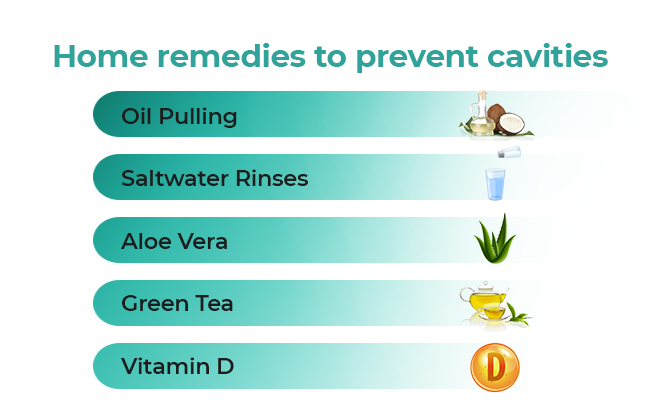
    home remedies to prevent cavities

    Nature’s Pharmacy: Home Remedies to Combat Cavities

    Consider these home remedies to enhance oral health before rushing to the dental clinic:

    • Oil Pulling: Oil pulling is a form of traditional Indian medicine that involves swishing coconut or sesame oil around the mouth to remove bacteria.
    • Saltwater Rinses: Along with adding flavour to our meals, salt’s antibacterial properties can reduce bacteria and calm swollen gums.
    • Aloe Vera: Aloe vera is well-known for its antibacterial properties, which can be a nemesis for bacteria that cause cavities.
    • Green Tea: Green tea’s fluoride and tannin levels may prevent the growth of germs. And it also freshens breath!
    • Vitamin D: Vitamin D is crucial for oral health as well as general wellness. Calcium absorption is aided by vitamin D, which is necessary for healthy teeth.

    Although helpful, these remedies to how to heal cavities can’t take the place of expert dental evaluations and procedures.

    Beyond the Home: Clinical Procedures to Bid Adieu to Cavities

    Advanced cavities require expert care. Let’s discover what to expect at a dental clinic run by professionals:

    • Dental Fillings: In this process, of cavity filling with materials like composite resin or amalgam after the decaying area removal.
    • Fluoride Treatments: Fluoride treatments can revitalise enamel in its early phases, perhaps reversing the cavity.
    • Crowns: A crown can restore a tooth’s shape and function when a cavity weakens its structural integrity.
    • Root Canals: A root canal removes the injured pulp, securing the tooth, when decay enters the pulp’s inner sanctum.
    • Sealants: In order to prevent cavities in these difficult-to-reach locations, sealants are placed on the chewing surfaces of rear teeth.
    • Professional Cleanings: By removing tartar or hardened plaque on a regular basis, damage to teeth can be avoided.

    Lifestyle Tweaks: Crafting a Cavity-Resistant Life

    Many things are essential other than a regular brush-floss routine for healthy teeth. These changes in lifestyle for strong dental health include the following:

    • Mindful Eating: Eat wisely and avoid sugary foods. Consider tooth buddies like cheese, fresh fruit, leafy greens, and unflavored drinks.
    • Hydration: Cavities are less likely to thrive in a wet mouth. Water after meals helps in rinsing away sugars and food particles.
    • Regular Dental Visits: Regular check-ups aid in early detection, preventing the escalation of minor disorders.
    • Sugar-free Gum: Increased salivation helps to wash out and neutralise toxic acids.
    • Replace Toothbrush: Replace your toothbrush after a period because a used toothbrush is ineffective. Replace it every three to four months or after a sickness.
    • Avoid Tobacco: Tobacco, whether chewed or smoked, produces an environment where bacteria flourish, increasing the risk of cavities.

    Concluding with a Smile: Trust Elite Dental for Your Cavity Concerns

    Elite Dental stands out as a light of trust and competency in the field of professional dental clinic in Kochi. They make sure that every cavity, no matter how big or tiny, is treated with accuracy and care by utilising cutting-edge facilities, seasoned professionals, and a caring approach.

    Ultimately, despite their scary nature, cavities are defeatable. You can make sure that your smile stays radiant, healthy, and cavity-free by using a combination of home remedies, professional treatments, and preventative measures. If you need more clarification, keep in mind that Elite Dental is ready to help you through your dental journey and is only a phone call away.

    FAQs

    1. Can I really reverse a cavity at home with natural remedies?

    Ans. While some home remedies, such as oil pulling, salt water rinses, and aloe vera gel, may aid in lowering bacterial activity and easing gum irritation, they are typically more successful in preventing cavities or treating them in their very first stages. To stop the growth of advanced cavities, skilled dental intervention is necessary.

    1. Is it possible to heal a cavity without dental fillings or treatments?

    Ans. Fluoride treatments can remineralize the enamel and reverse some conditions, including very early-stage cavities. A cavity, however, cannot be completely cured without dental fillings or other medical activities if it has grown past a certain stage. For an accurate diagnosis and the best treatment, you must see a dentist.

    1. How often should I visit the dentist for check-ups?

    Ans. For maintaining good oral health and identifying cavities or other dental disorders early, routine dental check-ups are crucial. Regular check-ups and cleanings at the dentist should be done every six months. However, depending on your particular oral health requirements, your dentist might advise more frequent visits.

    1. Are sugar-free gums effective in preventing cavities?

    Ans. Sugar-free gum, particularly xylitol-containing varieties, can be good for your teeth. Sugar-free gum encourages salivation, which helps wash away food particles and neutralise acids. It can be a helpful supplement to routine dental care and a cavity prevention method, but it shouldn’t take the place of brushing, flossing, or going to the dentist on a regular basis.

    1. Can I prevent cavities solely by brushing and flossing regularly?

    Ans. Regular brushing and flossing are essential for preserving dental health and avoiding cavities, but they are only one component of a complete oral care routine. The best way to prevent cavities is to eat a balanced diet, avoid sugary foods and drinks, remain hydrated, and schedule routine dental check-ups and cleanings. Together, these efforts contribute to total cavity prevention and ideal dental health.

  • Caring for my teeth and gums

    Why are my teeth so important?

    Your teeth vary in shape and size depending on where they are in your mouth. These differences allow the teeth to do many different jobs. Teeth help us to chew and digest food. They help us to talk, and to pronounce different sounds clearly. Finally, teeth help to give our face its shape. A healthy smile can be a great asset; and because this is so important, it makes sense to give your teeth the best care possible.

    What can go wrong?

    Tooth decay can be painful and lead to fillings, crowns or inlays. If tooth decay is not treated, the nerve of the tooth can become infected and die, causing an abscess. This may then need  root canal treatment or even for the tooth to be removed. It is very important that you keep up a good routine at home to keep your teeth and gums healthy. Gum disease is common and, if left untreated, may lead to bone loss around the teeth. In some cases, it may lead to loose teeth and teeth being lost. Gum disease is preventable. It can be treated and kept under control with regular cleaning sessions and check-ups, preventing further problems. If teeth are lost, it may be necessary to fill the gaps with bridges, dentures or implants.

    How do I keep my teeth and gums healthy?

    It is easy to get your mouth clean and healthy, and keep it that way. A simple routine can help prevent most dental problems:

    • brushing your teeth last thing at night and at least one other time during the day, with a fluoride toothpaste
    • spit out after brushing and do not rinse, so that the fluoride stays on your teeth longer
    • cleaning between the teeth with ‘interdental’ brushes or floss at least once a day
    • good eating habits – having sugary foods and drinks less often, and
    • regular dental check-ups.

    Although most people brush regularly, many don’t clean between their teeth and some people don’t have regular dental check-ups. A few small changes in your daily routine can make a big difference in the long term. Your dental team can remove any build-up on your teeth and treat any gum disease that has already appeared. But daily dental care is up to you, and the main weapons are the toothbrush, toothpaste and interdental cleaning (cleaning between your teeth).

    What is plaque?

    Plaque is a thin, sticky film of bacteria that constantly forms on your teeth.

    How can plaque cause decay?

    When you eat foods containing sugars and starches, the bacteria in plaque produce acids, which attack tooth enamel. The stickiness of the plaque keeps these acids in contact with your teeth. After constant acid attack, the tooth enamel breaks down forming a hole or cavity.

    How can plaque cause gum disease?

    If plaque is not removed by brushing, it can harden into something called ‘calculus’ – another name for it is ‘tartar’. As calculus forms near the gumline, the plaque underneath releases harmful poisons causing the gums to become irritated and inflamed.

    The gums start to pull away from the teeth and the gaps become infected. If gum disease is not treated promptly, the bone supporting the teeth is destroyed, and healthy teeth can become loose and fall out. Severe gum disease can lead to teeth falling out and needing to be replaced.

    How can I prevent gum disease?

    It is important to remove plaque and bits of food from around your teeth as this will stop your gums from becoming inflamed and swollen, and becoming infected. If you leave plaque on your teeth it can harden into tartar, which can only be removed by the dental team. It is important to keep up your regular appointments so that your teeth can have a thorough cleaning if they need it.

    How do I know if I have gum disease?

    Gum disease is generally painless, even though it damages the bone supporting the teeth. Gum disease (gingivitis) will usually show itself as red, swollen gums that bleed when you brush or clean between your teeth. Many people are worried when they notice their gums are bleeding and then brush more gently, or stop altogether.

    In fact, it is important that you continue to clean regularly and thoroughly if you are to fight the gum disease. If the bleeding does not go away within a few days see your dental team to ask for their advice.

    Which type of toothbrush should I use?

    Your dental team will be able to recommend a toothbrush suitable for you. However, adults should choose a small- to medium-sized brush head. This should have soft to medium, multi-tufted, round-ended nylon bristles or ‘filaments’. The head should be small enough to reach into all parts of the mouth: especially the back of the mouth where it can be difficult to reach. Children need to use smaller brushes but with the same type of filaments.

    You can now buy more specialised toothbrushes. For instance, people with sensitive teeth can now use softer-bristled brushes. There are also smaller-headed toothbrushes for people with crooked or irregular teeth. Some people find it difficult to hold a toothbrush, for example because they have Parkinson’s disease or a physical disability. There are now toothbrushes which have large handles and angled heads to make them easier to use.

    Why is brushing important?

    Daily brushing and cleaning between your teeth is important because it removes plaque. If the plaque isn’t removed, it continues to build up, feeding on the bits of food left behind and causing tooth decay and gum disease.

    How do electric or ‘power’ toothbrushes work?

    A power brush has an oscillating rotating or vibrating head, which provides a large amount of cleaning action with very little movement needed from the user, although you do need to position the brush correctly.

    Do electric toothbrushes clean better?

    Tests have shown that power toothbrushes are more effective at removing plaque. Those with heads that rotate in both directions (‘oscillating’ heads) are the most effective. Everyone can use a power brush. They are particularly useful for people with limited movement of the arm or hand, such as disabled or elderly people, who often find that using a normal toothbrush does not allow them to clean thoroughly.

    Power brushes can also be better for children as they may be more likely to brush regularly because of the novelty of using a power brush. Discuss the idea with your dental team to find out if you would benefit from using a power brush.

    How should I brush?

    Brushing removes plaque and bits of food from the inner, outer and biting surfaces of your teeth.

    Here is one way to remove plaque – discuss with your dental team which is the best for you:

    • Place the head of your toothbrush against your teeth, then tilt the bristle tips to a 45-degree angle against your gumline. Move the brush in small circular movements, several times, on all the surfaces of every tooth.
    • Brush the outer surface of each tooth, upper and lower, keeping the bristles angled against your gumline.
    • Do this again, but on the inside surfaces of all your teeth.
    • To clean the inside surfaces of your front teeth, tilt the brush vertically and make several small, circular strokes with the front part of the brush.
    • Brush the biting surfaces of your teeth.
    • Brush your tongue to help freshen your breath and clean your mouth by removing bacteria.
      How often should I brush my teeth?

    Be sure to brush thoroughly with a fluoride toothpaste last thing at night and at least one other time during the day. If you regularly keep getting discomfort or bleeding after brushing you should see your dentist.

    How do I know if I have removed all the plaque?

    You can stain the plaque with special dye, which you can paint onto your teeth with a cotton bud, or you can use special disclosing tablets. You can get these from your dental practice or pharmacy.

    The stain is harmless and will show any areas of your mouth which need better brushing. Look particularly at where your teeth and gums meet. Further brushing will remove the stained plaque.

    How often should I change my toothbrush?

    Worn-out toothbrushes cannot clean your teeth properly and may damage your gums. It is important to change your toothbrush every two to three months, or sooner if the filaments become worn. When bristles become splayed, they do not clean properly.

    Should I use fluoride toothpaste?

    Yes. Fluoride helps to strengthen and protect teeth, which can reduce tooth decay in adults and children.

    All children up to three years old should use a smear of toothpaste with a fluoride level of no less than 1000ppm (parts per million). After three years old they should use a pea-sized amount of toothpaste that contains 1350ppm to 1500ppm.

    Some children’s toothpastes only have about half the fluoride that adult toothpastes have. They only give limited protection for the teeth. If your children are under 7 you should keep an eye on them when they brush their teeth and encourage them not to swallow the toothpaste.

    What sort of toothpaste should I use?

    As well as regular family toothpastes, there are many specialised toothpastes. These include tartar control for people who get tartar build-up, and a choice of toothpastes for people with sensitive teeth. ‘Total care’ toothpastes include ingredients to help fight gum disease, freshen breath and reduce plaque build-up. ‘Whitening’ toothpastes are good at removing staining to help restore the natural colour of your teeth, but are not strong enough to change the natural shade of the teeth.

    Some children’s toothpastes only have about half the fluoride that adult toothpastes have. They only give limited protection for the teeth. If your children are under 7 you should supervise them when they brush their teeth. Encourage them not to swallow the toothpaste and to just spit, not rinse, after brushing.

    To have a clean and healthy mouth you need to use the correct dental-care products. Ask your dental team to tell you what choices there are and to give their recommendations.

    How much toothpaste should I use?

    You do not need to cover the head of your brush in toothpaste. Children under three should use a smear, and children over three, a pea-sized blob of toothpaste. Remember to spit out after brushing and do not rinse, so that the fluoride stays on your teeth longer.

    Should my gums bleed when I clean in between my teeth?

    Your gums may bleed or be sore for the first few days that you clean between your teeth. This should stop once the plaque is broken up and the health of your mouth has improved. If the bleeding does not stop, tell your dental team. It may be that you are not cleaning correctly, or that your teeth and gums need a more thorough clean by your dental team.

    How should I clean between my teeth?

    You can clean between your teeth with an ‘interdental’ brush or dental floss. Cleaning in between your teeth removes plaque and bits of food from between your teeth and under your gumline – areas a toothbrush can’t reach. When flossing or using interdental brushes, keep to a regular pattern and remember not to miss any teeth. It helps to look in the mirror.

    Don’t forget the backs of your last teeth. It is also very important to clean around the edges of any crowns, bridges or implants. You should clean between your teeth at least once a day. Your dental team can show you how to clean between your teeth properly.

    Interdental

    Interdental brushes come in various sizes. It may be helpful to ask your dentist or hygienist to show you the correct sizes for your mouth.

    Hold the interdental brush between your thumb and forefinger. Gently place the brush through the gap between your teeth. Do not force the brush head through the gap. If the brush splays or bends then it is too big – you will need a smaller brush head for this space.

    Flossing

    • Break off about 45 centimeters (18 inches) of floss, and wind some around one finger of each hand.
    • Hold the floss tightly between your thumbs and forefingers, with about an inch of floss between them, leaving no slack.
    • Use a gentle ‘rocking’ motion to guide the floss between your teeth. Do not jerk the floss or snap the floss into the gums.
    • When the floss reaches your gumline, curve it into a C-shape against one tooth until you feel resistance.
    • Hold the floss against the tooth. Gently scrape the side of the tooth, moving the floss away from the gum. Repeat on the other side of the gap, along the side of the next tooth.
    • Don’t forget the back of your last tooth.
    • When flossing, keep to a regular pattern. Start at the top and work from left to right, then move to the bottom and again work from the left to right. This way you’re less likely to miss any teeth.

    Are ‘oral irrigators’ useful? 

    Oral irrigators use a stream or jet of water to remove plaque and bits of food from around your teeth. They can be particularly helpful if you wear an orthodontic appliance (‘brace’) or a fixed bridge that is difficult to clean, or if you find it difficult to use interdental brushes or floss.

    Should I use a mouthwash?

    A fluoride mouthwash can help prevent tooth decay. Your dental team may recommend an antibacterial mouthwash to help control plaque and reduce gum disease. If you find that you are regularly using a mouthwash just to freshen your breath see your dental team, because bad breath can be a sign of unhealthy teeth and gums or of poor general health.

    Can my diet help?

    Many people think that it is a high level of sugar in your diet that causes decay, but this is not true. It is how often you have sugar in your diet, not the amount, that causes problems. It takes up to an hour for your mouth to cancel out the acid caused by eating and drinking sugar. During this time your teeth are under attack from this acid. It is therefore important to limit the number of attacks by having sugary foods and drinks just at mealtimes. Chewing sugar-free gum and drinking water after meals or snacks can also help to cancel out the acid more quickly.

    As well as causing decay, sugary fizzy drinks, fruit juices, sports drinks, and wine can be acidic – which can also cause dental erosion. This is when the acid in foods and drinks gradually wears away the hard enamel coating of the tooth. This may lead to the tooth being sensitive.

    How should I clean my dentures?

    It is just as important to clean dentures as it is to clean your natural teeth. Food can become caught around the edges of dentures and clasps, and the food can rot if you do not clean them thoroughly.

    You should keep a separate toothbrush for cleaning your dentures. The general rule is: brush, soak and brush again. Clean your dentures over a bowl of water in case you drop them. Brush your dentures before soaking them, to help remove any bits of food. Soak the dentures in a specialist cleaner for a short time and then brush the dentures again. Brush them like you would your natural teeth.

    Make sure you clean all the surfaces of the dentures, including the surface which fits against your gums. If you notice a build-up of stains or scale, have your dentures cleaned by your dental team. Most dentists still recommend a small- to medium-headed toothbrush.

    I have implants, do I have to do anything special?

    Your dental team or oral surgeon will tell you how to care for your implants after surgery. It is very important to make sure you clean them regularly and thoroughly to prevent gum disease and possible infection. Follow the instructions your dental team or oral surgeon gives you.

    Why should I visit the dental team regularly?

    It is always better to prevent problems rather than have to cure them when they happen. If you visit your dental team regularly you will need less treatment and they will spot any problems earlier, making any treatment easier.

    Final words

    Good dental health begins with you. By following these simple tips you can keep your mouth clean and healthy:

    • Brush your teeth for two minutes, last thing at night and at least one other time during the day, using fluoride toothpaste.
    • Spit toothpaste out after brushing and do not rinse.
    • Use a toothbrush with a small- to medium-sized head.
    • Use a toothbrush with soft to medium, multi-tufted, round-ended nylon bristles.
    • Consider using a power toothbrush.
    • Use small, circular movements to clean your teeth.
    • Change your toothbrush regularly, and at least every 3 months.
    • Clean between your teeth every day using interdental brushes or dental floss.
    • Have sugary drinks and foods less often.
    • Visit your dental team regularly, as often as they recommend.
  • Dental Care is Key to Good Health

    When people take into consideration the state of their health, rarely are their teeth the first item that comes to mind. But according to the medical professionals at the Mayo Foundation for Medical Education and Research, the state of your dental care can indeed have a direct effect on your overall health and well-being. Fact is, the many issues and problems that occur in the mouth can pose negative consequences for the rest of your body.

    What it all comes down to is bacteria. Your mouth is teaming with all sorts of bacteria, most of which is benign and won’t cause any physical problems. However, since the mouth (and your teeth in particular) is the gateway to your respiratory and digestive tracts, harmful bacteria can end up causing serious disease. Luckily, nature has designed the human body to fight off most of these diseases. That, plus practicing good dental care, including keeping regular twice per year dental cleaning appointments at a certified oral health specialist. Only when you commit to regular dental checkups can you keep the nasty bacteria at bay and live a healthy, disease free existence.

    But without proper daily dental care, like brushing two to three times per day and flossing at least once per day, you place your body at serious risk, since harmful bacteria will almost certainly lead to oral infections, tooth decay, and even gum disease.

    What other oral and dental care related issues can affect your overall health?

    Says, the Mayo Foundation, certain everyday medications such as painkillers, diuretics, antidepressants, and even decongestants can reduce the natural flow of saliva in the mouth. Nature designed saliva to wash away food particles and also to neutralize the acids that create the harmful bacteria and microbes that inflict great harm on not only the digestive tract, but even your heart.

    Taken a step further, severe gum disease such as periodontitis can potentially play a significant role in life threatening diseases such as diabetes, and even HIV/AIDS. That alone should make you think twice about skipping out on brushing your teeth and/or missing your dental cleaning appointment. You should always bear in mind, proper dental care not only aids in good health, it can be the key to good health.

    But what other medical conditions can be directly associated to dental care?   

    The list might surprise or even frighten you.

    *Heart disease: In this case, endocarditis, which occurs when harmful bacterial in the mouth spreads to the inner linings of your heart chambers and valves, via the bloodstream. This condition can cause severe damage to the heart and even death. Cardiovascular degeneration can also occur when bad bacterial finds its way into the blood stream. By not practicing good dental care, your arteries can become clogged, leading to heart attack and stroke.

    *Complications with pregnancy: Researchers are said to have established a direct connection between periodontitis and premature birth, and also dangerously low birth weight in newborns.

    *Respiratory Infections: By ignoring good dental and oral health practices and getting regular dentist checkups, harmful bacteria can enter into the lungs which can lead not only to life threatening pneumonia but other respiratory disease.

    Are there other serious medical conditions related to dental care?

    *Diabetes: People who suffer from gum disease are said to have a much harder time controlling their blood sugar levels. That’s why regular dental checkups and good oral care can help control diabetes.

    *Osteoporosis: Several medications used to treat bone-weakening diseases such as osteoporosis are said to cause damage to the bones associated with both the upper and lower jaws, resulting in tooth decay and took loss.

    *Alzheimer’s Disease: Those persons afflicted with Alzheimer’s often simply forget to brush their teeth and floss regularly. Since the disease is degenerative in nature, as it progresses, oral health only worsens over time.

    How should you protect your overall health and well-being?

    Best dental practices include but are not limited to, brushing at least twice per day with fluoride toothpaste. Floss regularly, optimally after each meal. Follow up by gargling and rinsing your mouth with mouthwash. A healthy, low sugar diet that also excludes processed foods is highly recommended. Limit and/or refrain from alcohol and tobacco use. More importantly, scheduling regular checkups and dental cleanings is imperative.

    Proper dental care can be key in maintaining good health. But even those of you who engage good dental practices will be subject to oral health issues on occasion. That’s why it’s important not to ignore them. The moment a dental problem arises, you should immediately contact your dentist. Your overall health could very well depend upon it.

  • How to Care for Your Child’s Teeth

    Healthy teeth are important to your child’s overall health. They help your child eat and talk. Strong oral care helps set good dental habits as your child grows. Poor oral care can lead to infection, disease, or other teeth problems.

    Help make dental hygiene fun with these tips:

    • Let children help choose their own toothbrush. They can pick one that has a favorite color or character.
    • Let children help choose toothpaste. They can pick their favorite flavor.
    • Read books or watch videos that talk about dental hygiene.
    • Use a timer to make sure kids brush their teeth for 2 minutes. Or play their favorite song to help keep track of time.
    • Reward children for good oral care. Do not give them food or sugary treats. Offer something healthy or simple instead, like apple slices or a gold star.
    • Plan a fun activity following your child’s dentist visit.

    Path to improved health

    The role of fluoride

    Fluoride is important to your child’s dental health. It is known to reduce cavities in baby (primary) teeth and adult (permanent) teeth. It also helps make teeth strong by hardening the tooth enamel. Most children get fluoride in drinking water. Many cities are required to add fluoride to tap water. Water filters, such as Brita, do not remove fluoride and are okay to use. You should not use “reverse osmosis” water filters.

    If your water does not contain fluoride, your child may need to take an oral fluoride supplement. Talk to your doctor to see if your child needs this. Once your child starts going to the dentist, they will get a fluoride varnish or cleaning on their teeth.

    Too much fluoride can cause tooth stains and be harmful to your child’s health. Be sure your child does not swallow fluoride toothpaste or mouthwash. Follow all instructions for fluoride supplements.

    Brushing and flossing

    Dental hygiene should begin when your child is a baby. Start using a soft child-size toothbrush around the age of 1 or 2. You should brush your child’s teeth with water at least twice a day. You also can add a small dab of toothpaste that doesn’t have fluoride in it. This type of toothpaste is safe for your child to swallow. Once your child is old enough to spit out the toothpaste, you can switch to one that has fluoride. Only use a small amount. Teach your child to spread it among their teeth, gums, and tongue. Have your doctor or dentist show you the right way to brush your child’s teeth.

    Your child likely will need help brushing their teeth until they are 7 or 8 years old. Around this time, they can start using a larger sized toothbrush. You should switch out toothbrushes every 3 to 6 months or when the bristles look worn. Children should brush their teeth for 2 minutes. Flossing is another key part of your child’s oral care routine. Teach your child to floss at least once a day. You can buy floss that comes on a handle to make it easier.

    You should also teach your child to brush his or her tongue. This helps reduce the amount of bacteria in the mouth.

    Be sure that your child knows to brush his or her teeth before bed, after all eating and drinking (except water) is done.

    Cavities

    Cavities are holes that form in your teeth. These can occur when bacteria (germs) build up in your mouth. Sugar in food and drinks turn into acid, which can eat away at your teeth. Cavities are common in children because their teeth can be harder to brush. Everyone in your family should take good care of their teeth. People who have cavities can pass the cavity-causing bacteria to unborn babies, infants, and children.

    Your child may be at risk for cavities if they:

    • Have white spots or brown areas on their teeth.
    • Have ongoing special health care needs.
    • Do not go to the dentist often.
    • Were born early (premature) or had a low birth weight.

    Diet

    Kids who eat a lot of sugary foods and drinks also are at high risk for cavities. It is important to make healthy food choices. Avoid too much sugar. Do not let your child have a lot of soda, fruit juice, or sweetened drinks. Limit sweet snacks and drinks between meals. If your child does have sugar, make sure they brush their teeth afterward.

    Chewing gum is safe for older kids. It can provide benefits, such as:

    • Strengthening the jaw.
    • Helping produce saliva.
    • Washing away bits of food.
    • Balancing acid that can cause tooth decay.
    • Freshening breath.

    However, gum that contains sugar can cause cavities. Limit the amount of sugar gum your child chews or only give them sugar-free gum.

    Mouth safety

    Safety is another big part of dental hygiene. If your child plays sports, they should wear a mouth guard. This is a soft, plastic retainer that covers the teeth and sometimes the lips. It helps protect your child’s mouth from injuries. Talk to your dentist if you need a custom-fit mouth guard.

    From baby teeth to adult teeth

    In general, baby teeth start to appear between 4 and 7 months old. The first teeth to come in are usually the 2 bottom front teeth. Most kids have all 20 baby teeth by about 3 years of age.

    Children can lose their baby teeth as early as 6 years old and as late as 12 years old. During this process, your child has a mix of teeth as baby ones fall out and adult ones break through. Around this time, your dentist may talk to you and your child about possible teeth problems. Some kids need orthodontia treatment, such as braces. A full set of adult teeth is 32 teeth. This includes wisdom teeth, which most people do not get until their late teens or early adulthood.

    Things to consider

    It’s normal for babies to suck their thumbs, their fingers, or a pacifier. Most children give up this habit on their own by age 4. Prolonged use can cause problems with teeth alignment. Talk to your dentist if your child still has a sucking habit after age 4. They can watch for problems as your child’s teeth develop. In most children, there is no reason to worry about a sucking habit until around age 6, when the permanent front teeth come in.

    When to see a dentist

    The American Academy of Pediatric Dentistry (AAPD) recommends that children see a dentist around their first birthday. This gives the dentist a chance to look for early problems with your child’s teeth. Pediatric dentists specialize in treating children’s dental health. The dentist will talk to you about proper oral care.

    Visiting the dentist from a young age will help your child be more comfortable. It also establishes the good habit of regular dental checkups. Everyone should see the dentist twice a year.

    Contact your dentist right away if:

    • Your child has tooth pain or a tooth or mouth infection.
    • Your child loses a permanent tooth. If you find the tooth, put it in milk and take it to the dentist with you. They may be able to reattach it.

    Questions to ask your doctor

    • Does my child need to take oral fluoride supplements?
    • What is the best type of toothbrush for my child?
    • Can my child use mouthwash?
    • Is my child at high risk for cavities?
    • How often should my child visit the dentist?
    • Are dental X-rays safe for my child?
    • Is it okay for my child to chew gum?