Tag: dental hospital in kochi

  • Is Chewing Gum Good for Teeth?

    Chewing gum is a habit most people share, after meals, during work, or simply to feel fresh. But many still wonder, is chewing gum actually good for teeth, or does it harm them over time?

    Yes, chewing sugar-free gum can be good for your teeth. It boosts saliva flow, neutralizes acids, and helps protect enamel, but only when used in moderation and alongside regular brushing and flossing.

    At Elite Dental Studio, the best dental clinic in Calicut and a trusted dental hospital in Kochi, our dentists often hear this question, whether or not chewing gum good for teeth. The truth lies in what kind of gum you chew, how often you chew it, and how it fits into your overall oral hygiene routine. Let’s break it down.

    Elite dental studio chewing gum

    What Happens Inside Your Mouth When You Chew Gum?

    When you chew, your salivary glands become more active. This extra saliva performs several protective functions for your mouth:

    • Neutralizes acids: It reduces the acid levels created by bacteria after eating, preventing enamel erosion.
    • Cleans tooth surfaces: Increased saliva flow helps wash away food debris and bacteria from hard-to-reach areas.
    • Strengthens enamel: Saliva contains calcium and phosphate, which assist in tooth remineralization, the natural repair of early enamel damage.
    • Freshens breath: It keeps your mouth moist, reducing dryness that often leads to bad breath.

    So, chewing gum can be beneficial when done correctly, especially when you choose sugar-free options.

    What to Look for in a Good Chewing Gum?

    Choosing the right gum is crucial. Keep these quick checks in mind:

    • Look for ADA-approved or dentist-recommended sugar-free gums.
    • Prefer xylitol or natural sweeteners instead of sugar or aspartame.
    • Avoid flavored gums that have added sugar or sticky coatings.
    • Chew moderately, about 10–15 minutes after meals, to get the benefits without overworking your jaw.

    When Chewing Gum Can Harm Your Teeth?

    While sugar-free gum is generally safe, excessive chewing can cause strain. Over-chewing may lead to:

    • Jaw pain or TMJ disorder: Constant chewing can fatigue the jaw muscles and affect the temporomandibular joint (TMJ), leading to soreness or clicking sounds.
    • Muscle fatigue and headaches: Prolonged chewing puts stress on facial muscles, which can cause tension headaches.
    • Digestive discomfort: Gums with polyols like sorbitol or mannitol can lead to bloating or mild diarrhea if consumed in excess.

    If you experience jaw soreness, gum discomfort, or headaches, take a break from chewing and consult a dentist.

    Book Your Dental Appointment at Elite Dental Studio for More Oral Insights!

    If you’re unsure about which chewing habits are right for you, our dentists can guide you with personalized recommendations based on your oral health and lifestyle.

    Whether you’re in Calicut or Kochi, Elite Dental Studio offers expert dental consultations, preventive care, and modern treatments designed for healthy, confident smiles.

    Book your appointment today and get expert-led guidance on smarter oral care habits.

    FAQs

    Q1. Is chewing gum really good for your teeth?

    Yes. Sugar-free chewing gum helps reduce acid, increase saliva flow, and prevent cavities when used in moderation.

    Q2. How long should I chew gum for best results?

    Dentists recommend chewing for about 10–15 minutes after meals to aid acid neutralization and enamel protection.

    Q3. Can chewing gum replace brushing or flossing?

    No. It’s a helpful add-on but not a substitute. Always brush twice daily and floss once a day.

    Q4. What type of gum do dentists recommend?

    Choose xylitol-based sugar-free gum that’s ADA-approved or dentist-recommended. These are safe for daily use.

    Q5. Can children chew gum safely?

    Yes, children above 7–8 years can chew sugar-free gum, but always under parental supervision to prevent choking and overuse.


  • OPG Dental X-Ray: Understanding the Benefits and Process

    Patients are often referred for an OPG scan without a detailed explanation of its purpose. An OPG dental x-ray, also called an orthopantomogram or panoramic x-ray, is a comprehensive radiography procedure that captures the teeth, jaws, roots, and surrounding oral structures in a single image. It is routinely recommended for the evaluation, screening, and treatment planning of orthodontic, implant, and surgical cases.

    At Elite Dental Studio, Calicut, advanced digital radiology equipment and experienced specialists ensure accurate, safe, and comfortable OPG dental x-ray. Read this blog till the end to know all about the benefits, process, and safety measures involved in an OPG examination.

    What Is an OPG Dental X-Ray?
    OPG dental x-ray infographic

    An OPG (Orthopantomogram) is a panoramic imaging procedure that records a two-dimensional view of the oral and maxillofacial region. During the scan, the x-ray machine rotates gently around the patient’s head while a digital sensor or detector captures continuous images, later combined into a single panoramic view.

    The resulting image displays the teeth, gums, jawbone, sinus, roots, nerves, and temporomandibular joints. This wide coverage allows dentists to assess tooth alignment, arch structure, bite, and overall oral health. OPG imaging is widely used in orthodontics, implantology, periodontics, endodontics, and maxillofacial surgery for precise diagnosis and treatment planning.

    Benefits of OPG

    An OPG scan offers both diagnostic and patient-centric advantages, making it an essential part of comprehensive dental care.

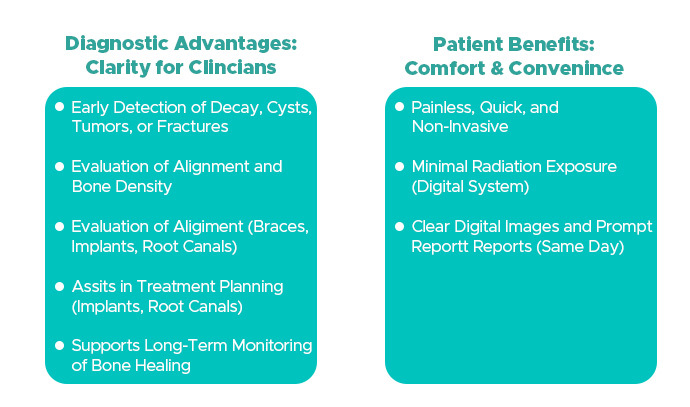
    Diagnostic Advantages

    An OPG provides complete visibility across both jaws, enabling early detection of decay, infection, cysts, tumours, fractures, or lesions. It assists clinicians in evaluating alignment, bone density, and pathological changes with clarity and accuracy.

    Treatment Planning and Monitoring

    Dentists use OPG images to design treatment plans for braces, implants, root canal therapy, and extractions. The scan supports long-term monitoring of bone healing, jaw stability, and changes after orthodontic or surgical care.

    Patient Benefits

    The scan is painless, quick, and non-invasive. It requires minimal radiation exposure, produces clear digital images, and delivers reports promptly. These features make it convenient for routine screening and advanced diagnostic evaluation.

    The OPG Process, Step by Step
    the OPG process, step by step

    Understanding how the scan works helps patients know what to expect during the appointment.

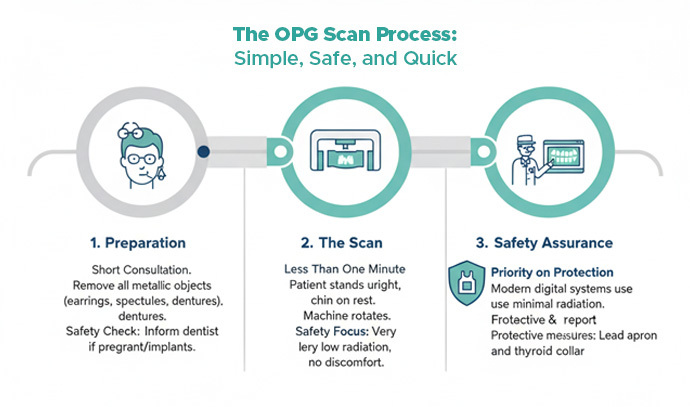
    1. Pre-Examination Preparation

    Before the procedure, the dental team conducts a short consultation and assessment. Patients are asked to remove any metal objects, such as earrings, spectacles, or removable dentures, to avoid image distortion. This simple preparation step ensures accurate capture and high image clarity.

    2. During the Scan

    The patient stands upright with the chin placed on a rest and gently bites on a sterile block. The machine completes a controlled rotation around the head while the sensor records the exposure. The process takes less than one minute and causes no discomfort.

    3. Post-Examination Review

    After the scan, the digital image is displayed immediately on the system. A radiologist or dentist performs an analysis, prepares the report, and explains the findings during the consultation. The image serves as a valuable reference for further diagnostic evaluation or treatment planning.

    OPG Dental X-Ray: Safety and Radiation 

    Patient safety is a priority during all radiographic procedures at Elite Dental Studio, and OPG imaging follows strict protection protocols.

    Controlled Exposure

    Modern digital radiography systems use very low radiation doses, significantly less than traditional film-based methods. Advanced technology ensures sharp image resolution while maintaining patient protection.

    Protective Measures

    Standard safety equipment such as a lead apron and thyroid collar is provided when necessary. Proper positioning and machine calibration reduce the need for repeat scans, maintaining minimal overall exposure.

    Important Precautions

    Patients who are pregnant, have undergone recent imaging, or have medical implants should inform the dentist in advance. These details allow the clinician to adjust the procedure or postpone it when required.

    OPG Compared with Other Dental Imaging Methods

    Different imaging methods serve specific purposes. The OPG stands out for its ability to capture an overall view of the oral cavity efficiently.

    OPG vs Intraoral Radiography

    Intraoral x-rays focus on small areas, capturing one or two teeth for detailed examination. They help detect fine cracks or caries. An OPG, in contrast, provides a complete panoramic overview of both jaws, offering insight into structural relationships and tooth alignment.

    OPG vs CBCT

    A CBCT (Cone Beam Computed Tomography) scan delivers a three-dimensional view useful for implant placement, orthodontic assessment, or maxillofacial surgery. An OPG is often used first for general screening, while CBCT is chosen for cases needing 3D analysis and volumetric detail.

    Integrated Diagnostic Approach

    Clinicians may combine OPG, CBCT, and intraoral imaging to achieve complete evaluation and accurate treatment planning. This balanced approach offers both detail and context while limiting radiation exposure.

    OPG Dental X-Ray: Results and Interpretation

    After the scan, the radiologist examines the image to identify tooth structure, root formation, bone levels, nerve pathways, and potential pathology such as infection, fracture, or anomaly. A concise report is then shared with the treating dentist.

    This information supports accurate decisions for orthodontic adjustments, implant placement, root canal therapy, or tooth extraction. Precise interpretation ensures effective planning and improved clinical outcomes.

    OPG Dental X-Ray: Patient Guidelines for an Effective Examination

    Following a few practical measures helps achieve optimal image quality and a smooth experience.

    • Arrive a few minutes before the appointment to complete registration.
    • Remove metallic items and accessories to avoid image artefacts.
    • Follow positioning instructions carefully and remain still during the rotation.
    • Maintain normal breathing to prevent motion blur.
    • Request a copy of the digital image or report for your records.

    These steps ensure clear imaging, efficiency, and consistent diagnostic accuracy.

    Book Your OPG Dental X-Ray with Elite Dental Studio, Calicut Now

    Elite Dental Studio provides advanced digital panoramic imaging with a focus on accuracy, safety, and patient comfort. Each OPG scan is supervised by qualified radiology specialists and reviewed by senior dentists for reliable results.

    Appointments are easily available, with same-day reports and prompt consultations. To schedule your OPG Dental X-Ray, contact your nearest Elite Dental Studio, Calicut

    Whether you’re searching for a dental clinic in Calicut or a dental hospital in Kochi, Elite Dental Studio in Calicut offers a range of dental treatments under one roof. Book a Consultation with our experts now.

    Frequently Asked Questions (FAQ)

    Is an OPG dental x-ray painful?

    No. The OPG dental x-ray is a non-invasive and painless radiography procedure. The panoramic scan completes in less than a minute with no discomfort.

    How long does the OPG process take?

    The full OPG dental x-ray process takes about five minutes, including positioning and capture. The actual imaging lasts under sixty seconds.

    Is radiation exposure high in an OPG scan?

    No. Modern digital radiography equipment uses minimal radiation exposure. Standard protection protocols, such as a lead apron, ensure complete safety.

    Is an OPG required before braces or dental implants?

    Yes. An OPG scan helps evaluate jaw structure, bone density, root alignment, and tooth positioning, which are essential for braces or implant planning.

    Can I receive my OPG report on the same day?

    Yes. The digital OPG image appears instantly, and the radiologist provides the diagnostic report and interpretation within a few hours of the scan.

    What conditions can an OPG detect?

    An OPG dental x-ray identifies decay, infection, cysts, tumours, fractures, and anomalies in the teeth, jawbone, and oral structures accurately.

    Can children undergo an OPG scan safely?

    Yes. When clinically required, pediatric OPG imaging is performed using adjusted exposure settings and radiation protection to ensure complete safety.


  • Dental crown cost in kerala

    The search for an ideal dental solution often leads patients to one common query—what is the dental crown cost in Kerala? Whether it’s about restoring a damaged tooth, enhancing aesthetics, or simply regaining confidence in your smile, understanding the tooth crown cost in Kerala is crucial for planning treatment effectively.

    This in-depth guide dives deep into crown types, pricing, materials, and what to expect when visiting a dental hospital in Kochi, dental clinic in Kannur, or even the best dental clinic in Calicut.

    Understanding Dental Crowns: Function and Necessity

    Dental crowns act as a protective cap for damaged, weak, or aesthetically compromised teeth. Think of them as helmets that safeguard the tooth structure, strengthen it, and restore function and appearance.

    Common Reasons for Dental Crowns:

    • Post-root canal protection
    • Covering discolored or misshaped teeth
    • Restoring cracked or broken teeth
    • Supporting dental bridges or implants
    • Cosmetic enhancement

    Tooth crown cost in kerala

    Types of Dental Crowns Available in Kerala: 

    Before we talk numbers, it’s important to understand the material options. The cost of dental crown in Kerala varies based on the crown type, material used, and the expertise of the dentist.

    1. Metal Crowns

    • Made from alloys like gold, nickel, or chromium.
    • Highly durable and less prone to wear.
    • Ideal for molars.
    • Cost Range: ₹4,000 – ₹8,000

    2. Porcelain-Fused-to-Metal (PFM) Crowns

    • Offers a natural look with inner strength.
    • A balanced choice between aesthetics and durability.
    • Cost Range: ₹6,000 – ₹12,000

    3. All-Ceramic or All-Porcelain Crowns

    • Highly aesthetic and best suited for front teeth.
    • Biocompatible and metal-free.
    • Cost Range: ₹10,000 – ₹18,000

    4. Zirconia Crowns

    • Extremely strong and long-lasting.
    • Best for both front and back teeth.
    • Premium aesthetics with high fracture resistance.
    • Cost Range: ₹12,000 – ₹25,000

    Pro Tip: Discuss with your dentist about long-term durability versus upfront cost. Not all materials suit every case.

    Factors Affecting Tooth Crown Cost in Kerala: 

    While the average tooth crown cost in Kerala gives a ballpark, various other factors can influence the final quote:

    1. Location of the Clinic

    • Urban centers like Kochi and Calicut may charge more due to higher overheads.

    2. Dentist’s Experience

    • Senior prosthodontists or cosmetic dentists might quote higher but offer precision-driven outcomes.

    3. Technology and Equipment

    • CAD/CAM-based crowns or 3D imaging could increase treatment accuracy and, consequently, cost.

    4. Type of Crown

    • As outlined above, material choice significantly impacts cost.

    5. Additional Treatments

    • Root canal therapy, core buildup, or gum treatment may be required before crown placement.

    What’s Included in the Dental Crown Cost?

    When comparing prices from different clinics, make sure you understand what’s included:

    • Initial consultation
    • Digital X-rays or scans
    • Tooth preparation
    • Crown fabrication and placement
    • Follow-up visit(s)

    Transparent dental clinics like Elite Dental Studio ensure that patients are fully informed about every stage and cost breakdown, creating a stress-free treatment experience.

    Cost Comparison: Kerala vs Other States

    Kerala has emerged as a popular destination for affordable yet high-quality dental care. Here’s why:


    Location  Average PFM Crown Cost  Average Zirconia Crown Cost 
    Kerala  ₹6,000 – ₹12,000 ₹12,000 – ₹25,000
    Bangalore  ₹8,000 – ₹15,000 ₹15,000 – ₹30,000
    Mumbai  ₹10,000 – ₹18,000 ₹18,000 – ₹35,000
    Delhi  ₹9,000 – ₹17,000 ₹16,000 – ₹32,000

    Kerala offers high-quality dental solutions with lower overheads—without compromising on care standards.  

    Challenges Patients Face While Choosing Dental Crowns: 

    Choosing the right crown and clinic can be overwhelming. Here are some common pain points:

    • Lack of transparency in pricing
    • Unclear communication about material choices
    • Variable lab quality affecting crown longevity
    • Limited post-treatment care guidance

    Best Practices to Overcome These:

    • Ask for a written treatment plan
    • Inquire about the brand and warranty of the crown
    • Check before-and-after cases
    • Confirm follow-up visit policies

    Choosing the Right Dental Clinic in Kerala: 

    Whether you’re in Calicut, Kochi, or Kannur, the key to a successful outcome is choosing the right dentist. Look for:  

    • Modern sterilization standards
    • Latest technology like intraoral scanners
    • Transparent billing
    • Verified patient reviews
    • In-house lab support

    Clinics like Elite Dental Studio have set a benchmark by combining world-class technology with ethical, patient-first care models.

    Recovery and Maintenance: What to Expect Post-Treatment

    Once your crown is placed, some mild discomfort may be experienced, but it subsides in a few days. For lasting results:

    Post-Crown Maintenance Tips:

    • Avoid sticky or hard foods for the first few days
    • Practice good oral hygiene
    • Use a soft-bristle toothbrush
    • Visit your dentist every 6 months for a check-up

    Proper care ensures your dental crown lasts between 10 to 15 years, sometimes even more.

    Investing in Long-Term Dental Health! 

    Understanding the cost of dental crown in Kerala empowers you to make smart, informed decisions about your oral health. While the upfront cost might vary, the long-term benefits in terms of function, aesthetics, and confidence are undeniable.

    Choosing the best dental clinic in Calicut, a trusted dental hospital in Kochi, or an experienced dental clinic in Kannur can make all the difference—not just in quality of service but in peace of mind. Explore crown options with a seasoned professional and invest wisely in your smile.

    Need expert advice tailored to your dental needs? Connect with a trusted dentist today. Search “best dentist near me” and take the first step towards a healthier, confident smile.   


    Frequently Asked Questions: 


    1. How much does a dental crown cost in Kerala?

    Ans. The cost of a dental crown in Kerala typically ranges between ₹4,000 and ₹25,000. The variation depends on several factors such as the type of material used (metal, porcelain-fused-to-metal, zirconia, or all-ceramic), the complexity of the case, and the location and reputation of the dental clinic. For example, prices may vary between a dental hospital in Kochi and a dental clinic in Kannur. It’s advisable to consult a dentist to understand the best option for your needs and budget.

    1. What is the best type of dental crown for front teeth?

    Ans. When it comes to restoring front teeth, aesthetics are a top priority. Hence, all-ceramic crowns or zirconia crowns are often considered the best options. They are tooth-colored, durable, and provide a natural appearance that blends seamlessly with the surrounding teeth. These materials are also biocompatible, reducing the chances of allergic reactions. A consultation with the best dentist near me can help determine which crown suits your smile best.

    1. How long do dental crowns last with proper care?

    Ans. Dental crowns are built to be durable. On average, they can last anywhere from 10 to 15 years, and sometimes even longer with proper oral hygiene and regular dental check-ups. The lifespan of a crown depends on factors such as the material used, your biting and chewing habits, and whether you grind your teeth (bruxism). High-quality crowns placed by reputed clinics like Elite Dental Studio are known to provide long-term reliability and functionality.

    1. Is the dental crown procedure painful or uncomfortable?

    Ans. The procedure for placing a dental crown is generally painless. Local anesthesia is used to numb the area, making the treatment comfortable. Patients might experience mild sensitivity or soreness after the procedure, but it usually subsides within a few days. Any discomfort can be managed with over-the-counter pain relievers and guidance from your dentist. Most patients can return to normal activities the same day.

    1. Are dental crowns covered under insurance in Kerala?

    Ans. Coverage for dental crowns in Kerala can vary significantly depending on your insurance provider and plan. While some policies might cover crowns when deemed medically necessary (e.g., after a root canal), cosmetic crowns may not be covered. It is recommended to check your policy documents or speak directly with your insurance company. Clinics like Elite Dental Studio often assist patients in understanding their insurance benefits better.


    Dental crown cost in kerala

  • Laser Dentistry: The Future of Dental Care

    Welcome to the world of laser dentistry, where technology meets oral health care! Technology is growing day by day, and it is reflected in every field. Similarly, laser dentistry is opening new ways of treatments without any scary sounds or tools. Here, we are going to discuss laser dentistry, how it works, and how laser dentistry is used for regular dental procedures. Also, we will explore how dental hospitals in Kochi, like Elite Dental Care, are leading the way in this innovative field.

    About Laser Dentistry

    Laser dentistry is a modern technique that uses lasers to treat various dental conditions. It offers a minimally invasive alternative to traditional dental procedures. The term “laser” stands for Light Amplification by Stimulated Emission of Radiation. In simpler terms, it is a focused beam of light that can be used for cutting, shaping, or removing tissue in small amounts.

    How Does Laser Dentistry Work?

    In laser dentistry, dentists use a specialised device that emits a concentrated beam of light. This laser beam delivers energy in the form of light. When it hits the tissue, it can either remove or shape that tissue. Lasers are precise, so they can target the tissue they’re meant to treat without affecting surrounding areas.

    Types of Dental Lasers

    In laser dentistry, not all lasers are the same. Depending on what your teeth need, dentists use different kinds of lasers. Here are they:

    Hard Tissue Lasers

    What They Do: These lasers are like precise sculptors for your teeth. They are used mainly on the hard parts of your teeth, like when you have a cavity.

    Features: Hard tissue lasers can cut through tooth structures very precisely. This is super helpful for shaping a tooth to prepare it for a filling or removing small bits of tooth decay.

    Why They are Useful: They can sometimes do this without needing to drill or numb your tooth, which is pretty awesome if you ask anyone who does not like the sound of the drill!

    Soft Tissue Lasers

    What They Do: These lasers are all about taking care of your gums. They are used for things like reshaping gums, fixing gum disease, or even helping heal canker sores.

    Features: Soft tissue lasers are great at targeting gum tissue without affecting the nearby teeth. They can seal blood vessels and nerve endings as they go, which means less pain and faster healing.

    Why They are Useful: If you need gum work done, these lasers make it a lot less scary. There is usually less bleeding, swelling, and discomfort compared to traditional methods.

    Cosmetic Lasers

    What They Do: These lasers are used to make your smile look even better. They are often used in teeth whitening procedures.

    Features: They can speed up the bleaching process during teeth whitening. This means you can get brighter teeth faster than with just the bleaching gel alone.

    Why They Are Useful: Who does not want a quick and effective way to get a brighter smile? These lasers make teeth whitening sessions shorter and more efficient.

    uses of laser dentristry

    The Uses of Laser Dentistry

    Laser dentistry is versatile and can be used for a range of treatments:

    Cavity Treatment

    Lasers can remove tooth decay and prepare the surrounding enamel for fillings. They are more precise and can sometimes be used without the need for a drill or anaesthesia.

    Gum Disease Treatment

    Lasers are effective in reshaping gums and removing bacteria during root canal procedures. They can shape your gums and get rid of bad bacteria without needing to cut anything.

    Biopsy or Lesion Removal

    Lasers can remove a small piece of tissue (a biopsy) so it can be examined for cancer. They can also remove sores in your mouth and help them heal faster.

    Teeth Whitening

    Lasers speed up the bleaching process during teeth whitening procedures. They activate the peroxide bleaching solution, leading to faster and more effective results.

    Features of Laser Dentistry

    Minimally Invasive

    One of the biggest benefits of laser dentistry is that it is less invasive than traditional methods. It reduces the need for drills and anaesthesia, making procedures more comfortable.

    Reduces Discomfort

    Laser treatments are generally less painful. This means less discomfort during and after procedures.

    Quickens Recovery Time

    Healing times are often faster with laser treatments because they are less invasive. There is also less swelling and bleeding.

    Precise

    Lasers provide more precision in treatments, which helps preserve more of your healthy tooth during cavity removal and provides better results in gum reshaping.

    Elite Dental Care is Leading the Way in Laser Dentistry

    In Kochi, Elite Dental Care is at the forefront of laser dentistry. Recognized as one of the best dental clinics in the city, they offer a range of laser-based treatments.

    Why Choose Elite Dental Care?

    Expertise: The best dentist in Kochi has extensive experience in laser dentistry.

    Advanced Technology: The clinic is equipped with advanced laser devices for various dental treatments.

    Patient Comfort: They focus on making dental visits as comfortable and stress-free as possible.

    Effective Results: Patients at Elite Dental Care experience effective, lasting results from their laser dental treatments.

    Conclusion

    Laser dentistry is transforming the way we think about dental care. It offers a more comfortable, less invasive, and precise alternative to traditional dental procedures. With clinics like Elite Dental Care in Kochi using this technology, patients can expect a higher standard of care. Laser dentistry is not just the future; it is here now, making dental visits something to look forward to!

    FAQs

    Is Laser Dentistry Safe?

    Ans. Totally! Laser dentistry is super safe when done by trained dentists. It is precise and gentle, which means it is suitable for your teeth and gums. Plus, dentists use special glasses to protect your eyes during the procedure, so no worries there.

    Does Laser Dentistry Hurt?

    Ans. Most people say laser dentistry is way less painful than traditional methods. Since it is so precise, there is less poking around, and sometimes you might not even need numbing. So, it is generally more comfortable, especially if you are not a fan of drills or needles.

    How Long Do Laser Treatments Take?

    Ans. Laser treatments can be pretty quick! They often take less time than traditional dental procedures because there is no setup for drills and stuff. Each treatment varies, but you might be surprised at how fast it can be.

    Can Lasers Be Used for All Dental Treatments?

    Ans. Lasers are super versatile, but they can not do everything. They are great for a lot of things like treating cavities, gum disease, and whitening teeth, but not all dental procedures can be done with lasers just yet. Your dentist can tell you if lasers are a good option for your treatment.

  • A Patient’s Guide: What to Expect from a Root Canal Treatment

    If your dentist has suggested a root canal treatment, don’t worry! It might sound a bit intimidating, but it is the best option when you have a tooth that is badly damaged. So, if you are looking for a quick guide to root canal treatment, we’re here to guide you through it step by step. Let’s break it down in simple terms, so you know exactly what to expect.

    Understanding the Basics

    Let’s start by understanding what a root canal treatment is. It is a process to restore a severely decayed or infected tooth. An infection of the pulp, a soft tissue found inside each tooth, can result in excruciating pain and swelling. A root canal treatment removes the infected pulp and saves your tooth.

    Quick Guide to Root Canal Treatment – What to Expect

    quick guide to root canal treatment what to expect

    Before the Treatment

    1. Consultation with Your Dentist: Before the procedure, you’ll have a talk with your dentist. They’ll examine your tooth, take some X-rays, and discuss the treatment plan. This is the time to ask any questions you might have.
    2. Anesthesia: Don’t worry about feeling pain during the procedure. Your dentist will use a local anesthetic to numb the area surrounding your tooth. The needle may cause you to feel a slight pinch, but that will be the only sensation you experience.

    During the Treatment

    1. Removing the Infected Pulp: Once you’re numb and comfortable, the dentist will make a small opening in your tooth to reach the infected pulp. Using special tools, they’ll carefully remove the damaged pulp. It might sound a bit noisy, but you won’t feel a thing.
    2. Cleaning and Shaping: After removing the infected pulp, the dentist will clean the inside of your tooth to get rid of any remaining bacteria. They’ll also shape the space for the filling. This step ensures that your tooth is ready for the next phase.
    3. Filling the Space: With the tooth all cleaned up, it’s time to fill the space with a material called gutta-percha. This seals off the inside of your tooth, preventing any future infections. It’s like giving your tooth a protective shield!

    After the Treatment

    1. Temporary Filling: After the root canal, your dentist might place a temporary filling on the tooth. This is just a placeholder until you get a permanent crown. It’s essential to be gentle with the tooth while the final crown is being made.
    2. Getting the Crown: In some cases, you might need a crown to protect your tooth. The crown is like a cap that goes over your treated tooth, making it strong and functional again. Your dentist will discuss this with you and let you know when to come back for the crown placement.

    Recovery and Aftercare

    1. Managing Discomfort: After a root canal, it’s common to experience some discomfort. Over-the-counter pain relievers can help manage any discomfort. Follow your dentist’s advice on medication and care instructions.
    2. Maintaining Oral Hygiene: Maintaining dental hygiene is crucial after a root canal. Keep up your regular brushing and flossing schedule, and attend your follow-up appointments. This encourages the long-term maintenance of your restored tooth’s dental health.

    In Conclusion

    Root canal treatment might sound daunting, but it’s a common and effective way to save a tooth. Your dentist is there to make sure you’re comfortable throughout the process. Ask questions, follow aftercare instructions, and soon enough, you’ll have a healthy, pain-free tooth again! Remember, taking care of your teeth is a team effort between you and your dentist.

    If you have any concerns or questions about your upcoming root canal treatment, don’t hesitate to reach out to Elite Dental Studio. As the best dental hospital in Kochi, we are here to help you every step of the way. Stay positive, and soon, you’ll be smiling without any toothache worries!

    FAQs About Root Canal Treatment

    Is it painful?

    No, the procedure itself is not painful. You’ll be comfortably numb during the treatment. Some discomfort after the procedure is normal, but it can be easily managed with over-the-counter pain relievers.

    How long does it take?

    The entire process usually takes one or two visits. The actual root canal treatment can be completed in one appointment, while additional visits may be needed to place a crown.

    Will the tooth be weaker?

    Initially, your tooth may feel a bit different, but with a crown, it will regain its strength. In fact, a tooth with a successful root canal and a crown can last a lifetime.

    Can I go back to my regular activities after a root canal?

    Yes, you can resume your normal activities after a root canal. However, it’s advisable to take it easy for the rest of the day after the procedure. Avoid eating hard or crunchy foods immediately after the treatment, and follow any specific instructions provided by your dentist.

    How much does a root canal treatment cost in Kochi?

    A: The cost of a root canal treatment in Kochi can vary depending on factors such as the tooth’s location, the severity of the infection, and the dental clinic you choose. On average, you can expect the cost to be in the range of ₹3,000 to ₹6,000 per tooth.