Your teeth are covered by a thin yet incredibly strong layer called enamel. It protects your teeth from everyday wear, temperature changes, and harmful bacteria. Over time, this protective layer can weaken due to acidic foods, sugary drinks, teeth grinding, or brushing too hard. Once enamel is completely worn away, it cannot grow back.
The good news is that early enamel damage can be repaired naturally through a process called remineralization. This process helps your teeth absorb minerals like calcium and phosphate to make enamel stronger and more resistant to decay.
At Elite Dental Studio, the best dental clinic in Calicut and a trusted dental hospital in Kannur, our dentists guide patients to restore enamel health using safe, natural, and scientifically proven methods. This blog explains five easy and effective ways to strengthen your enamel naturally, prevent future damage, and keep your teeth healthy for years.
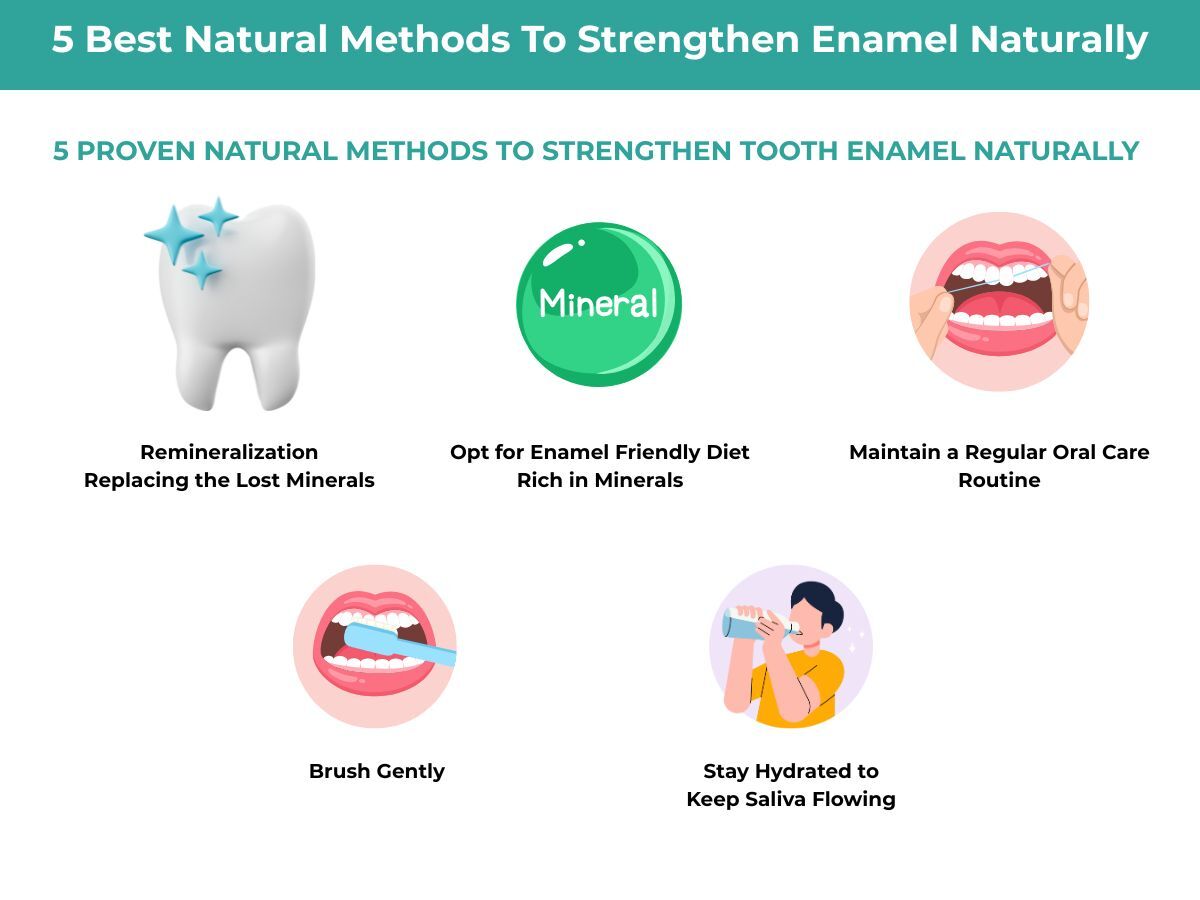 Protecting your enamel does not require expensive treatments. Simple, everyday habits can help your teeth recover and stay strong. Below are five proven and best natural methods to strengthen enamel when followed consistently.
-
Boost Enamel Strength with Calcium, Phosphate, and Fluoride
Enamel is made mostly of minerals, and the best way to repair it is to replace what has been lost. The process is called remineralization, and it helps fill weak spots before they turn into cavities.
- Brush twice a day with fluoride toothpaste. Fluoride forms a stronger, acid-resistant layer on the enamel surface.
- Look for toothpaste that contains nano-hydroxyapatite or CPP-ACP (casein phosphopeptide–amorphous calcium phosphate). These ingredients restore lost minerals and make the tooth surface smoother.
- If you have sensitivity or visible wear, your dentist may apply fluoride varnish or remineralizing gel for deeper protection.
Tip: Rinse once daily with a fluoride mouthwash and avoid brushing right after eating acidic foods. This gives your enamel time to harden naturally before cleaning.
-
Eat a Tooth-Friendly Diet Rich in Minerals
What you eat matters as much as how you brush. A balanced diet provides your teeth with the nutrients needed to rebuild enamel and prevent erosion.
Include:
- Milk, cheese, and yogurt for calcium and phosphate
- Leafy greens, nuts, eggs, and fish for magnesium, zinc, and vitamin D
Limit:
- Sodas, citrus juices, and vinegar-based foods, which dissolve enamel crystals
- Sugary snacks and processed foods, which feed bacteria and cause acid formation
Add alkaline foods such as bananas, cucumbers, and spinach to balance mouth acidity. Chewing sugar-free gum after meals also helps because it increases saliva flow, which naturally delivers minerals back to your teeth.
Tip: Finish every meal by drinking plain water. It clears away acids and food particles that can damage enamel.
-
Brush Gently and Maintain a Consistent Oral Care Routine
Brushing correctly is essential for protecting enamel. Hard scrubbing may clean faster, but it also wears down the protective layer.
- Use a soft-bristled toothbrush and move it in gentle, circular motions.
- Brush for two minutes, twice daily, with fluoride or enamel-repair toothpaste.
- Floss once a day to remove plaque that brushing misses.
- Wait at least 30 minutes after meals before brushing, especially if you’ve eaten acidic food.
Finish with a mild fluoride mouthwash at night to strengthen enamel and control bacteria.
Tip: Replace your toothbrush every three months. Worn bristles can scratch enamel and make cleaning less effective.
-
Stay Hydrated and Keep Saliva Flowing
Saliva protects your enamel naturally by washing away acids and helping minerals reach your teeth. Keeping your mouth moist is one of the simplest ways to strengthen enamel.
- Drink water regularly throughout the day.
- Chew sugar-free gum to stimulate saliva when your mouth feels dry.
- Reduce alcohol, smoking, and caffeine, which can slow saliva production.
- Eat water-rich foods like cucumbers, celery, and melon to stay hydrated.
A well-hydrated mouth maintains the right pH balance and supports continuous enamel repair.
Tip: Keep a water bottle nearby and sip often. Small, steady hydration keeps enamel safe all day.
-
Use Safe Home Remedies and Natural Aids
Certain gentle home practices can support enamel health when used correctly.
- Oil pulling with coconut oil may lower harmful bacteria that produce acids.
- Warm salt-water rinses help balance mouth pH and soothe gum tissues.
- Mineral supplements such as calcium, magnesium, and vitamin D strengthen enamel from within when your diet is lacking.
Avoid harsh remedies like lemon juice or baking soda mixtures; they can erode enamel instead of repairing it.
Tip: Natural aids should always be gentle. Confirm with your dentist before adding any new remedy or supplement to your routine.
Quick Comparison: Natural and Clinical Enamel Restoration
Natural methods work well for mild enamel wear or early sensitivity. However, when enamel erosion is more advanced, professional dental care can make a significant difference. Here’s a simple comparison to help you understand how both approaches support enamel health.
| Natural Methods | Professional Dental Treatments |
|---|---|
| Fluoride or nano-hydroxyapatite toothpaste helps replace lost minerals and strengthen enamel at home. | Fluoride varnish and remineralizing gel applications deliver a higher concentration of minerals directly to the enamel. |
| A balanced diet rich in calcium, phosphate, and vitamin D supports natural remineralization. | CPP-ACP and nano-hydroxyapatite treatments rebuild enamel structure with clinical precision. |
| Regular hydration and saliva stimulation through sugar-free gum and water maintain pH balance in the mouth. | Laser fluorescence scans measure enamel thickness and detect early signs of erosion before damage progresses. |
| Gentle brushing and pH-balanced oral care protect enamel from daily wear. | Biomimetic enamel restoration procedures use bioactive materials that act like real enamel to seal and protect the tooth surface. |
| Salt-water rinses and oil pulling support a cleaner, healthier oral environment. | Custom enamel-strengthening plans are created by dentists based on your enamel condition and oral habits. |
Still Not Seeing Results? Choose Professional Enamel Restoration!
If your teeth remain sensitive, dull, or weak even after following the best natural methods to strengthen enamel, professional treatment may be necessary. When enamel erosion has progressed beyond the early stage, home care alone cannot rebuild the lost structure. Clinical enamel restoration can help strengthen your teeth from the inside out.
At Elite Dental Studio, our dentists use advanced and safe procedures to restore and protect weakened enamel. Each treatment is personalized after a detailed oral examination and enamel assessment.
Professional Tooth Enamel Restoration Procedures
- Fluoride Varnish Therapy: A highly concentrated fluoride coating applied to the tooth surface. It strengthens enamel and provides immediate protection against acid attacks.
- Nano-Hydroxyapatite And CPP-ACP Gels: These bioactive agents repair micro-cracks and replenish minerals, restoring the enamel’s smoothness and shine.
- Laser Fluorescence Enamel Scans: These detect early signs of erosion, thinning, or demineralization so that timely action can be taken.
- Biomimetic Enamel Reinforcement: This modern method uses materials that closely imitate natural enamel to seal weak spots and improve resistance to wear and temperature changes.
These treatments are painless, quick, and clinically proven to reduce tooth sensitivity, prevent future enamel loss, and improve overall oral health. Many patients notice visible improvement in comfort and smoothness after just one or two sessions.
Book Your Appointment with Expert Dentists at Elite Dental Studio Now!
Restore your tooth enamel before it weakens further and protect your beautiful smile with professional care.
At Elite Dental Studio, located in Kochi, Kannur, and Calicut, our expert team of dentists provides comprehensive dental care services using advanced technology and a gentle, patient-focused approach. We are committed to ensuring your comfort, confidence, and lasting oral health with every visit.
Schedule your appointment with our expert dentists at the dental clinic in Calicut or the dental hospital in Kannur now. .
- Kochi: +91 95671 24888
- Calicut: +91 97450 72555
- Kannur: +91 96458 74777
Frequently Asked Questions
Can tooth enamel really be restored naturally?
Enamel cannot regrow once it is completely lost, but early damage can be repaired through remineralization. This process helps your teeth absorb minerals like calcium, phosphate, and fluoride, making the enamel surface harder and more resistant to decay.
How long does it take to strengthen tooth enamel?
It depends on the level of enamel wear and your oral care routine. With regular brushing using fluoride toothpaste, a mineral-rich diet, and proper hydration, you may notice improvement in sensitivity and enamel strength within a few weeks.
What foods naturally help restore enamel?
Foods rich in calcium and vitamin D, such as milk, cheese, yogurt, almonds, spinach, and fish, support natural enamel repair. Drinking water after acidic meals also helps neutralize acids that erode enamel.
Which toothpaste ingredients rebuild enamel?
Look for fluoride, nano-hydroxyapatite, or CPP-ACP (casein phosphopeptide–amorphous calcium phosphate) in your toothpaste. These ingredients actively replace lost minerals and smooth rough enamel surfaces.
Can brushing too hard damage enamel?
Yes. Using a hard-bristled toothbrush or brushing aggressively can wear away enamel. Always use a soft-bristled brush with gentle circular motions to clean effectively without causing damage.
What are the signs that my enamel is weakening?
Common signs include tooth sensitivity, rough edges, dull or yellowish color, and increased pain while eating hot or cold foods. If these symptoms persist, consult a dentist for enamel assessment.