Tag: Dental clinic in Kochi

  • Dental Fluorosis – Causes, Symptoms & Modern Treatment Options

    Have you ever noticed white streaks or brownish patches on your teeth? These could be signs of dental fluorosis, a condition that develops when the teeth are exposed to too much fluoride while they are still forming usually during early childhood.

    While fluoride strengthens enamel and helps fight cavities an overdose during tooth development can lead to permanent discoloration and surface changes in your teeth.

    Here’s what’s important to know:

    • It begins before permanent teeth erupt.
    • The condition can appear as tiny streaks or dark stains.
    • It mainly affects adult teeth but can sometimes be seen in milk teeth too.

    Spotting fluorosis early helps maintain the strength of its look and overall health of your teeth. Let’s dive into the main symptoms, causes and available treatments for this condition.

    Common Dental Fluorosis Symptoms

    The Dental fluorosis symptoms depend on how much fluoride exposure occurred during tooth formation.

    Mild Cases:

    • Small white spots or streaks on the enamel.
    • Slight surface texture difference.
    • No pain or sensitivity.

    Moderate Cases:

    • Yellow or brown stains appear on teeth.
    • The surface may look uneven or chalky.
    • Teeth might feel sensitive to temperature changes.

    Severe Cases:

    • Dark brown or black discoloration.
    • Noticeable pits or enamel erosion.
    • Teeth become fragile or prone to cracking.

    If you notice any of these dental fluorosis symptoms then it’s best to visit Elite Dental Studio, the best dental clinic in Calicut where professionals can assess and guide you with proper treatment options.

    What is‍‌‍‍‌‍‌‍‍‌ Dental Fluorosis Causes? 

    Dental fluorosis is a condition that results from an excessive intake of fluoride during the period when teeth are developing.

    The most common dental fluorosis causes are:

    • Water full of fluoride: There are areas where the fluoride concentration in the groundwater is high.
    • Ingesting toothpaste: Children under five may eat toothpaste while brushing their teeth.
    • Too much use of fluoride supplements: Using fluoride tablets or drops without the correct instruction.
    • Processed food and beverages: Some products have fluoride added.

    Fluoride is an excellent helper in making enamel strong but it is very important to control and understand the dental fluorosis causes the intake in children so as not to get ‍‌‍‍‌‍‌‍‍‌fluorosis.

    How Is Dental Fluorosis Diagnosed?

    Elite‍‌‍‍‌‍‌‍‍‌ Dental Studio through a detailed and thorough evaluation carries out the diagnosis of fluorosis as follows:

    • Visual Examination: Looking for discoloration and textural changes of the teeth.
    • Fluoride Exposure Review: Identifying potential fluoride sources such as toothpaste, supplements, and water.
    • Intensity Determination: Measuring the degree of fluorosis to figure out the best way of treatment.

    Their method guarantees a treatment plan customized to the patient’s needs which not only revitalizes the dental health but also the dental ‍‌‍‍‌‍‌‍‍‌aesthetics.

    Options for Dental Fluorosis Treatment

    Dental fluorosis treatment varies depending on how mild or severe the fluorosis is.

    1.‍‌‍‍‌‍‌‍‍‌‍‌‍‍‌‍‌‍‍‌ Cosmetic Solutions for Mild Cases

    • Professional Whitening: A technique that lightens the outer layer of the enamel and thus makes color changes less visible.
    • Microabrasion: A gentle method that removes a very thin layer of enamel. Therefore the overall appearance is improved.

    2. Restorative Procedures for Moderate to Severe Fluorosis

    • Composite Bonding: A resin-based material that matches the tooth color is used to hide the stains and make the surface even.
    • Porcelain Veneers: The most-near-to-perfect coverlets that go over the front surface of the teeth and make them look excellent.
    • Dental Crowns: If the enamel is severely damaged these are the methods to not only bring back the look but also the strength.

    3. Preventive Recommendations

    • Watch the amount of toothpaste your children use. Just a tiny bit about the size of a pea is ‍‌‍‍‌‍‌‍‍‌enough.
    • While for kids below 3 years fluoride-free toothpaste is recommended if the dentist advises so.
    • Find out the fluoride level in your local water if it is too high you might want to think about ‍‌‍‍‌‍‌‍‍‌filtration.

    Living with Dental Fluorosis 

    Even‍‌‍‍‌‍‌‍‍‌ if treatment is able to change your smile to a great extent, prevention is still the best way. Parents can lessen the chances by:

    • Instructing kids to clean their teeth in the right way and not to swallow the toothpaste.
    • Taking fluoride supplements only if a professional gives the green light.
    • Making appointments for dental checks regularly at a clinic you can trust in Kochi or Calicut.

    Good oral hygiene practice and regular dental visits will go a long way in keeping the enamel safe and stopping the condition from getting worse with the best dental fluorosis treatment.

    When Should You Visit a Dentist?

    You should see a dental expert if:

    • You spot persistent white or brown marks on your teeth.
    • Enamel looks rough, chalky or pitted.
    • You experience increased tooth sensitivity.
    • You feel conscious about your smile due to discoloration.

    The sooner you consult professionals at Elite Dental Studio the best dental clinic in Calicut the easier it is to control and treat the effects of dental fluorosis effectively.

    Maintain a Healthy Smile Beyond Dental Fluorosis with Elite Dental Studio! 

    Dental‍‌‍‍‌‍‌‍‍‌ fluorosis is one of the most common situations but it is also a condition that can be easily prevented. Dental fluorosis happens when a child consumes too much fluoride while the teeth are still developing. Mild forms only change the look of the teeth, whereas severe forms can make the enamel less strong and lower the person’s confidence.

    Identifying symptoms, learning about the causes and receiving the treatment in time from Elite Dental Studio skilled dentists can be the factor that changes everything.

    Whether you visit our dental clinic in Kochi or dental clinic in Calicut, Our team is committed to giving you the right treatment which will enable you to keep your smile strong, attractive and ‌ ‍ ‍‌‍‍‌‍‌‍‍‌healthy.

    Frequently Asked Questions

    Is dental fluorosis able to vanish spontaneously?

    Ans. No, fluorosis is a source of permanent changes in the enamel. Nevertheless, the appearance can be made to look nice again very much by a few of the cosmetic treatments like veneers, bonding or whitening.

    Is dental fluorosis a health risk?

    Ans. Mild cases are just cosmetic ones. In a serious situation, the enamel that is weakened can become more susceptible to cracking.

    How can parents help to prevent fluorosis in their kids?

    Ans. Make fluoride intake safe and sound, toothbrush supervision, toothpaste usage limitation and if necessary, fluoride supplements should not be given.

    At what point in time is fluorosis most likely to be?

    Ans. The development of permanent teeth is when it is most common and therefore it is usually from birth to about 8 years of age.

    Is it possible for adults to get fluorosis later in life?

    Ans. No, it cannot be developed by adults. Still, they might have some retention of the discoloration that resulted from too much fluoride during their ‍‌‍‍‌‍‌‍‍‌childhood.

  • Gum Recession – Symptoms, Causes, Treatment

    Gum recession is one of those dental problems that often sneaks up quietly until you suddenly notice your teeth looking longer or feel a sting of pain while brushing. It happens when the gum tissue surrounding your teeth starts to wear away or pull back, exposing the sensitive roots underneath.

    While it may start off small, untreated gum recession can lead to serious oral health issues like tooth sensitivity, gum infection and even tooth loss. The tricky part? Most people don’t realize it’s happening until the damage is already visible.

    But here’s the good news with the right care, awareness and timely treatment, gum recession can be controlled and even reversed. In this blog, we’ll walk you through everything you need to know from early symptoms and common causes to effective treatment options that help restore your gums and protect your smile for years to come.

    gum recession

    Understanding Gum Recession

    Gums‍‌‍‍‌‍‌‍‍‌ are the main defenders of the teeth and are responsible for holding them tightly. Once this defensive layer is going back, the roots are left exposed as they are the parts that are not covered by enamel and are very sensitive to temperature changes, bacteria and decay.

    Any person can get this disease but statistically, it is more probable for adults over 30 years to get it. The main thing is to recognize it at the very beginning and getting support from a reliable dental clinic in Calicut or dental clinic in Kochi, before it gets ‍‌‍‍‌‍‌‍‍‌worse.

    Recognizing Gum Recession Symptoms

    Because the gum recession happens gradually many people overlook the early warning signs. Here’s what you should look out for:

    • Tooth sensitivity: Sharp pain when eating or drinking something hot, cold or sweet.
    • Longer-looking teeth: Gums pulling back make teeth appear uneven or elongated.
    • Visible roots: You may see darker areas near the gum line.
    • Red or swollen gums: Inflammation can indicate gum irritation or infection.
    • Bleeding during brushing or flossing: A sign that your gums are under stress.
    • Bad breath: Persistent odor even after brushing can point to bacterial buildup.
    • Loose teeth: Severe gum recession weakens the foundation that holds teeth in place.

    If you notice any of these gum recession symptoms then don’t wait. Early consultation and professional guidance can make a big difference in preserving gum health.

    Common Gum Recession Causes

    Gum‍‌‍‍‌‍‌‍‍‌ recession can be caused by a variety of factors, some of which are within your control while others may require a visit to the dentist. Knowing the gum recession causes can assist you in taking the right preventive measures in advance.

    1. Poor Oral Hygiene

    If you skip brushing or flossing, there is nothing to prevent plaque and tartar from building up on teeth which leads to gum irritation and the gums pulling away from the teeth.

    2. Brushing Too Hard

    Do not use a hard toothbrush nor put excessive pressure on teeth as it will damage your gums instead of cleaning them; the wear will come from the sides of your gums.

    3. Gum Disease (Periodontitis)

    It is the most significant factor that leads to the loss of the gums. Infections make apis tissue and the surrounding jawbone to get damaged, resulting in the formation of pockets that contribute greatly to the loss of gums.

    4. Misaligned or Crooked Teeth

    When teeth are not properly aligned, they exert uneven pressure on the gums and bone which eventually leads to gum wear.

    5. Tobacco Use

    Whether smoking or chewing tobacco, the by-products cause a shortage of oxygen in the blood vessels of the gums and thus slow down the recovery process and at the same time increase the chance of occurrence of gum diseases.

    6. Hormonal Fluctuations

    Gums may become extremely sensitive during pregnancy, menstruation or menopause and thus more likely to recession.

    7. Teeth Grinding (Bruxism)

    Grinding non-stop is basically putting very heavy pressure on teeth and gums and thus wearing down of the tissue is gradual.

    8. Genetic Factors

    Some people are born with naturally thin gum tissues which makes them highly susceptible to gum recession even if they follow good oral hygiene ‍‍‌‍‌‍‍‌practices.

    Gum Recession Treatment Options

    Once diagnosed, your dentist will suggest the right gum recession treatment based on its severity. Treatments can range from deep cleaning to advanced surgical procedures.

    1.‍‌‍‍‌‍‌‍‍‌ Professional Deep Cleaning (Scaling and Root Planing)

    It is the removal of plaque and tartar that have built up under the gums by a non-surgical method. The roots are made smooth so that the gums can reattach and heal by themselves.

    2. Antibacterial Treatments

    Antimicrobial gels or mouth rinses may be used to eliminate bacteria and lessen the inflammatory process, thereby, they are especially helpful in cases that are of a mild nature.

    3. Gum Grafting

    In case of moderate to severe recession of the gums, a gum graft surgery might be your doctor’s suggestion. A small piece of tissue is taken from another part of your mouth (usually the palate) and used to cover the roots that have been exposed thus, protecting them from further ‍‌‍‍‌‍‌‍‍‌harm.

    4. Pinhole Surgical Technique

    A modern, minimally invasive method that repositions existing gum tissue through a tiny entry point no stitches required. Healing is quicker and more comfortable.

    5. Regenerative Procedures

    If bone loss has occurred, regenerative materials may be applied to rebuild the bone and tissues supporting your teeth.

    6. Orthodontic Correction

    If misaligned teeth are contributing to gum recession then correcting them with braces or aligners can help relieve the pressure and prevent future gum wear.

    Preventing Gum Recession: Simple Daily Habits

    Preventing gum recession starts with consistent and gentle oral care. Here are some easy habits to follow:

    • Use a soft-bristled toothbrush and gentle circular motions while brushing.
    • Floss daily to clean areas your toothbrush can’t reach.
    • Avoid smoking or chewing tobacco.
    • Maintain a balanced diet rich in vitamins and minerals.
    • Use a mouthguard at night if you grind your teeth.
    • Schedule regular dental check-ups and cleanings at your nearest dental clinic in Kochi or dental clinic in Calicut.

    Why Timely Treatment Matters?

    Leaving a gum recession without treatment can result in a very long list of problems such as extreme sensitivity, gum infections or even the loss of teeth. Because gum tissue does not regenerate, it is very important to locate and treat the problem quickly. Through professional dental care and some lifestyle changes, you will be able to keep your gums strong and healthy and have a smile that makes you proud, your whole life ‍‌‍‍‌‍‌‍‍‌long.

    Healthy Gums Begin at Elite Dental Studio!

    At Elite Dental Studio, we understand that healthy gums are the key to a beautiful smile. Our experienced dental team uses advanced diagnostic tools and modern treatment techniques to manage gum recession symptoms effectively. Whether you are dealing with mild gum sensitivity or advanced gum wear we provide gentle, customized solutions to restore your gum health and confidence.

    Book your appointment today with Elite Dental Studio, your trusted dental clinic in Calicut and dental clinic in Kochi and take the first step towards healthier and stronger gums.

    Frequently Asked Questions:

    What are the first signs of a gum recession?

    Ans. First gum recession signs could be dental sensitivity and gums bleeding while brushing or flossing and visually longer teeth. You may also feel that your teeth are loose and see dark areas close to the gum line.

    What causes gums to recede?

    Ans. Some of the causes of irreversible gum recession include bad oral hygiene, aggressive toothbrushing and diseases of the gums. In addition, smoking and hereditary factors can contribute to gum recission. Furthermore, the misalignment of teeth and grinding of teeth can make the gums become worn due to the accumulation of pressure in those areas for a long time.

    Can gum recession be treated or reversed?

    Ans. Gum recession treatment depends on the severity of the disease; stages are advised for deep cleaning by the dentist and rinses are antibacterial and in the late stages surgery like pinhole or grafting is used to retrieve the tissue and give the teeth protection.

    When should I visit a dentist for gum recession?

    Ans. Immediate aid from the dentist is what you need when you experience tooth sensitivity and gum bleeding during brushing and also you notice that your gums are receding. Early intervention and treatment can save the gums from being further damaged and help you keep your smile beautiful for a long ‍‌‍‍‌‍‌‍‍‌time.

  • Guide to Tooth Extraction for Individuals With Diabetes

    Living with diabetes means staying extra mindful of your health and oral care is no exception. When dental issues arise, such as severe tooth decay or infection, tooth extraction may become necessary. But is tooth extraction safe for diabetics? The good news is that with proper care, planning and the right expertise, tooth extraction can be performed safely for individuals with diabetes.

    In this guide, you will learn how dental extraction for diabetes patients is handled, what precautions are taken, how the procedure works and how to recover smoothly. By the end, you’ll understand how to make informed choices about your dental care and when to seek professional help at a trusted dental clinic in Calicut or dental clinic in Kochi.

    Let’s walk you through everything you need to know before, during and after tooth extraction with diabetes.

     Your easy guide to operculectomy

    Why Diabetes Affects Tooth Extraction

    Diabetes changes the body’s healing process that also impacts the ability to fight infections. Elevated blood sugar levels have a detrimental effect on the immune system and at the same time they decrease blood circulation to both of which are very important for wound healing after the dental operation.

    Tooth extraction in a diabetic patient should be handled with care as:

    • Healing can be delayed.
    • The possibility of infection increases.
    • Blood sugar levels can fluctuate due to stress or medication changes.

    Understanding these risks helps you work with your dentist to ensure the procedure is as smooth and safe as possible.

    When Tooth Extraction Becomes Necessary for Diabetic Patients

    Not all dental issues require extraction but in certain cases, removing a tooth becomes essential, such as:

    • Severe tooth decay where restoration is not possible.
    • Chronic gum disease causing loose or painful teeth.
    • Tooth abscess with infection spreading to surrounding tissue.
    • Impacted wisdom teeth causing pain or misalignment.
    • Trauma leading to irreparable damage.

    For diabetes patients, untreated dental problems can worsen and lead to more serious complications, making timely intervention critical.

    How Tooth Extraction Works: Step-by-Step Care for Diabetics

    The procedure is similar to that for non-diabetic patients but with extra precautions in place to manage healing and blood sugar control.

    What to Expect:

    • Initial assessment: Blood sugar levels, medications and overall health are evaluated.
    • Pre-procedure planning: Instructions are given on fasting, medication adjustments and stress management.
    • Extraction procedure: Local anesthesia is administered to numb the area.
    • Post-procedure care: Aftercare focuses on infection prevention, proper diet and blood sugar monitoring.

    Your dentist will customize the approach based on your specific health condition, ensuring a safer experience.

    Preparing for Tooth Extraction When You Have Diabetes

    Proper preparation minimizes risks and ensures smooth recovery. Here’s how you can get ready:

    1. Consult your physician: Share your medical history and current medication schedule.
    2. Maintain stable blood sugar: Keep fasting and post-meal sugar levels in check before the procedure.
    3. Disclose all medications: Inform your dentist about insulin or other prescriptions.
    4. Plan for follow-up care: Schedule regular post-extraction visits for monitoring healing.
    5. Stay hydrated: Good hydration supports circulation and healing.

    By staying prepared, you help your body heal faster and avoid unnecessary complications.

    What Makes Tooth Extraction Safe for Diabetics

    With proper medical coordination and hygiene, tooth extraction can be performed safely by addressing the following factors:

    • Controlled blood sugar levels: Stable glucose levels reduce the risk of infection.
    • Use of antibiotics when necessary: Prevents post-extraction complications.
    • Gentle surgical technique: Minimizes trauma to tissues.
    • Effective pain management: Keeps stress levels low and supports recovery.
    • Close monitoring after extraction: Ensures early detection of swelling or infection.

    Experienced dental teams are trained to handle these factors with precision, making the extraction process safer and more comfortable.

    What Happens During the Procedure

    The procedure itself is quick and usually done in a single visit. Here’s how it typically goes:

    1. Initial consultation: Review of your medical history, examination of the tooth and planning.
    2. X-rays or scans: Used to assess tooth position and surrounding bone structure.
    3. Anesthesia: Local anesthesia is administered to numb the area.
    4. Extraction: The tooth is carefully loosened and removed.
    5. Bleeding control: Gauze is applied to stop bleeding.
    6. Aftercare instructions: Guidelines on eating, cleaning and managing discomfort are provided.

    For most patients, the procedure takes 30–60 minutes depending on complexity.

    Recovery After Extraction: What Diabetic Patients Should Know

    Recovery from a wound requires care for the wound, blood sugar control and taking measures to avoid any complications. The following rundown highlights the period you should expect:

    • First 24 hours: Slight bleeding and discomfort are acceptable symptoms. Do not rinse your mouth vigorously or smoke.
    • First few days: Soft diet, given pain relief drugs, and antibiotics make the pain manageable and help in giving the body resistance to infection.
    • Healing timeline: Full recovery may take 1-2 weeks duration in diabetic patients.
    • Monitoring: The site of the wound is checked in regularly to ensure that healing is going well and blood sugar levels are maintained.

    With proper and meticulous care as well as strictly following the advice of your medical professional, you will definitely have a quicker and complication-free recovery.

    Foods and Lifestyle Tips Post Extraction for Diabetics

    By consuming the right food and sticking to the right lifestyle and healing can be promoted as well as blood sugar maintained at the required levels.

    • Soft and nutrient-dense foods like soups, mashed vegetables and yogurt should be eaten.
    • Avoid sugary snacks and carbonated beverages.
    • Stay hydrated with water and electrolyte solutions.
    • Make powerful blood sugar diaries to ease any variations of your blood sugar level.
    • Take your medication as you always do unless your doctor tells you otherwise.

    Don’t underestimate these small moves that can become very important for your well recovery process.

    Cost & Duration of Tooth Extraction for Diabetic Patients

    Cost and recovery time depend on the complexity of the extraction and your individual health needs. Below is a general guideline:

    Service Estimated Cost (INR) Duration
    Initial Consultation 500 – 1500 30-45 mins
    X-rays or Scans 800 – 2500 15-30 mins
    Tooth Extraction Procedure 2000 – 8000 30-60 mins
    Post-operative Care Visit 500 – 1200 20-30 mins
    Medicines (antibiotics, pain relievers) 300 – 1500 3-7 days

    What’s included:

    • Medical consultation and assessment
    • X-ray or imaging
    • Local anesthesia
    • Extraction procedure
    • Post-operative care guidance
    • Prescribed medications (if required)

    At Elite Dental Studio, comprehensive care ensures you are supported throughout your treatment journey.

    Why Choose Elite Dental Studio for Tooth Extraction in Diabetes Care

    Choosing a good dental clinic is really important. Elite Dental Studio, which is easily accessible for the people who are looking for a dental clinic in Calicut or a dental clinic in Kochi, attends to diabetic patients with the help of:

    • Expert care: A medical team consisting of skilled doctors and medically adept nurses trained in handling delicate and sensitive patient cases.
    • Advanced technology: Digital imaging and using very accurate and small surgical instruments which enable the treatment to be done in a short time and with no damage to the patient’s body.
    • Patient-centered approach: A special treatment plan that is designed as per your sugar levels, medicine, and recovery requirements.
    • Infection control protocols: Certifying sanitized and sterile for every step of the procedure.
    • Follow-up care: Be with you all through the recovery process providing the best outcome.

    We value your health above all and make sure that you get professional advice and treatment at every step of the way.

    Safe and Confident Dental Care for Diabetic Patients!

    Tooth removal for diabetics is not necessarily a frightening or complex task. By doing the right scheduling, medical coordination and receiving the right care from a professional, you can get it done safely and recover comfortably. Knowing the operation, practicing the right post-operative care, and picking a clinic that is your health and safety priority can really change the situation.

    If you want expert care, the right guidance and a patient-friendly approach then make an appointment at Elite Dental Studio. Our team is ready to assist you at each step with warmth, expertise and accuracy.

    Book your appointment today with us today and let the healthier teeth and better general health journey begin.

    Frequently Asked Questions:

    Is tooth extraction safe for diabetics?

    Ans. Of course, tooth extraction along with blood sugar control and dental care by professionals is safe for diabetics.

    How should diabetics prepare for tooth extraction?

    Ans. Patients should ensure blood glucose stability, inform their doctor about their health condition and the drugs they are taking, and follow the dentist’s instructions before the procedure.

    How long does it take to get a wound healing after tooth extraction for diabetic patients?

    Ans. Recovery might be 1–2 weeks in case blood sugar control is optimal and necessary care along with follow-up visits is done.

    Where can diabetics get safe dental extraction in Kerala?

    Ans. ‘Elite Dental Studio’ a top dental clinic in Calicut and a dental clinic in Kochi, is the place that provides the most reliable and safest care giving the most proficient extraction services for diabetic patients.


  • What is Operculectomy Surgery Related To Wisdom Teeth

    Wisdom teeth are the last set of back teeth, and they usually show up between the ages of 17 and 25. For some people, they come in smoothly and never cause any trouble. But in many cases, there just isn’t enough room for them to grow the right way. When that happens, the tooth might only come out halfway and stay partly covered.

    This is where a small flap of gum, called an operculum, can form over the tooth.

    At first, this flap might not look like a big deal. But because it sits at the very back of the mouth, it’s tricky to clean properly with a toothbrush or floss. Food and germs often get stuck under it, which can lead to swelling, pain, and even repeated infections.

    To solve this problem, dentists may recommend a minor procedure called operculectomy surgery.

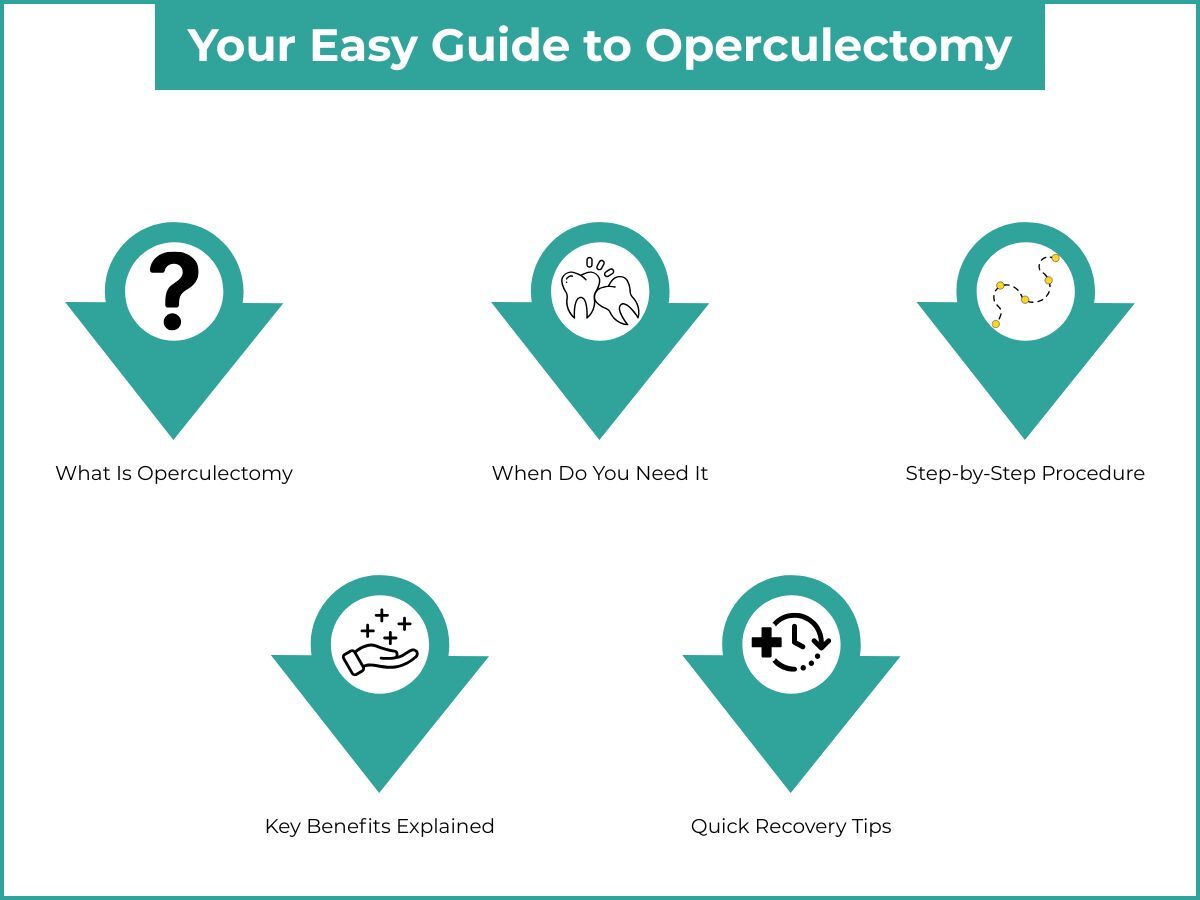
    Now, you might be wondering: “What exactly is operculectomy surgery?” or “When do I really need it for wisdom teeth?” That’s exactly what we’ll break down in this blog. We’ll cover the symptoms you should watch for, how the procedure is done, what recovery feels like, and when it’s the right time to visit a dentist.

    what is operculectomy surgery

    Understanding the Gum Flap (Operculum) and Its Problems

    An operculum is just a small piece of gum that partly covers a wisdom tooth that hasn’t come out fully. Because it sits right at the back of the mouth, it’s very hard to clean with a toothbrush or floss.

    As a result, food and bacteria can easily get trapped under it, causing an infection called pericoronitis. Signs of this infection may include:

    • Redness and swelling of gums.
    • Sharp or throbbing pain around the wisdom tooth.
    • Food is getting stuck repeatedly.
    • Bad breath or unpleasant taste.
    • Difficulty opening the mouth or chewing.
    • Occasional pus discharge in severe cases.

    Pericoronitis can flare up again and again, creating long-term discomfort. If ignored, the infection may spread to nearby tissues, the jawbone, or even other teeth.

    That’s why dentists recommend operculectomy as a preventive and curative measure.

    What is Operculectomy Surgery?

    Operculectomy surgery is a minor oral surgical procedure where the gum flap (operculum) covering the wisdom tooth is carefully removed.

    The goal is simple:

    • Eliminate the flap that traps bacteria.
    • Preserve the wisdom tooth if it is healthy and functional.
    • Reduce the chances of infection and improve oral hygiene.

    Unlike tooth extraction, operculectomy only targets gum tissue, making it a quicker and less invasive procedure.

    When is Operculectomy Needed for Wisdom Teeth?

    Not everyone with wisdom teeth needs this surgery. Dentists usually recommend it in the following scenarios:

    1. Repeated Infections: If you experience frequent gum swelling and pain near your wisdom tooth, it could be due to bacteria under the operculum.
    2. Food Impaction: Small food particles constantly get stuck under the flap, causing bad breath and discomfort.
    3. Pericoronitis: Ongoing or recurring infection of gum tissue.
    4. Difficulty in Cleaning: The flap prevents proper brushing and flossing, increasing decay risk.
    5. Chewing Problems: The gum flap gets bitten during chewing, causing bleeding or pain.
    6. Preventive Care: Before orthodontic treatments or braces to avoid future infection.

    If any of these apply, your dentist may suggest operculectomy to protect both your wisdom tooth and overall oral health.

    Step-by-Step Operculectomy Procedure

    At Elite Dental Studio, we follow a safe, precise, and patient-friendly process for operculectomy. Here’s what to expect:

    1. Examination & Diagnosis

      • Clinical evaluation of your symptoms.
      • X-rays to check wisdom tooth position.
      • Sometimes, 3D scans for better accuracy.
    2. Anaesthesia

      • Local anaesthesia is given to numb the area.
      • Ensures a completely painless experience.
    3. Surgical Removal of Gum Flap

      • The gum tissue covering the tooth is carefully trimmed.
      • Advanced tools like soft-tissue lasers may be used for precision and reduced bleeding.
    4. Cleaning & Disinfection

      • The area is thoroughly cleaned.
      • Antibacterial rinses ensure no infection remains.
    5. Healing Phase

      • Since the procedure is minimally invasive, stitches are often not required.
      • Healing usually occurs within a few days.

    Benefits of Operculectomy Surgery

    Choosing operculectomy for wisdom teeth offers several benefits:

    • Pain Relief: No more swelling or gum discomfort.
    • Improved Oral Hygiene: Easier brushing around wisdom teeth.
    • Prevents Recurrent Infections: Stops pericoronitis episodes.
    • Tooth Preservation: Keeps wisdom teeth intact if healthy.
    • Faster Recovery: Quick healing compared to extractions.
    • Minimally Invasive: Less bleeding, no stitches in most cases.

    Recovery After Operculectomy

    Most patients recover in 2–5 days. To ensure smooth healing:

    • Eat soft foods like soups, yogurt and rice.
    • Avoid spicy, hard or hot foods initially.
    • Rinse with lukewarm salt water after 24 hours.
    • Avoid smoking and alcohol for at least 48 hours.
    • Take prescribed medications as directed.
    • Resume brushing gently after a day, avoiding the treated area initially.

    Risks and Considerations

    Like any surgical procedure, operculectomy has minor risks, though they are rare when performed by experts. These include:

    • Mild bleeding or swelling.
    • Temporary soreness.
    • Risk of operculum regrowth (in some cases).
    • Rare chances of infection if aftercare is ignored.

    Your dentist will discuss these risks and ensure you are well-prepared.

    Operculectomy vs. Extraction: Which is Right for You?

    Many patients ask whether they should go for an operculectomy or a full wisdom tooth extraction. Here’s a quick comparison:

    Aspect Operculectomy Extraction
    What is removed? Gum flap only Entire tooth + gum tissue
    When recommended? Healthy tooth with gum flap issue Decayed, impacted, or problematic tooth
    Invasiveness Minor Moderate to major
    Recovery time 2–5 days 7–10 days
    Tooth preserved? Yes No

    Dentists usually recommend operculectomy first if the wisdom tooth is healthy and functional. Extraction is reserved for cases where the tooth is impacted, decayed or causing alignment issues.

    Why Choose Elite Dental Studio for Operculectomy Surgery?

    When it comes to oral surgeries, choosing the right dental team makes all the difference. At Elite Dental Studio:

    • We use advanced laser-assisted techniques for precision.
    • Our dentists have expertise in minor oral surgeries like operculectomy.
    • Patient comfort is our priority; procedures are painless and minimally invasive.
    • Conveniently located for patients seeking a dental clinic in Calicut or a dental clinic in Kochi.
    • Transparent guidance on whether you need operculectomy or extraction.

    Restoring Comfort and Oral Health with Operculectomy!

    Wisdom teeth can be a real hassle for many people. If you notice swelling in the gums, get frequent infections, or just can’t keep your wisdom tooth clean no matter how much you brush, there’s a simple fix. It’s called operculectomy.

    In this procedure, the dentist removes the small flap of gum that sits over your wisdom tooth. Once that’s gone, food won’t get stuck as easily, and the chances of pain or infection go down a lot. The best part is that your tooth stays safe, and you feel much more comfortable.

    At Elite Dental Studio, we help with everything from regular dental checkups to small surgeries like this, so you don’t have to live with constant discomfort.

    If your wisdom tooth has been troubling you, don’t ignore it. Come see us at Elite Dental Studio in Calicut or Kochi and we’ll help you find relief.

    Frequently Asked Questions:

    What is operculectomy?
    It’s a quick fix where the dentist just removes that little flap of gum covering your wisdom tooth. That flap is the one that keeps trapping food and causing irritation.

    When would I need it?
    Usually when the gum around your wisdom tooth keeps getting sore, swollen, or infected. If food keeps getting stuck there and you’re tired of the pain that’s when this treatment helps.

    Does it hurt?
    Not at all during the procedure. The dentist numbs the area first, so you won’t feel a thing. Afterward, it may feel a bit tender, kind of like a small cut healing, but it goes away in a few days.

    How long before I feel normal again?
    Most people are back to eating normally in 2–5 days. Stick to soft food for a bit, rinse with warm salt water, and you’ll heal faster.

    Is it better than pulling the tooth out?
    If the wisdom tooth itself is fine, yes. It’s easier and less invasive to just remove the gum flap. Taking the whole tooth out is only needed if the tooth is damaged or causing bigger problems.

  • Using Aspirin Directly on a Toothache: Does it Work?

    Tooth pain can stop you in your tracks, whether it’s while eating, talking or even trying to sleep. Out of desperation, many people place aspirin directly on the aching tooth, hoping for fast relief. The reality, however, is that aspirin for toothache works only when swallowed, not when applied topically. In fact, putting it directly on your tooth or gums can do more harm than good.

    This article clears the confusion, explains safe ways to ease pain and shows when it’s time to call your dentist for lasting relief.

    Why Do People Use Aspirin for Toothache Relief?

    It’s easy to understand why people experiment with this remedy. Aspirin is available in almost every household and when toothache strikes suddenly, it feels like a quick solution. The assumption is simple: if aspirin relieves pain when taken orally, it should work faster when placed directly on the tooth.

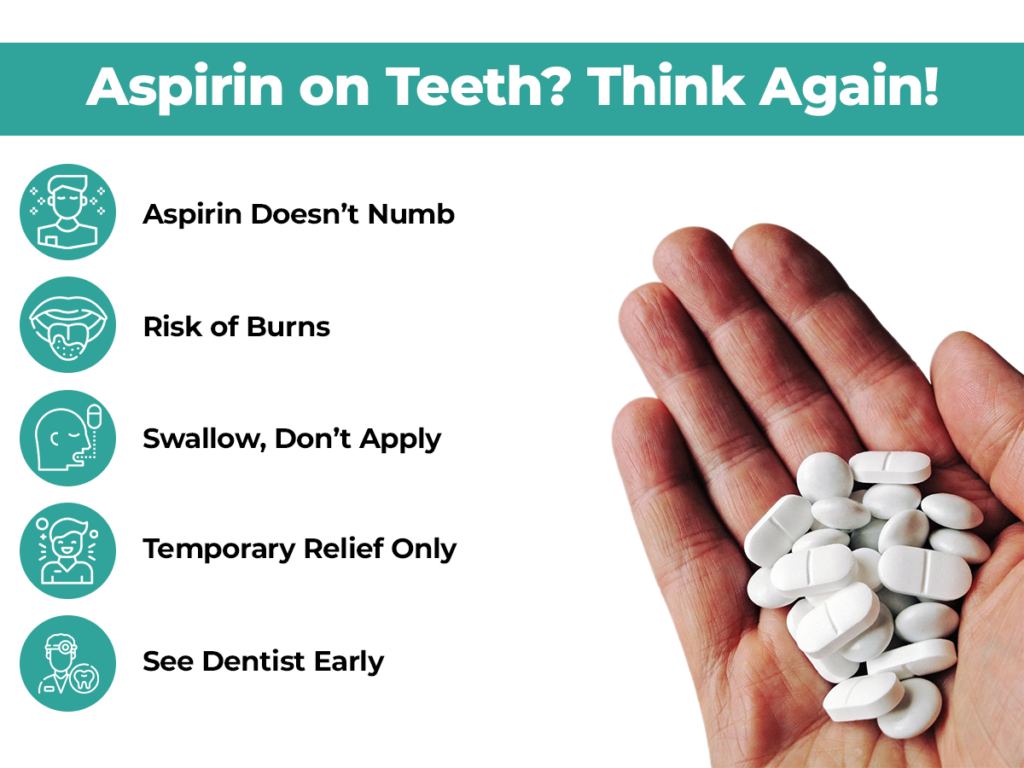
    Unfortunately, that assumption is misleading. Aspirin is not a numbing agent. Applying it directly only risks burning your gums and worsening your discomfort instead of chasing a quick fix that backfires knowing the right way to use it saves you from unnecessary pain.

    Does Placing Aspirin on the Tooth Actually Work?

    The direct answer: no, it doesn’t. Aspirin only provides relief when absorbed into your bloodstream. Also, placing it on your tooth or gum does not numb pain and often leaves behind burns on delicate oral tissues.

    Think of it this way: rubbing aspirin on your head for a headache won’t ease the pain, your mouth works the same way. Instead of helping, this “home trick” often leaves people with painful ulcers and swollen gums. If your pain feels unbearable along with swallowing the correct dose and calling your dentist is far safer than experimenting with harmful shortcuts.

    Aspirin on Teeth? Think Again!

    How Aspirin Works When Taken Correctly?

    When used properly, aspirin can provide temporary relief from toothache:

    • It blocks pain signals to the brain.
    • It reduces swelling around irritated nerves and gums.
    • It manages fever if the pain is linked to infection.

    But here’s the catch: these effects only happen when the tablet is swallowed with water. The disappointment many feel after trying to place it directly on a tooth is simply because aspirin wasn’t made to work that way. If the pain persists even after proper dosage that’s your body’s way of telling you it’s time for a dental check-up.

    Risks of Using Aspirin Directly on a Toothache

    Before you reach for this “hack,” consider the risks:

    • Chemical burns on gums, tongue or inner cheeks.
    • Painful ulcers that can last days.
    • False sense of relief which delays treatment.
    • Worsening infection if the root cause is ignored.

    Every time you try to silence tooth pain without addressing the source you risk turning a small problem into a major dental emergency. A simple cavity left untreated can quickly escalate into severe nerve infection and will cost you more time along with money and discomfort.

    How to Use Aspirin for Toothache Safely?

    If you’re considering aspirin for toothache, here’s the correct way:

    • Step 1: Confirm dosage instructions on the packaging.
    • Step 2: Swallow the pill with water and never press it against the tooth.
    • Step 3: Combine it with supportive relief like a cold compress.
    • Step 4: Contact your dentist to treat the actual cause.

    Trying to bypass these steps by applying aspirin directly is like pouring medicine on your skin for stomach pain; it simply doesn’t work.

    When Toothache Pain Signals Something Serious?

    Not all toothaches are equal. Some are warning signs of conditions that need urgent care. You should seek immediate dental help if you notice:

    • Constant throbbing that painkillers can’t control.
    • Swelling in the jaw, cheeks or gums.
    • Fever, headache or general weakness along with pain.
    • Pus or discharge around the tooth.
    • Difficulty chewing, opening your mouth or swallowing.

    These symptoms usually point to infections that aspirin won’t cure. The longer you wait the higher the risk of spreading infection to surrounding tissues.

    Why is Professional Care the Only Long-Term Solution?

    Painkillers can dull discomfort but they can’t stop decay even reverse gum infection or repair nerve damage. The longer toothache is ignored the greater the risk of tooth loss or severe infection. What starts as mild sensitivity may soon leave you unable to chew or sleep peacefully.

    Visiting a dental clinic in Kochi or a dental clinic in Calicut ensures the real problem is diagnosed and treated early. That way you walk out not just pain-free but also confident that your dental health is protected for the future.

    Why Choose Elite Dental Studio for Toothache Relief?

    At Elite Dental Studio the goal is never just to numb pain temporarily but to restore lasting comfort, confidence and long-term oral health. Whether it’s filling root canal therapy or preventive care every treatment is guided by advanced diagnostics and a gentle approach that helps patients feel at ease. That’s why countless people who once struggled with persistent toothaches have walked out not only pain-free but also reassured with healthier and brighter smiles with a trust that truly sets the clinic apart.

    After all, quick hacks like pressing aspirin against a tooth might seem tempting at the moment but they often leave behind burns, ulcers and disappointment. Real relief doesn’t come from shortcuts, it comes from addressing the root cause with the right care. If tooth pain has been holding you back then now is the time to break free. Book your consultation with Elite Dental Studio today and take the first step towards lasting relief along with the comfort and a confident pain-free smile.

    Frequently Asked Questions

    Can aspirin cure a toothache permanently?

    Ans. No, aspirin cannot cure a toothache. It only helps manage pain temporarily when swallowed but it does not treat the underlying cause such as cavities, infections or gum disease. Permanent relief comes only after a dentist diagnoses and treats the root problem.

    Is it safe to put crushed aspirin on my gums for quick pain relief?

    Ans. No, applying crushed aspirin directly on your tooth or gums can cause chemical burns, painful ulcers and irritation. The safe way to use aspirin for toothache is to swallow the recommended dose with water and not to apply it topically.

    How long does aspirin take to reduce toothache pain after swallowing?

    Ans. Aspirin usually begins to ease pain within 20 to 30 minutes of swallowing. However, if the toothache persists beyond a few hours or keeps returning it means the issue needs professional dental care not just pain management.

    What can I do at home if aspirin isn’t enough for my toothache?

    Ans. You can try rinsing your mouth with warm saltwater applying a cold compress on the outside of your cheek or using over-the-counter painkillers like ibuprofen (if suitable for you). But remember, these are temporary measures and seeing a dentist is essential for lasting relief.

    When should I stop relying on painkillers and visit a dentist?

    Ans. If your toothache is constant and worsens at night it is accompanied by swelling, fever or pus or if painkillers no longer provide relief it’s time to book a dental appointment. These are red flags that point to infections or advanced dental problems needing immediate treatment.

  • Self-Ligating Braces vs Traditional Braces – Know the Difference

    Braces have come a long way from being chunky, metal-heavy devices to smarter, sleeker solutions. If you’re exploring braces options, you’ve likely to come across two popular choices – traditional braces and self-litigating braces.

    Unlike traditional braces that use metal brackets and elastic bands for alignment, self-litigating braces eliminate the need of elastic by using specialized brackets with built-in clips. Moreover, self-litigating braces, as compared to the traditional braces, are easier to clean and more comfortable.

    If you’re trying to decide between self-ligating braces vs traditional braces, this guide is exactly what you need. Whether you’re planning for yourself or a family member, choosing the right braces can make a big difference in comfort, treatment time, and maintenance.

    Keep reading as we break down everything you need to know about self-litigating braces and traditional braces, including key differences, pros and cons, and expert insights that will help you make an informed choice.

    Self-Ligating Braces vs Traditional Braces (Infographic)

    Understanding Traditional Braces 

    Traditional braces are the most commonly used orthodontic solution. They consist of:

    • Metal brackets attached to each tooth.
    • Elastic bands or ties to hold the archwire in place.
    • Adjustments done periodically to tighten the wire and move teeth.

    Traditional metal braces work effectively by applying continuous pressure on teeth to gradually shift them into place.

    Pros of Traditional Braces:

    • Proven track record for a wide range of dental issues.
    • Often more affordable.
    • Suitable for complex orthodontic cases, including severe misalignments, bite issues or teeth rotations.

    Cons of Traditional Braces:

    • May cause discomfort due to elastic bands.
    • Require more frequent visits for adjustments.
    • Can be harder to clean due to additional parts.

    Understanding Self-Ligating Braces

    Self-ligating braces look quite similar to traditional braces, but they come with one major difference:

    • No elastic bands are used.
    • Specialized clips or brackets hold the archwire in place.

    This means the wire can slide freely within the brackets, leading to smoother tooth movement.

    Pros of Self-Ligating Braces:

    • Reduced friction and pressure.
    • Fewer dental visits needed.
    • Easier to clean and maintain.
    • Often more comfortable to wear.

    Cons of Self-Ligating Braces:

    • Slightly more expensive.
    • May not be ideal for severe alignment issues.
    • Not as widely available in every dental clinic.

    Key Differences: Self-Ligating Braces vs Traditional Braces

    Now that we know the basics for what are traditional braces and self-litigating braces, their pros and cons, let’s now dig into the quick and detailed comparison between the two!

    Feature Self-Ligating Braces Traditional Braces
    Elastic Bands Not used Required
    Friction Level Lower Higher
    Treatment Time Often shorter Typically longer
    Maintenance Easier Slightly difficult
    Appointments Fewer visits Frequent adjustments
    Comfort Generally more comfortable Can cause discomfort
    Cost Slightly higher More affordable

    Self-Ligating Braces vs Traditional Braces: Treatment Experience

    The treatment experience can vary significantly between traditional and self-ligating braces, from the frequency of dental visits to overall comfort and hygiene. Here’s what you can expect with each option:

    With Traditional Braces:

    • Monthly visits are usually required.
    • Elastic bands need replacing.
    • Adjustments can cause soreness.
    • Proper brushing and flossing is crucial due to extra components.

    With Self-Ligating Braces:

    • Visits may be spaced out every 6-8 weeks.
    • Minimal discomfort during adjustments.
    • Less plaque buildup around brackets.
    • More hygienic due to open design.

    If you’re still unsure about which braces to opt for, it’s best to visit a reputable dental clinic in Calicut or a dental clinic in Kochi for a professional consultation.

    Self-Ligating Braces vs Traditional Braces: Which Option Is More Popular?

    While traditional braces remain widely used, self-ligating braces are becoming increasingly popular due to their enhanced comfort, cleaner design, and shorter appointment schedules. However, popularity doesn’t always mean suitability.

    The choice is personal and depends on your priorities. If comfort, hygiene, and fewer visits matter to you, self-ligating braces may be the way forward. If budget and time-tested effectiveness are your top concerns, traditional braces are still a solid option.

    When it comes to self-ligating braces vs traditional braces, Consult a trusted expert at Elite Dental Studio for a personalized orthodontic plan tailored to your dental needs and lifestyle.

    Don’t Let Confusion Delay Your Confident Smile! Book Your Appointment with Expert Dentists Now! 

    Whether you’re in Calicut or Kochi, the right dental care and guidance can make your orthodontic journey seamless and rewarding. Explore your options and take the first step towards a brighter, healthier smile.

    Visit a trusted dental clinic in Calicut or dental clinic in Kochi today to know what suits you best! s

    Frequently Asked Questions: 

    Are self-ligating braces faster than traditional braces?

    Ans. Self-ligating braces may reduce treatment time slightly due to less friction, but the actual speed depends on your specific dental condition and how well you follow your orthodontist’s instructions.

    Do self-ligating braces hurt less than traditional ones?

    Ans. Yes, self-ligating braces generally cause less discomfort because they don’t use elastic bands, which reduces pressure on the teeth.

    Can both self-ligating and traditional braces treat severe dental misalignments?

    Ans. Traditional braces are often better suited for complex orthodontic issues. Self-ligating braces work well for moderate cases but may not be ideal for very severe misalignments.

    How often do I need to visit the dentist with self-ligating braces?

    Ans. Typically, visits are less frequent—around every 6 to 8 weeks—compared to traditional braces, which may require monthly adjustments.

    Are self-ligating braces more expensive?

    Ans. Yes, they tend to cost more upfront but may save you time and reduce the number of appointments, potentially balancing out the cost over time.

    Which type of braces is easier to clean?

    Ans. Self-ligating braces are easier to maintain as they don’t have elastic ties that trap food and plaque.

  • What Role Do Dental Crowns Play in Your Oral Health?

    Dental crowns are an essential component of modern dentistry, offering protection, restoration, and enhancement of damaged teeth. Understanding the role of dental crowns in oral health is crucial for maintaining a healthy, beautiful smile. Whether you’re considering a crown for cosmetic reasons or to restore functionality, it’s important to grasp the importance of dental crowns and the various options available.

    Understanding the Role of Dental Crowns

    The role of dental crowns extends beyond mere aesthetics; they play a significant part in maintaining your oral health. A dental crown acts as a cap that covers a damaged or decayed tooth, restoring its shape, size, and strength. This not only improves the tooth’s appearance but also protects it from further damage.

    For those visiting a dental clinic in Kochi or consulting with the best dental clinic in Calicut, dental crowns are often recommended after procedures like root canals, where the tooth structure becomes weak and vulnerable. Crowns provide a durable solution, ensuring the tooth remains functional and aesthetically pleasing.

    Importance of Dental Crowns in Oral Health

    The importance of dental crowns cannot be overstated when it comes to preserving your teeth. They help in several ways:

    • Protection: Crowns shield weakened teeth from further decay or breakage.
    • Restoration: They restore the functionality of damaged teeth, allowing for normal chewing and biting.
    • Aesthetic Improvement: Crowns enhance the appearance of misshapen or discolored teeth, providing a natural look.
    • Support for Dental Work: Crowns support other dental procedures, such as bridges or implants, ensuring long-lasting results.

    Patients seeking treatment from a dentist in Calicut or nearby areas often find that crowns are a vital part of their oral health strategy, especially when dealing with extensive tooth damage or decay.

    Different Types of Dental Crowns:

    When considering a dental crown, it’s essential to understand the different types of dental crowns available. Each type has its unique advantages, making it suitable for specific needs and preferences.

    1. Porcelain Crowns: These are highly popular due to their natural appearance. They are ideal for front teeth as they closely resemble the natural color of teeth.
    2. Metal Crowns: Made from alloys like gold or platinum, metal crowns are known for their durability and strength. They are typically used for molars, where the forces of chewing are greatest.
    3. Porcelain-Fused-to-Metal (PFM) Crowns: These combine the strength of metal with the aesthetic appeal of porcelain. They are versatile and can be used for both front and back teeth.
    4. Ceramic Crowns: Similar to porcelain, ceramic crowns offer excellent aesthetics and are often chosen for front teeth. They are a great option for patients with metal allergies.
    5. Resin Crowns: While not as durable as other types, resin crowns are more affordable and can be a good temporary solution.

    Choosing the right type of crown depends on various factors, including the location of the tooth, the extent of damage, and your personal preferences. Consulting with a professional at a dental clinic in Kochi or the best dental clinic in Calicut will help you make an informed decision.

    When Are Dental Crowns Necessary?

    Dental crowns are necessary in several situations, such as:

    • Severe Tooth Decay: When a large portion of a tooth is decayed, a crown may be needed to protect and restore it.
    • After Root Canal Therapy: Post-root canal, a crown is often used to strengthen the tooth and prevent further damage.
    • Cracked or Broken Teeth: Crowns are ideal for repairing and reinforcing cracked or broken teeth.
    • Cosmetic Enhancement: If a tooth is misshapen or severely discolored, a crown can improve its appearance.
    • Supporting a Dental Bridge: Crowns are used to anchor a dental bridge, ensuring stability and durability.

    For patients in Kerala, particularly those visiting a dentist in Calicut, understanding when crowns are necessary can lead to better oral health outcomes.

    How to Care for Your Dental Crowns?

    Taking care of your dental crowns is essential for ensuring their longevity and maintaining overall oral health. Here are some tips:

    • Good Oral Hygiene: Brush and floss regularly to prevent plaque buildup around the crown.
    • Avoid Hard Foods: Refrain from chewing on hard foods or ice, which can damage the crown.
    • Regular Dental Checkups: Visit your dentist in Calicut or the best dental clinic in Calicut for regular checkups and professional cleanings.
    • Address Issues Promptly: If your crown feels loose or uncomfortable, contact your dental clinic in Kochi immediately for an adjustment.

    The Cost of Dental Crowns

    The cost of dental crowns can vary based on the material used, the complexity of the procedure, and the location of the dental clinic. Generally, porcelain and ceramic crowns tend to be more expensive due to their aesthetic appeal, while metal crowns are more durable and may offer a cost-effective solution.

    Patients in Kerala looking for affordable and high-quality dental care can consult with a dental clinic in Kochi or the best dental clinic in Calicut to explore their options. The investment in a dental crown is worthwhile for the long-term health and appearance of your teeth.

    Conclusion:

    The role of dental crowns in maintaining and restoring your oral health is significant. Whether it’s protecting a damaged tooth, enhancing your smile, or supporting other dental work, the importance of dental crowns cannot be underestimated. By understanding the different types of dental crowns available, you can make an informed decision that best suits your needs.

    FAQs

    What is the main purpose of a dental crown?

    A dental crown restores and protects a damaged tooth, improving both its functionality and appearance.

    How long do dental crowns last?

    With proper care, dental crowns can last 10-15 years or even longer.

    Are dental crowns painful to get?

    The procedure is typically painless, as it’s done under local anesthesia. Some mild discomfort may be experienced afterward.

    Which type of dental crown is best?

    The best crown depends on your needs—porcelain for aesthetics, metal for durability, or a combination like PFM.

    Can I eat normally with a dental crown?

    Yes, once the crown is in place, you can eat and chew normally, just avoid biting on hard objects.

  • How To Protect Your Teeth During The Rainy Season

    The rainy season brings a refreshing change in the weather, but it also comes with its own set of challenges, especially when it comes to maintaining good oral health. The high humidity and frequent rains, and sudden temperature changes can affect your teeth and gums in ways you might not expect. This blog will guide you through essential tips for taking care of your teeth during the rainy season, ensuring that your smile remains bright and healthy. We’ll also touch on how to find the best dental care in Kochi, a city where the rainy season can be particularly challenging.      

    The Impact of the Rainy Season on Oral Health    

    Before we dive into the tips, it’s important to understand how the rainy season affects your oral health. The increase in moisture and temperature fluctuations can create an environment where bacteria thrive, leading to a higher risk of cavities, gum infections, and other oral health issues. 

    Common Oral Health Issues During the Rainy Season

    1. Cavities and Tooth Decay: The humidity can increase the growth of bacteria in your mouth, leading to a higher risk of cavities and tooth decay.  
    2. Gum Infections: The rainy season can make your gums more susceptible to infections due to the increased bacteria.  
    3. Tooth Sensitivity: Sudden changes in temperature can cause tooth sensitivity, making it uncomfortable to eat or drink hot or cold foods.  

    Oral Care Tips for the Rainy Season:

    Maintaining your oral health during the rainy season requires extra care. Here are some practical tips to protect your teeth and gums: 

    Maintain a Regular Oral Hygiene Routine

    Regardless of the season, it’s crucial to stick to your daily oral hygiene routine. This includes brushing your teeth twice a day, flossing, and using an antibacterial mouthwash. During the rainy season, consider using a toothpaste that’s specially formulated to combat sensitivity, as your teeth might be more prone to discomfort.

    • Brush Twice Daily: Use a fluoride toothpaste to help strengthen your enamel and protect against cavities.
    • Floss Regularly: Flossing helps remove food particles and plaque from between your teeth, areas that your toothbrush might miss.
    • Use Mouthwash: An antibacterial mouthwash can help reduce the risk of gum infections by killing bacteria in your mouth.

    Watch Your Diet

    What you eat has a direct impact on your oral health. During the rainy season, it’s especially important to avoid foods that can exacerbate oral health issues.

    • Limit Sugary Foods: Sugar is a major contributor to tooth decay. Try to avoid sugary snacks and drinks, as they can feed the bacteria in your mouth, leading to cavities.
    • Stay Hydrated: Drink plenty of water to help wash away food particles and bacteria from your mouth. Staying hydrated also helps maintain a healthy saliva flow, which is your body’s natural defense against cavities.       
    • Eat Nutritious Foods: Focus on eating a balanced diet that includes plenty of fruits and vegetables. Foods rich in calcium and vitamins can help strengthen your teeth and gums.

    Protect Against Tooth Sensitivity

    The temperature changes during the rainy season can make your teeth more sensitive. Here’s how you can manage and prevent tooth sensitivity:

    • Use Desensitizing Toothpaste: If you experience sensitivity, switch to a toothpaste designed for sensitive teeth. These toothpastes contain compounds that help block the transmission of sensation from the tooth surface to the nerve.
    • Avoid Extreme Temperatures: Try to avoid eating or drinking extremely hot or cold foods. Opt for lukewarm water when rinsing your mouth, as extreme temperatures can exacerbate sensitivity.
    • Regular Dental Check-ups: Visiting your dentist regularly can help manage sensitivity and prevent it from becoming a bigger issue.

    Keep Your Mouth Clean

    Maintaining cleanliness is key to preventing oral health issues, especially in a humid environment.

    • Clean Your Tongue: Don’t forget to clean your tongue as part of your oral hygiene routine. Bacteria can accumulate on your tongue, leading to bad breath and other oral health problems.
    • Change Your Toothbrush: It’s a good practice to change your toothbrush every three months or after you’ve recovered from an illness. During the rainy season, consider using a toothbrush with soft bristles to avoid irritating your gums.

    Visit the Dentist Regularly

    One of the best ways to protect your oral health during the rainy season is to visit your dentist regularly. A professional cleaning can help remove plaque and tartar buildup, reducing the risk of cavities and gum disease.

    • Routine Check-ups: Schedule regular dental check-ups to catch any potential issues early. Your dentist can provide personalized advice and treatments to keep your teeth and gums healthy during the rainy season.
    • Professional Cleaning: A professional cleaning can help remove stubborn plaque and tartar, reducing the risk of gum disease.  

    If you’re in Kochi, finding the best dental care is essential for maintaining your oral health during the rainy season. Search for the best dental clinic in Kochi or the best dentist near me to ensure you receive top-notch care.

    Finding the Best Dental Clinic in Kochi 

    Kochi, with its unique climate, requires special attention when it comes to dental care. The rainy season can be particularly harsh on your teeth, making it essential to choose a dental clinic that understands these challenges.

    When searching for a dental clinic in Kochi consider the following: 

    • Reputation: Look for a clinic with a strong reputation for providing high-quality care. Online reviews and word-of-mouth recommendations can be invaluable.
    • Expertise: Ensure the clinic has experienced dentists who specialize in preventive care and can provide advice tailored to the rainy season.
    • Technology: A clinic equipped with modern technology can offer better diagnostics and more effective treatments.
    • Convenience: Choose a clinic that is easily accessible and offers flexible appointment timings.

    Conclusion:  

    The rainy season doesn’t have to be a time of worry for your oral health. By following these oral care tips for the rainy season and maintaining regular visits to your dentist, you can keep your teeth and gums healthy and free from disease. Remember, your smile is one of your most important assets—protect it, no matter the weather.   

    For those in Kochi looking for exceptional dental care, it’s important to choose a clinic that understands the specific challenges of the rainy season. Whether you need routine care or specialized treatment, finding the best dentist near me or the best dental clinic in Kochi is key to maintaining your oral health. Book Your Consultation Today With Us!!    

  • Tips to Ensure That Your Dental Crown Lasts For Years

    A sparkling smile full of healthy, natural-looking teeth – that’s a goal for many people seeking cosmetic dentistry. And for teeth that are damaged or showing signs of decay, dental crowns can help create a picture-perfect smile. These tooth-shaped caps fit securely over teeth to strengthen, protect, and improve their appearance.

    But don’t take these restorations for granted. Like your natural teeth, caring for your dental crowns is essential. Avoid “crown failure” and make your investment in oral health last by following these essential care tips mentioned in the blog.

    Taking Care of Your Dental Crowns

    A dental crown is an excellent way to restore a damaged or decayed tooth. With proper care, a crown can last for many years. Here are some tips to help you make dental crowns last long.

    dental crown lasts for years

    Get Regular Dental Checkups

    See your dentist for a checkup and cleaning at least twice a year. During the exam, your dentist will inspect the crown and surrounding teeth for any signs of problems. Detecting issues early makes them easier to treat.

    Practice Good Oral Hygiene

    Brush at least twice a day and floss once a day. Brushing and flossing removes plaque and bacteria that can lead to decay under and around the crown. Use a soft-bristle toothbrush and a gentle flossing technique to avoid damaging the crown.

    Avoid Hard, Sticky, and Crunchy Foods

    Foods that are hard, sticky, or crunchy can dislodge or crack a dental crown. Avoid chewing hard items like ice, nuts, and hard candy. Caramel, chewing gum, and popcorn can also stick to dental work and damage it.

    Wear a Mouthguard for Sports

    If you play recreational sports, wear a custom mouthguard made by your dentist. A mouthguard protects the crown from trauma. Sports like basketball, soccer, and lacrosse can lead to dental injuries.

    Don’t Use Your Teeth as Tools

    Using your teeth to open packages, crack nuts, rip open bags, hold nails, and complete other tasks can crack or dislodge crowns. Protect your restoration by avoiding using your teeth as tools. Ask your dentist about options if you have an occupational need to use your teeth.

    Get Broken Crowns Repaired Immediately

    If a crown starts feeling loose, comes off, chips, or shows any signs of damage, see your dentist right away. Leaving a broken crown can allow bacteria to infect the tooth underneath. Getting it repaired quickly protects the tooth.

    Consider a Crown for High-Risk Teeth

    If you have a tooth that has required multiple root canals or repairs, ask your dentist about placing a crown on it to prevent future damage. Protecting a vulnerable tooth with a dental crown can help save it.

    Take Steps to Prevent Teeth Grinding

    Clenching or grinding your teeth puts intense pressure on dental crowns that can lead to cracks and loose crowns. If you have symptoms of teeth grinding, like sore jaw muscles or headaches, talk to your dentist. A night guard custom-fit to your teeth can prevent damage from grinding.

    Get Dental Crowns Replaced On Time

    While crowns are durable, they do not last forever. The normal lifespan for a crown is about 10 years. Make sure to have your crowns checked at your regular dental appointments. When a crown starts to wear down or show signs of problems, dental experts recommend replacement.

    Preserve the Space for Missing Teeth

    If a dental crown is placed where a tooth has been extracted, it’s important to replace it. Allowing other teeth to drift into the empty space can lead to problems with your bite and cause complications. Talk to your dentist about your options.

    With proper home care and regular dental visits, your crowns can serve you well for years to come. Avoid harmful habits, report any issues promptly, and follow your dentist’s recommendations for crown care. With some simple precautions, your restored smile will stay healthy and beautiful.

    Conclusion

    With some attentive care and preventative habits, the crowns that bring new life to your smile can last for years without tarnish or complications. Avoid unnecessary repairs or replacements by brushing gently, protecting your crowns from damage, and reporting problems early on. See your dentist right away if you notice any signs of looseness, cracking, or changes in the tooth or gums around a crown.

    By looking after your dental restorations, you can ensure your healthy, radiant smile will stay intact for decades to come. If you are looking for the best dental clinic in Kochi, visit Elite Dental Studio. We have an experienced team of dentists who can give the right treatment and aftercare to their patients. Book an appointment today to know more.

    FAQs

    How long do dental crowns last? 

    With proper care, dental crowns typically last 5-15 years. Getting them replaced on time ensures the tooth underneath stays protected.

    Can you eat normally with a dental crown? 

    Yes, you can eat normally with a restored tooth. However, avoid sticky, hard or crunchy foods which could damage or dislodge the crown.

    Do dental crowns come off easily? 

    Crowns are securely attached to teeth with dental cement. With care, they should not come off easily. Avoid biting hard objects or using teeth to open items to prevent loosening or cracking crowns.

    Can I whiten my teeth with a dental crown? 

    You cannot whiten a dental crown at home or with strips since it is an artificial cover. However, your dentist can professionally whiten the crown to match better with the surrounding teeth.

    How do I prevent decay under a dental crown? 

    Brush twice daily, floss at least once daily, avoid sugary and acidic foods and drinks, use fluoride toothpaste, and maintain regular dental cleanings and exams every 6 months to catch problems early. This protects the natural tooth under the crown from decay.