Tag: dental clinic in kannur

  • Gingival Hyperplasia – Symptoms, Causes, Treatment

    If your gums look bigger than usual, feel puffy or start creeping over your teeth it’s not something to ignore. This could be a condition called Gingival Hyperplasia where the gums grow more than they should. It can make brushing difficult, affect the way you eat and even change how your smile appears.

    In simple words, Gingival Hyperplasia means your gum tissue is growing too much. The gums may look thick, uneven or swollen. With time, they may even begin covering parts of your teeth which makes cleaning your mouth harder and may lead to discomfort or confidence issues.  

    Normally, gums sit tight and close around each tooth. But when this condition develops then you may notice:

    • Trouble brushing or flossing
    • Food getting trapped near the gums
    • A bulky or uneven gum line

    Knowing the Gingival Hyperplasia Symptoms along with the causes behind it and the best Gingival Hyperplasia Treatment options can help you avoid future problems. With proper care at Elite Dental Studio patients can get their gum health back on track in the most gentle and comfortable way.

    Gingival Hyperplasia

    Gingival Hyperplasia Symptoms You Should Watch For! 

    The earlier you notice the gingival hyperplasia symptoms, the easier the treatment is. Some common symptoms include:

    • Gums that look swollen or unusually thick
    • Bleeding while brushing or flossing
    • Soreness or sensitivity in the gums
    • Gum color turning darker red or even purple
    • Gums covering parts of the teeth
    • Difficulty keeping the mouth clean

    If these signs stay for a while it’s best to book a check-up at a trusted dental clinic in kannur or best dental clinic in calicut for the right evaluation. 

    Gingival Hyperplasia Causes

    Many things can make the gums overgrow. Once the gingival hyperplasia causes is identified then your dentist can suggest the best solution.

    1. Side Effects of Certain Medications

    Some medicines can cause gum enlargement, such as:

    • Anti-seizure medicines
    • Blood pressure medicines (like amlodipine or nifedipine)
    • Immunosuppressant drugs

    How much the gums grow depends on the dosage or the time you’ve been taking the medicine and your daily oral hygiene.

    2. Poor Brushing Habits

    If plaque collects near the gum line because of irregular brushing or flossing it can irritate the gums and make them grow more than needed.

    3. Hormonal Changes 

    During puberty, pregnancy or menstrual cycles gums may become extra sensitive and swollen. These changes are usually temporary but still need dental supervision.

    4. Genetics

    Some people inherit a condition where gums naturally overgrow over time. This is known as Hereditary Gingival Fibromatosis.

    5. Medical Conditions

    Issues like hormonal disorders or leukemia can also cause gum enlargement. These conditions require both dental and medical treatment.

    Types of Gingival Hyperplasia

    This gum condition usually falls under these categories:

    • Inflammatory: caused by plaque buildup
    • Drug-Induced: triggered by medications
    • Hereditary: runs in families
    • Systemic Disease-Related: linked to underlying health issues

    Each type can affect gum health and appearance if not treated early.

    What Happens If You Ignore?

    Leaving Gingival Hyperplasia untreated may lead to:

    • Gum infections
    • Tooth decay
    • Persistent bad breath
    • Trouble chewing or speaking
    • Bone loss in severe cases

    When Should You Visit a Dentist?

    See a professional if you notice:

    • Gum swelling that doesn’t go away
    • Frequent gum bleeding
    • Gums covering your teeth
    • Trouble cleaning your mouth

    The sooner you act the better the results.

    Why Do You Need Professional Dental Help? 

    Home remedies can give temporary relief but cannot stop gum overgrowth. A professional dentist can:

    • Find the exact cause
    • Create a treatment plan personalized for you
    • Use safe, modern techniques for gum correction

    At Elite Dental Studio, one of the most trusted clinics for people searching for the best dental hospital in kannur or a best dental clinic in Calicut patients receive expert care, modern tools and a hygiene-first approach for long-lasting gum health.

    Gingival Hyperplasia Treatment at Elite Dental Studio

    Treatment depends on what’s causing the gum overgrowth and how severe it is. At Elite Dental Studio, known as the best dental clinic in Calicut for many patients the focus is on comfort, precision and long-lasting results.

    1. Professional Dental Cleaning

    Deep cleaning removes plaque and tartar so your gums can heal and shrink naturally.

    2. Medicine Review

    If your medication is causing the issue your dentist may work with your doctor to adjust it. Never stop medication on your own.

    3. Better Daily Oral Care

    A good routine helps control swelling:

    • Brush twice daily with a soft brush
    • Floss once a day
    • Use a dentist-approved mouthwash

    4. Surgical or Laser Gum Shaping

    If the gum growth is severe then removing extra tissue may be needed:

    • Gingivectomy: trims and reshapes extra gum
    • Laser Gum Treatment: gentle quick healing and highly precise

    Elite Dental Studio uses advanced laser technology for painless and accurate gum correction.

    5. Managing Health Conditions

    If hormonal imbalance or medical issues are involved your dentist may work with a specialist to treat the root cause.

    Get Healthy Gums & a Confident Smile at Elite Dental Studio! 

    Gingival Hyperplasia might look like a simple swelling but often points to deeper gum problems. Acting early helps you avoid discomfort and keeps your smile healthy.

    If you notice gum overgrowth or swelling visit Elite Dental Studio which is a preferred choice for many looking for the best dental clinic in Calicut. Their caring and experienced team will help you get back healthy gums and a confident fresh smile.

    Frequently Asked Questions: 

    ‍​‌‍​‍‌​‍​‌‍​‍‌ What Is Gingival Hyperplasia and Why Do My Gums Look So Big?

    Ans. Gingival Hyperplasia means your gums grew beyond what is normal and hence started looking swollen or even very large. Such a regain can be caused by drugs, inefficient brushing of teeth, or some pathological conditions. If you observe your gums changing, it is of utmost importance to have a dental check-up in Kannur or Calicut.

    What Should I Think of If I Only Suspect Gingival Hyperplasia?

    Ans. The main symptoms of this disease are bleeding during brushing, swelling of the gums, bad breath and the covering of the teeth by gums for a longer period. In most cases these signs mean that professional help is unavoidable.

    How Do Dentists Come Up With Solutions for Gingival Hyperplasia?

    Ans. The initial stage for a dentist would be to perform a thorough cleaning of the teeth in order to remove both the plaque and the cause of the irritation. If drugs are determined to be the root cause, the doctor may consult your physician for other options. Laser or surgical gum contouring is performed to get rid of the extra tissue in a safe way for the advanced cases.

    Is It Possible for Gingival Hyperplasia to Disappear Without Any Intervention?

    Ans. On rare occasions, a minor swelling of the gums can be solved by good brushing and professional cleaning, but in most cases of true Gingival Hyperplasia, dental treatment is necessary. If you gamble with it, then the risk is not only growth of the gums but also losing your smile or the ability to chew.

    I Have Gum Swelling. When Should I Go to the Dentist?

    Ans. Gum swelling which is accompanied with bleeding or pain and is more than a week old should be taken to a dentist’s office. If any inconvenience or pain in the area occurs due to brushing, then also a dental visit is necessary. Timely support from the best dental clinic in Calicut or a dentist who is good and trustworthy in Kannur will assist you in keeping away the risk of major ​‍​‌‍​‍‌​‍​‌‍​‍‌problems.


  • Understanding Dental Abrasion – How to Identify and Treat It

    Dental health is often overlooked until a visible problem appears. One such silent but damaging issue is dental abrasion. Unlike cavities, dental abrasion doesn’t occur due to bacteria but because of physical wear and tear on your teeth. If left untreated then it can lead to sensitivity, discomfort and even affect your smile.

    If you want to know the symptoms, resulting factors and available treatment for dental abrasion to be able to react in time, then this guide is just what you need. The information that follows will teach you to keep your teeth and have an attractive smile of health and self-confidence.

    key steps to prevent and treat dental abrasion

    Understanding Dental Abrasion: What It Is and Why It Matters

    Dental abrasion refers to the loss of tooth enamel by a mechanical means. The receding of gums could be due to aggressive brushing, the frequent use of very hard toothbrushes or the habits like biting your nails and chewing on pens. Dental abrasion unlike decay that is caused by bacteria, which gradually goes deeper into the tooth, dental abrasion removes enamel directly, thus making the enamel underneath more sensitive.

    Without proper treatment, this enamel loss can cause:

    • Tooth sensitivity to hot, cold or sweet foods
    • Uneven tooth surfaces
    • Cosmetic concerns like shorter teeth or notches near the gum line

    Early detection is key to prevent further damage and discomfort.

    Recognizing Dental Abrasion Symptoms

    Understanding dental abrasion symptoms will enable you to detect the issue before it gets out of hand. Some of the symptoms which appear regularly are:

    • Small holes or grooves around the gum line: These holes may also be found as tiny areas where the tooth seems to be scooped out.
    • Abnormal tooth sensitivity: When you experience a sharp pain upon eating or drinking something hot, cold or acidic then you have increased tooth sensitivity.
    • Unusual and rough tooth surfaces: If you touch your teeth with your tongue and they are jagged or worn down then they might be so.
    • Color change: When the enamel gets thinner you will be able to see the yellowish dentin under it.
    • Discomfort of the gums: In some cases, abrasion may cause the gums to descend or feel irritated.

    Knowing these symptoms, consulting a dental clinic in Calicut or Kannur to stop the damage from getting worse is the next thing to do.

    Common Causes of Dental Abrasion

    Dental abrasion is caused when mechanical forces are applied to the tooth surface. Some of the major causes of this problem are:

    • Aggressive Brushing: The use of a toothbrush with hard bristles and brushing with too much force may, after some time, result in the depletion of enamel.
    • Incorrect Brushing Technique: The use of a horizontal scrubbing method instead of gentle circular motions may cause the development of notches at the gum line.
    • Frequent Use of Abrasive Toothpaste: A whitening or abrasive toothpaste can be the cause of enamel removal if it is used too much.
    • Habits and Lifestyle Factors: Nail-biting, chewing pens, holding things between your teeth or grinding your teeth (bruxism) can wear to the point of tearing off faster.
    • Acidic Foods and Drinks: Enamel can be made softer by citrus, soda or vinegar-based foods, thus becoming easier to mechanical wear.

    Prevention of the recurrence will be very easy by knowing the causes of the problem.

    How Dental Abrasion Treatment Works

    Addressing dental abrasion involves restoring the tooth surface and preventing further damage. Treatments vary depending on severity:

    1. Fluoride Application

      • Gives back the lost enamel and reduces sensitivity.
      • Can be used as gels, varnishes or toothpaste recommended by your dentist.
    2. Dental Bonding

      • Stainless material is added to the lost parts to regain the original shape and function of the tooth.
      • Short, faultless and perfect for slight abrasion.
    3. Composite Fillings

      • If enamel loss is deep, fillings will assist in the reformation of the structure.
      • Seals the tooth from further wear and lowers sensitivity.
    4. Crowns or Veneers

      • Implants are used only in the most extreme cases of enamel loss.
      • Offer a high level of defense against dental problems and also help your look improve.
    5. Behavioral Adjustments

      • Brushing with a soft toothbrush
      • The right way of brushing your teeth
      • Less consumption of acidic foods
      • The mouthguard to be worn at night to prevent grinding of the teeth

    Effective treatment often combines clinical restoration and lifestyle modifications for long-lasting results.

    Step-by-Step Process for Dental Abrasion Treatment

    Here’s what you can expect during treatment at a professional dental clinic:

    1. Initial Consultation

      • Dentist examines teeth and identifies worn areas.
      • May use X-rays to assess enamel and dentin health.
    2. Diagnosis and Treatment Planning

      • Severity and cause are determined.
      • Suitable restoration method is recommended.
    3. Enamel Protection or Restoration

      • Fluoride application for minor abrasion
      • Bonding, fillings or veneers for moderate to severe abrasion
    4. Polishing and Finishing

      • Tooth surfaces are smoothed to restore natural feel.
    5. Follow-up and Maintenance

      • Regular check-ups to monitor tooth wear
      • Guidance on brushing techniques and lifestyle adjustments

    This process ensures comfort, minimal discomfort and predictable outcomes.

    Cost and Duration of Dental Abrasion Treatment

    Treatment costs vary depending on the severity of abrasion and chosen procedure. Here’s a general overview:

    Treatment Type Duration Average Cost (INR) Notes
    Fluoride Application 15–30 mins 500–1,000 Reduces sensitivity, strengthens enamel
    Dental Bonding 30–60 mins/ tooth 2,000–5,000 Quick, cosmetic repair
    Composite Fillings 30–45 mins/ tooth 1,500–4,000 Restores enamel, protects tooth
    Crowns or Veneers 1–2 weeks 8,000–25,000 Extensive restoration and aesthetics

    Most treatments are minimally invasive, often painless and can be completed in one or a few visits depending on complexity.

    Preventing Dental Abrasion: Tips for Everyday Care

    Definitely preventing dental abrasion should be given the same importance as treatment. Conserve your teeth by employing the following ways.

    • Get yourself a toothbrush with soft bristles and brush your teeth in a gentle manner.
    • Do not use abrasive and horizontal scrubbing; try to use circular or vertical strokes.
    • Incorporate more acidic foods and drinks in your diet then do a mouth rinse after consumption.
    • Do not eat hard objects such as pens, nails and ice.
    • If you are a tooth grinder then a night guard is the best option for you.
    • Routine visits to the dentist in Calicut or Kannur will facilitate early diagnosis of the problem.

    If you are consistent with these practices, the wear of the enamel will be reduced and your teeth will remain healthy.

    Why Choose Elite Dental Studio for Dental Abrasion Treatment

    When it comes to dental abrasion, timely intervention and expert care are crucial. Elite Dental Studio in Kannur provides:

    • Advanced technology: High precision instruments for accurate diagnosis and minimal invasive treatment.
    • Experienced dentists: The experts who are capable of doing the entire range of dental abrasion work.
    • Patient-friendly approach: Procedures tailored for the patient’s comfort and durability of the results.
    • Convenient location: Residents can easily reach the dental clinic in Kannur that they trust.

    The patients will receive the perfect mix of the best clinical practice, comfort and dental health that lasts.

    Protecting Your Teeth from Dental Abrasion!

    Untreated enamel loss in dental abrasion may affect the function of the tooth, its appearance, and comfort. Early symptom recognition, cause comprehension, and proper treatment guaranteeing dental health for a long time.

    In any case, a professional intervention along with the use of preventive measures will be helpful to maintain your teeth and keep your smile intact.

    Do not wait until the time of sensitivity or damage that can become bigger. You can schedule a visit at the Elite Dental Studio to check your teeth and provide you with a personalized treatment of dental abrasion. Make an appointment with us today!

    Frequently Asked Questions:

    Can dental abrasion be reversed naturally?

    Ans. Enamel lost through abrasion, however, cannot be regenerated naturally. The help of a dentist is definitely needed to make the teeth healthy again and to prevent the problem from recurring.

    Is dental abrasion painful?

    Ans. Sensitivity is the most likely consequence and if a person has, for example, hot, cold or acidic foods he will feel pain but through proper care, the discomfort is removed in a very short time.

    How long does treatment take?

    Ans. Some minor procedures like fluoride application or dental bonding can be done in one visit but crowns and veneers usually need 1–2 weeks.

    Can brushing habits alone cause dental abrasion?

    Ans. Definitely, amongst the various causes of which wear of enamel is one, forceful brushing with a hard brush is the main source. Therefore the first step has to be changing the brushing style.

    Is dental abrasion common in children or adults?

    Ans. This issue may happen to anyone but the probability of it occurring is higher in adults as most of the habits that lead to this problem are usually acquired during the lifestyle.

  • Glycerine: A Natural Remedy for Mouth Ulcers

    Mouth ulcers can disrupt your day in an instant, making meals painful, conversations uncomfortable, and your overall oral health harder to manage. If you’re here, you’re already familiar with that sting. What you want is a practical solution that’s safe, fast-acting, and easy to find. Glycerine might just be the natural remedy for mouth ulcers that you’re looking for.

    In this blog, we’ll break down how glycerine works for mouth ulcers, why it’s effective, and how to use it the right way, without overcomplicating things. Read on to explore simple, science-backed relief.

    Glycerine

    Why Glycerine Works for Mouth Ulcers? 

    Glycerine (or glycerol) is a naturally occurring, colorless, and odorless compound with humectant properties, which means it draws in and retains moisture. It’s commonly found in skincare products and oral hygiene solutions, but its real superpower lies in how it interacts with delicate tissues, like the soft lining of your mouth.

    Here’s How Glycerine Helps with Mouth Ulcers! 

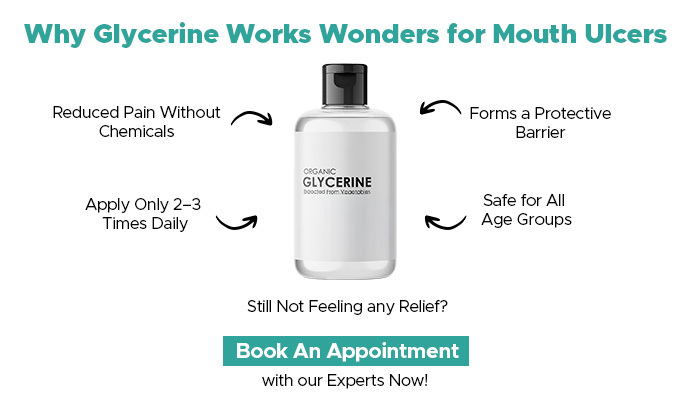
    • Hydrates the affected area: Keeps the ulcer moist, which prevents cracking or further irritation and allows tissues to regenerate more quickly.
    • Forms a protective layer: Acts as a gentle coat over the ulcer, shielding it from spicy foods, acidic drinks, and bacterial exposure.
    • Soothes pain and inflammation: Its cooling effect eases redness, swelling, and the raw, burning sensation.
    • Encourages healing: By creating a moist, clean environment, glycerine reduces healing time without introducing chemicals that could irritate the sore.

    Glycerine as a natural remedy for mouth ulcers, especially useful for those with recurring ulcers or sensitive mouths that react badly to synthetic treatments. 

    If you’re experiencing frequent, painful or unmanageable mouth sores, you can also seek guidance from a professional at our dental clinic in Calicut or dental clinic in Kannur for tailored advice.

    How to Use Glycerine Effectively for Mouth Ulcers? 

    Using glycerine doesn’t require any complicated mixing or ingredients. With just a small amount and basic hygiene, you can incorporate it easily into your daily routine.

    Step-By-Step Instructions to Use Glycerine Effectively for Mouth Ulcers: 

    1. Rinse your mouth with clean water to remove food particles and bacteria.
    2. Dry the area gently if possible, using a tissue or by letting your mouth air-dry for a few seconds.
    3. Apply glycerine directly to the ulcer using a clean fingertip or a sterile cotton swab. Ensure it coats the sore fully.
    4. Do not rinse, eat, or drink for the next 20–30 minutes to allow maximum absorption.
    5. Repeat this process 2–3 times a day especially after meals and before bedtime.

    Tip: Nighttime application works best since your mouth stays relatively undisturbed, giving glycerine more uninterrupted contact time with the ulcer.

    Is Glycerine Safe for Everyone?

    Yes; glycerine is generally safe for most people when used topically and in moderation. It is often used in oral care products and even food formulations. However, to ensure maximum safety and effectiveness, follow these usage guidelines:  

    Suitable for:

    • Children: Safe under adult supervision, especially for minor mouth sores or irritation from braces.
    • Adults and seniors: Ideal for recurring ulcers, dry mouth, or post-dental procedure care.
    • Pregnant and breastfeeding women: Typically safe, but it’s always wise to consult a healthcare provider before starting any new remedy.

    Important: Only use pharmaceutical-grade or food-grade glycerine. Avoid industrial or cosmetic glycerine as they may contain additives or chemicals not meant for oral use.

    Why Choose Glycerine Over Other Remedies for Mouth Ulcers?

    There are many options for treating ulcers, including gels, rinses and ointments. But, not all are gentle or effective for every case. Here’s why glycerine stands out:

    Remedy Pros Cons
    Glycerine Natural, gentle, safe for daily use Needs consistent application
    Antiseptic gels Fast relief Often contain alcohol or synthetic agents
    Salt rinses Easy to prepare Can irritate sensitive tissues
    Steroid ointments Strong anti-inflammatory Prescription only, not for mild cases

    If you’re looking for a reliable, chemical-free solution for mouth ulcers, glycerine offers the right balance between relief and safety. 

    Signs Your Mouth Ulcer Needs a Professional Attention! 

    While glycerine offers great relief, not every ulcer behaves the same. It’s important to recognize symptoms that suggest something more serious than a typical sore.

    Pay attention if:

    • The ulcer doesn’t heal after two weeks.
    • It returns to the same spot frequently.
    • It becomes unusually large, discolored, or starts to bleed.
    • You’re facing increased discomfort with eating or talking.

    These symptoms could indicate underlying health issues, ranging from nutritional deficiencies to immune responses. Knowing when to move from home care to expert advice ensures both comfort and safety.    

    Relief Can Be Simple! Book Your Appointment Now! 

    If you’re struggling with mouth ulcers, don’t ignore the pain. Relief is possible, and often without harsh chemicals. Glycerine as a natural remedy for mouth ulcers proves that healing doesn’t have to be complex or chemical-laden.

    Still unsure or dealing with stubborn ulcers? Visit Elite Dental Studio, your trusted dental clinic in Calicut and dental clinic in Kannur for a professional evaluation and long-term relief. 

    Frequently Asked Questions:

    Can I use glycerine for all types of mouth ulcers?

    Ans. Yes, glycerine can be used for most minor mouth ulcers caused by irritation, nutritional deficiencies, or stress. However, if the ulcers are large, persistent, or recurring frequently, it’s best to consult a dental professional.

    How often should I apply glycerine on a mouth ulcer?

    Ans. For best results, apply glycerine 2 to 3 times a day. Let it stay on the ulcer for 20–30 minutes each time without rinsing, eating, or drinking during that period.

    Is it safe to swallow glycerine after applying it?

    Ans. While small amounts of pharmaceutical or food-grade glycerine are generally safe if accidentally swallowed, it’s best to avoid ingesting it in large quantities. Spit out any excess after application when possible.

    How long does it take for glycerine to heal a mouth ulcer?

    Ans. Healing time varies depending on the severity of the ulcer, but regular use of glycerine can help reduce pain and promote healing within 3 to 5 days for most mild to moderate sores.

    Can children use glycerine for mouth ulcers?

    Ans. Yes, children can use glycerine, but it should be applied under adult supervision. Always ensure you’re using food-grade or pharmaceutical-grade glycerine only.

    What should I do if glycerine doesn’t improve the ulcer?

    Ans. If you see no improvement after 7 days of regular application, or if symptoms worsen, it may be time to seek professional evaluation. Persistent ulcers may be linked to nutritional deficiencies, stress, or underlying health conditions.   


  • Dental Attrition: Symptoms, Causes, Treatments

    Your teeth aren’t indestructible. Every time you chew, grind, or clench your jaw, a little bit of your enamel wears away. Over time, this natural wear can escalate into a more serious condition known as dental attrition, a silent destroyer of your smile and oral health.  

    While dental attrition is common, especially with age or lifestyle habits, it’s often misunderstood or mistaken for other dental issues. Left untreated, it can result in painful tooth sensitivity, bite misalignment, and even tooth loss. The good news? With the right knowledge and professional care, it’s entirely manageable.

    In this blog, we’ll explore dental attrition symptoms, understand its root causes, dive into treatment options, and outline how to prevent further damage. Whether you’re searching for guidance or looking for expert help at a trusted dental clinic in Calicut or Kannur, this comprehensive guide is your first step to healthier teeth.

    Understanding Dental Attrition

    Dental attrition is the gradual loss of tooth structure due to tooth-to-tooth contact. Unlike erosion or abrasion, which result from acids or external forces, attrition is caused by the friction between teeth — typically from grinding, clenching, or an imbalanced bite.

    It may not cause immediate discomfort, which is why many patients don’t realize the damage until it becomes severe.

    Dental-Attrition-Info

    Common Dental Attrition Symptoms

    Noticing changes in your teeth but unsure what’s going on? Here are key dental attrition symptoms to watch for:

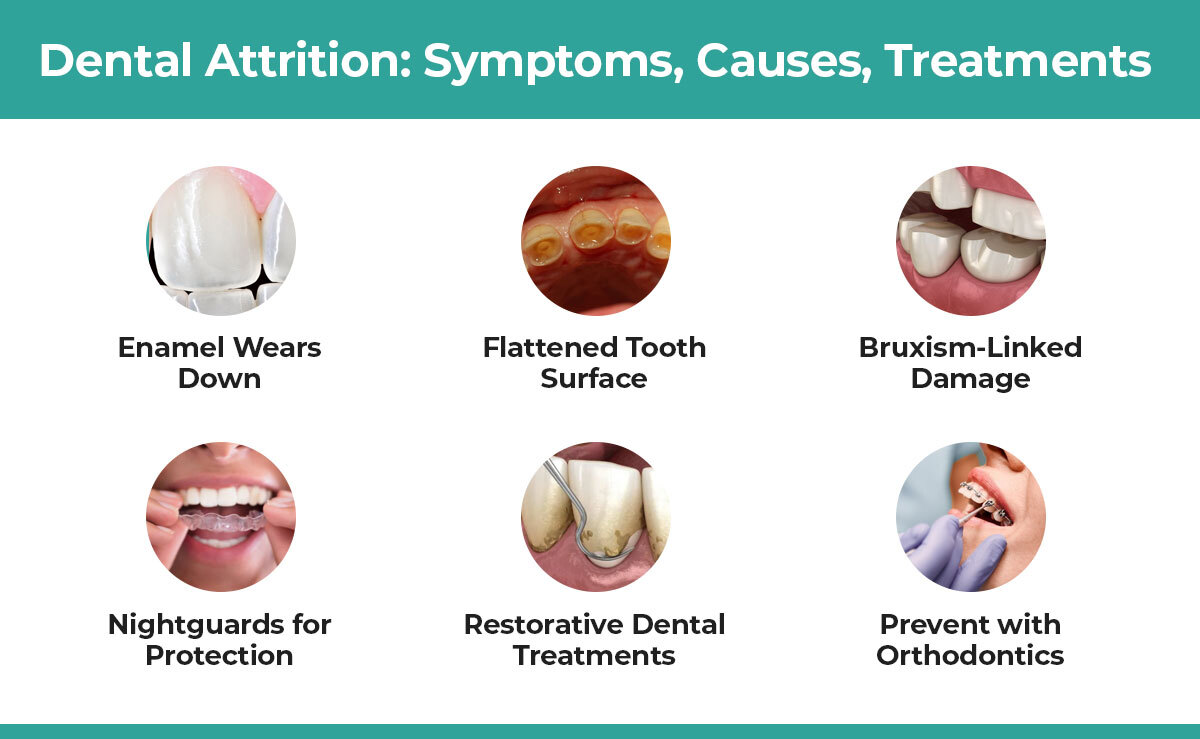
    • Flattened or worn-down teeth
    • Chipping or cracking of enamel edges
    • Tooth sensitivity (especially to hot or cold foods)
    • Yellowing teeth (due to exposed dentin)
    • Loss of bite height (changes in facial structure or appearance)
    • Jaw pain or TMJ discomfort
    • Headaches or sore muscles from clenching/grinding

    Early identification of these signs can help avoid irreversible damage and costly restorative procedures.

    Dental Attrition Causes: Why It Happens

    Dental attrition doesn’t just “happen” overnight. It’s usually triggered by underlying habits or conditions. Let’s break down the major dental attrition causes:

    1. Bruxism (Teeth Grinding or Clenching)

    One of the leading causes. Whether stress-induced or due to sleep disorders, bruxism exerts constant pressure, accelerating enamel wear.

    2. Malocclusion (Poor Bite Alignment)

    When teeth don’t align properly, certain areas endure more pressure, speeding up the wearing process.

    3. Age and Natural Wear

    Over time, regular chewing causes slow enamel wear. However, this process accelerates in those with thinner enamel.

    4. Dietary and Lifestyle Factors

    Hard or abrasive foods, frequent chewing of ice or pens, or even excessive use of teeth as tools can worsen attrition.

    5. Genetic Predisposition

    Some individuals naturally have softer enamel, increasing susceptibility.

    6. Missing Teeth

    When some teeth are missing, the others bear more pressure during chewing, leading to uneven wear.

    Why You Shouldn’t Ignore Dental Attrition? 

    Unchecked dental attrition can lead to serious oral health complications:

    • Increased tooth sensitivity and pain
    • Shortened or flattened teeth
    • Exposed dentin leading to decay
    • Gum recession and periodontal issues
    • Temporomandibular joint (TMJ) disorders
    • Changes in facial aesthetics
    • Difficulty chewing or speaking

    The earlier the intervention, the simpler the solution.

    Dental Attrition Treatments: From Relief to Restoration

    The best dental attrition treatments depend on the severity of the wear and underlying causes. Here’s how experts address it:

    1. Comprehensive Diagnosis

    Before any treatment begins, your dentist will assess:

    • Tooth wear patterns
    • Bite alignment
    • Jaw muscle activity
    • Bruxism tendencies (sometimes using sleep studies)

    2. Occlusal Splints or Night Guards

    For patients who grind their teeth during sleep, a custom-made mouthguard (night splint) helps reduce enamel wear and protects teeth from further damage.

    3. Orthodontic Correction

    In cases of malocclusion, braces or aligners can realign your bite to distribute chewing forces more evenly.

    4. Restorative Procedures

    Depending on the tooth damage, restorative options may include:

    • Dental Bonding – To reshape worn-down teeth with resin.
    • Dental Crowns – For severely damaged or sensitive teeth, crowns provide full coverage and restore structure.
    • Veneers – Ideal for aesthetic enhancement and minor reshaping.
    • Onlays/Inlays – For moderate damage requiring more than a filling but less than a crown.

    5. Tooth Replacement Options

    If tooth loss has occurred due to attrition:

    • Dental implants or
    • Bridges can help restore function and prevent further wear on surrounding teeth.

    6. Muscle Relaxant Therapies  

    In severe bruxism cases, muscle relaxant injections may be used to reduce clenching intensity.

    Preventing Dental Attrition: Best Practices for Long-Term Oral Health

    You don’t need to wait for damage to take action. Follow these preventive steps:

    • Use a nightguard if you grind or clench your teeth.
    • Address stress triggers that may contribute to bruxism.
    • Schedule regular dental checkups for early detection.
    • Maintain good oral hygiene to keep enamel strong.
    • Avoid hard or chewy foods that cause unnecessary strain.
    • Correct misaligned teeth through orthodontic treatments.
    • Replace missing teeth promptly to maintain bite balance.

    How Elite Dental Studio Supports Dental Attrition Care? 

    If you’re experiencing symptoms or suspect enamel wear, consult a dental expert promptly. Elite Dental Studio, a trusted dental clinic in Kannur and Calicut, offers tailored treatment plans backed by advanced diagnostics, modern equipment, and a compassionate team. 

    With a patient-first approach, they evaluate the root cause of your condition and create a customized roadmap for recovery — from nightguards and occlusal adjustments to full smile restorations.

    Whether your goal is to relieve sensitivity, stop further damage, or restore aesthetics, Elite Dental Studio is committed to bringing back your confident, healthy smile.  

    When to See a Dentist for Dental Attrition? 

    Here’s when professional intervention becomes non-negotiable:

    • You notice sharp edges or flattened areas on your teeth.
    • You’re dealing with persistent sensitivity or unexplained jaw discomfort.
    • You’re waking up with headaches or muscle tightness.
    • Your teeth look shorter or your smile has changed over time.
    • You’ve had a history of grinding or clenching.

    Early evaluation can make all the difference in preventing advanced complications.

    Protect, Preserve & Restore! 

    Your teeth were designed to last a lifetime, but only with the right care. Dental attrition, while common, doesn’t have to progress into something serious. By recognizing the early symptoms, understanding the causes, and exploring modern treatments, you’re already one step ahead in preserving your oral health.

    If you’re based in Kerala and looking for reliable care, a reputable dental clinic in Calicut or Kannur like Elite Dental Studio can guide you through diagnosis, prevention, and long-term solutions. 

    Don’t let silent wear rob you of your confident smile. Prioritize your teeth today — because once enamel is gone, it doesn’t come back.          

    Frequently Asked Questions:

    What is dental attrition and how is it different from erosion or abrasion?

    Ans. Dental attrition is the gradual loss of tooth structure due to tooth-to-tooth contact, unlike erosion (caused by acids) or abrasion (caused by external forces like hard brushing).

    What are the most common dental attrition symptoms I should look out for?

    Ans. Look for signs like flattened teeth, tooth sensitivity, yellowing, jaw pain, or changes in your bite or facial structure.

    Can dental attrition be reversed naturally?

    Ans. No, once enamel is lost, it doesn’t regenerate. However, the effects can be managed and treated with professional dental care.

    How is dental attrition treated in severe cases?

    Ans. Treatments may include night guards, dental bonding, crowns, orthodontics, or even implants and veneers depending on the severity.

    Is dental attrition painful?

    Ans. It may not be painful in early stages but can lead to discomfort, sensitivity, and jaw pain as it progresses.

    How can I prevent dental attrition in the future?

    Ans. Using nightguards, correcting your bite, managing stress, and avoiding hard foods can help prevent attrition.