Tag: dental clinic in calicut

  • Glycerine: A Natural Remedy for Mouth Ulcers

    Mouth ulcers can disrupt your day in an instant, making meals painful, conversations uncomfortable, and your overall oral health harder to manage. If you’re here, you’re already familiar with that sting. What you want is a practical solution that’s safe, fast-acting, and easy to find. Glycerine might just be the natural remedy for mouth ulcers that you’re looking for.

    In this blog, we’ll break down how glycerine works for mouth ulcers, why it’s effective, and how to use it the right way, without overcomplicating things. Read on to explore simple, science-backed relief.
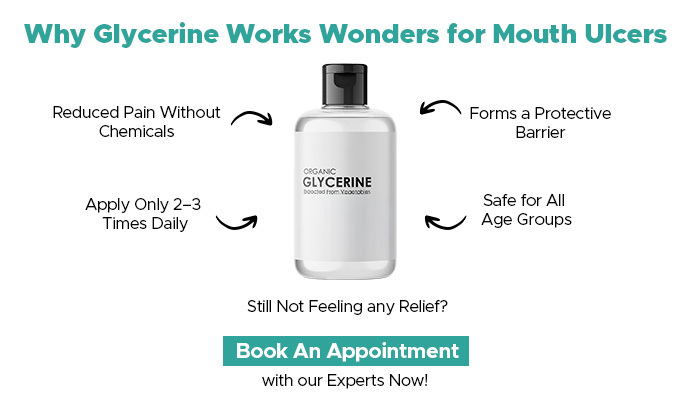
    Glycerine

    Why Glycerine Works for Mouth Ulcers? 

    Glycerine (or glycerol) is a naturally occurring, colorless, and odorless compound with humectant properties, which means it draws in and retains moisture. It’s commonly found in skincare products and oral hygiene solutions, but its real superpower lies in how it interacts with delicate tissues, like the soft lining of your mouth.

    Here’s How Glycerine Helps with Mouth Ulcers! 

    • Hydrates the affected area: Keeps the ulcer moist, which prevents cracking or further irritation and allows tissues to regenerate more quickly.
    • Forms a protective layer: Acts as a gentle coat over the ulcer, shielding it from spicy foods, acidic drinks, and bacterial exposure.
    • Soothes pain and inflammation: Its cooling effect eases redness, swelling, and the raw, burning sensation.
    • Encourages healing: By creating a moist, clean environment, glycerine reduces healing time without introducing chemicals that could irritate the sore.

    Glycerine as a natural remedy for mouth ulcers, especially useful for those with recurring ulcers or sensitive mouths that react badly to synthetic treatments. 

    If you’re experiencing frequent, painful or unmanageable mouth sores, you can also seek guidance from a professional at our dental clinic in Calicut or dental clinic in Kannur for tailored advice.

    How to Use Glycerine Effectively for Mouth Ulcers? 

    Using glycerine doesn’t require any complicated mixing or ingredients. With just a small amount and basic hygiene, you can incorporate it easily into your daily routine.

    Step-By-Step Instructions to Use Glycerine Effectively for Mouth Ulcers: 

    1. Rinse your mouth with clean water to remove food particles and bacteria.
    2. Dry the area gently if possible, using a tissue or by letting your mouth air-dry for a few seconds.
    3. Apply glycerine directly to the ulcer using a clean fingertip or a sterile cotton swab. Ensure it coats the sore fully.
    4. Do not rinse, eat, or drink for the next 20–30 minutes to allow maximum absorption.
    5. Repeat this process 2–3 times a day especially after meals and before bedtime.

    Tip: Nighttime application works best since your mouth stays relatively undisturbed, giving glycerine more uninterrupted contact time with the ulcer.

    Is Glycerine Safe for Everyone?

    Yes; glycerine is generally safe for most people when used topically and in moderation. It is often used in oral care products and even food formulations. However, to ensure maximum safety and effectiveness, follow these usage guidelines:  

    Suitable for:

    • Children: Safe under adult supervision, especially for minor mouth sores or irritation from braces.
    • Adults and seniors: Ideal for recurring ulcers, dry mouth, or post-dental procedure care.
    • Pregnant and breastfeeding women: Typically safe, but it’s always wise to consult a healthcare provider before starting any new remedy.

    Important: Only use pharmaceutical-grade or food-grade glycerine. Avoid industrial or cosmetic glycerine as they may contain additives or chemicals not meant for oral use.

    Why Choose Glycerine Over Other Remedies for Mouth Ulcers?

    There are many options for treating ulcers, including gels, rinses and ointments. But, not all are gentle or effective for every case. Here’s why glycerine stands out:

    Remedy Pros Cons
    Glycerine Natural, gentle, safe for daily use Needs consistent application
    Antiseptic gels Fast relief Often contain alcohol or synthetic agents
    Salt rinses Easy to prepare Can irritate sensitive tissues
    Steroid ointments Strong anti-inflammatory Prescription only, not for mild cases

    If you’re looking for a reliable, chemical-free solution for mouth ulcers, glycerine offers the right balance between relief and safety. 

    Signs Your Mouth Ulcer Needs a Professional Attention! 

    While glycerine offers great relief, not every ulcer behaves the same. It’s important to recognize symptoms that suggest something more serious than a typical sore.

    Pay attention if:

    • The ulcer doesn’t heal after two weeks.
    • It returns to the same spot frequently.
    • It becomes unusually large, discolored, or starts to bleed.
    • You’re facing increased discomfort with eating or talking.

    These symptoms could indicate underlying health issues, ranging from nutritional deficiencies to immune responses. Knowing when to move from home care to expert advice ensures both comfort and safety.    

    Relief Can Be Simple! Book Your Appointment Now! 

    If you’re struggling with mouth ulcers, don’t ignore the pain. Relief is possible, and often without harsh chemicals. Glycerine as a natural remedy for mouth ulcers proves that healing doesn’t have to be complex or chemical-laden.

    Still unsure or dealing with stubborn ulcers? Visit Elite Dental Studio, your trusted dental clinic in Calicut and dental clinic in Kannur for a professional evaluation and long-term relief. 

    Frequently Asked Questions:

    Can I use glycerine for all types of mouth ulcers?

    Ans. Yes, glycerine can be used for most minor mouth ulcers caused by irritation, nutritional deficiencies, or stress. However, if the ulcers are large, persistent, or recurring frequently, it’s best to consult a dental professional.

    How often should I apply glycerine on a mouth ulcer?

    Ans. For best results, apply glycerine 2 to 3 times a day. Let it stay on the ulcer for 20–30 minutes each time without rinsing, eating, or drinking during that period.

    Is it safe to swallow glycerine after applying it?

    Ans. While small amounts of pharmaceutical or food-grade glycerine are generally safe if accidentally swallowed, it’s best to avoid ingesting it in large quantities. Spit out any excess after application when possible.

    How long does it take for glycerine to heal a mouth ulcer?

    Ans. Healing time varies depending on the severity of the ulcer, but regular use of glycerine can help reduce pain and promote healing within 3 to 5 days for most mild to moderate sores.

    Can children use glycerine for mouth ulcers?

    Ans. Yes, children can use glycerine, but it should be applied under adult supervision. Always ensure you’re using food-grade or pharmaceutical-grade glycerine only.

    What should I do if glycerine doesn’t improve the ulcer?

    Ans. If you see no improvement after 7 days of regular application, or if symptoms worsen, it may be time to seek professional evaluation. Persistent ulcers may be linked to nutritional deficiencies, stress, or underlying health conditions.   


  • Self-Ligating Braces vs Traditional Braces – Know the Difference

    Braces have come a long way from being chunky, metal-heavy devices to smarter, sleeker solutions. If you’re exploring braces options, you’ve likely to come across two popular choices – traditional braces and self-litigating braces.

    Unlike traditional braces that use metal brackets and elastic bands for alignment, self-litigating braces eliminate the need of elastic by using specialized brackets with built-in clips. Moreover, self-litigating braces, as compared to the traditional braces, are easier to clean and more comfortable.

    If you’re trying to decide between self-ligating braces vs traditional braces, this guide is exactly what you need. Whether you’re planning for yourself or a family member, choosing the right braces can make a big difference in comfort, treatment time, and maintenance.

    Keep reading as we break down everything you need to know about self-litigating braces and traditional braces, including key differences, pros and cons, and expert insights that will help you make an informed choice.

    Self-Ligating Braces vs Traditional Braces (Infographic)

    Understanding Traditional Braces 

    Traditional braces are the most commonly used orthodontic solution. They consist of:

    • Metal brackets attached to each tooth.
    • Elastic bands or ties to hold the archwire in place.
    • Adjustments done periodically to tighten the wire and move teeth.

    Traditional metal braces work effectively by applying continuous pressure on teeth to gradually shift them into place.

    Pros of Traditional Braces:

    • Proven track record for a wide range of dental issues.
    • Often more affordable.
    • Suitable for complex orthodontic cases, including severe misalignments, bite issues or teeth rotations.

    Cons of Traditional Braces:

    • May cause discomfort due to elastic bands.
    • Require more frequent visits for adjustments.
    • Can be harder to clean due to additional parts.

    Understanding Self-Ligating Braces

    Self-ligating braces look quite similar to traditional braces, but they come with one major difference:

    • No elastic bands are used.
    • Specialized clips or brackets hold the archwire in place.

    This means the wire can slide freely within the brackets, leading to smoother tooth movement.

    Pros of Self-Ligating Braces:

    • Reduced friction and pressure.
    • Fewer dental visits needed.
    • Easier to clean and maintain.
    • Often more comfortable to wear.

    Cons of Self-Ligating Braces:

    • Slightly more expensive.
    • May not be ideal for severe alignment issues.
    • Not as widely available in every dental clinic.

    Key Differences: Self-Ligating Braces vs Traditional Braces

    Now that we know the basics for what are traditional braces and self-litigating braces, their pros and cons, let’s now dig into the quick and detailed comparison between the two!

    Feature Self-Ligating Braces Traditional Braces
    Elastic Bands Not used Required
    Friction Level Lower Higher
    Treatment Time Often shorter Typically longer
    Maintenance Easier Slightly difficult
    Appointments Fewer visits Frequent adjustments
    Comfort Generally more comfortable Can cause discomfort
    Cost Slightly higher More affordable

    Self-Ligating Braces vs Traditional Braces: Treatment Experience

    The treatment experience can vary significantly between traditional and self-ligating braces, from the frequency of dental visits to overall comfort and hygiene. Here’s what you can expect with each option:

    With Traditional Braces:

    • Monthly visits are usually required.
    • Elastic bands need replacing.
    • Adjustments can cause soreness.
    • Proper brushing and flossing is crucial due to extra components.

    With Self-Ligating Braces:

    • Visits may be spaced out every 6-8 weeks.
    • Minimal discomfort during adjustments.
    • Less plaque buildup around brackets.
    • More hygienic due to open design.

    If you’re still unsure about which braces to opt for, it’s best to visit a reputable dental clinic in Calicut or a dental clinic in Kochi for a professional consultation.

    Self-Ligating Braces vs Traditional Braces: Which Option Is More Popular?

    While traditional braces remain widely used, self-ligating braces are becoming increasingly popular due to their enhanced comfort, cleaner design, and shorter appointment schedules. However, popularity doesn’t always mean suitability.

    The choice is personal and depends on your priorities. If comfort, hygiene, and fewer visits matter to you, self-ligating braces may be the way forward. If budget and time-tested effectiveness are your top concerns, traditional braces are still a solid option.

    When it comes to self-ligating braces vs traditional braces, Consult a trusted expert at Elite Dental Studio for a personalized orthodontic plan tailored to your dental needs and lifestyle.

    Don’t Let Confusion Delay Your Confident Smile! Book Your Appointment with Expert Dentists Now! 

    Whether you’re in Calicut or Kochi, the right dental care and guidance can make your orthodontic journey seamless and rewarding. Explore your options and take the first step towards a brighter, healthier smile.

    Visit a trusted dental clinic in Calicut or dental clinic in Kochi today to know what suits you best! s

    Frequently Asked Questions: 

    Are self-ligating braces faster than traditional braces?

    Ans. Self-ligating braces may reduce treatment time slightly due to less friction, but the actual speed depends on your specific dental condition and how well you follow your orthodontist’s instructions.

    Do self-ligating braces hurt less than traditional ones?

    Ans. Yes, self-ligating braces generally cause less discomfort because they don’t use elastic bands, which reduces pressure on the teeth.

    Can both self-ligating and traditional braces treat severe dental misalignments?

    Ans. Traditional braces are often better suited for complex orthodontic issues. Self-ligating braces work well for moderate cases but may not be ideal for very severe misalignments.

    How often do I need to visit the dentist with self-ligating braces?

    Ans. Typically, visits are less frequent—around every 6 to 8 weeks—compared to traditional braces, which may require monthly adjustments.

    Are self-ligating braces more expensive?

    Ans. Yes, they tend to cost more upfront but may save you time and reduce the number of appointments, potentially balancing out the cost over time.

    Which type of braces is easier to clean?

    Ans. Self-ligating braces are easier to maintain as they don’t have elastic ties that trap food and plaque.

  • Dental Attrition: Symptoms, Causes, Treatments

    Your teeth aren’t indestructible. Every time you chew, grind, or clench your jaw, a little bit of your enamel wears away. Over time, this natural wear can escalate into a more serious condition known as dental attrition, a silent destroyer of your smile and oral health.  

    While dental attrition is common, especially with age or lifestyle habits, it’s often misunderstood or mistaken for other dental issues. Left untreated, it can result in painful tooth sensitivity, bite misalignment, and even tooth loss. The good news? With the right knowledge and professional care, it’s entirely manageable.

    In this blog, we’ll explore dental attrition symptoms, understand its root causes, dive into treatment options, and outline how to prevent further damage. Whether you’re searching for guidance or looking for expert help at a trusted dental clinic in Calicut or Kannur, this comprehensive guide is your first step to healthier teeth.

    Understanding Dental Attrition

    Dental attrition is the gradual loss of tooth structure due to tooth-to-tooth contact. Unlike erosion or abrasion, which result from acids or external forces, attrition is caused by the friction between teeth — typically from grinding, clenching, or an imbalanced bite.

    It may not cause immediate discomfort, which is why many patients don’t realize the damage until it becomes severe.

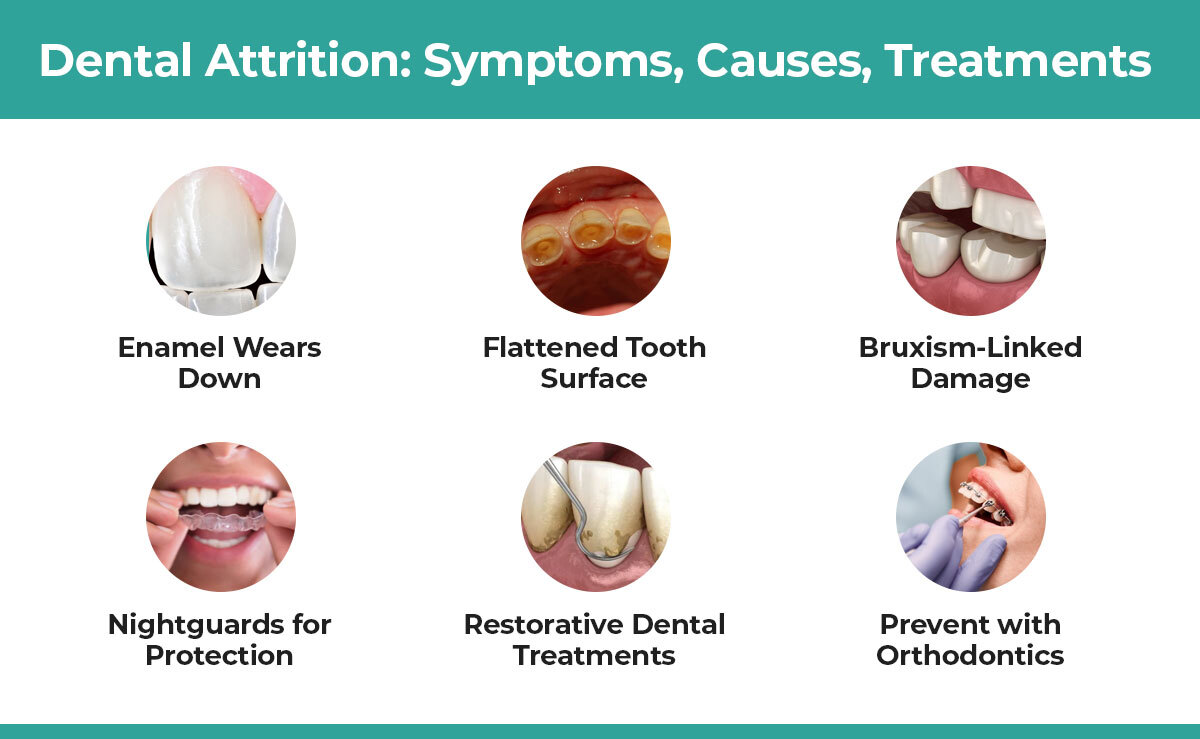
    Dental-Attrition-Info

    Common Dental Attrition Symptoms

    Noticing changes in your teeth but unsure what’s going on? Here are key dental attrition symptoms to watch for:

    • Flattened or worn-down teeth
    • Chipping or cracking of enamel edges
    • Tooth sensitivity (especially to hot or cold foods)
    • Yellowing teeth (due to exposed dentin)
    • Loss of bite height (changes in facial structure or appearance)
    • Jaw pain or TMJ discomfort
    • Headaches or sore muscles from clenching/grinding

    Early identification of these signs can help avoid irreversible damage and costly restorative procedures.

    Dental Attrition Causes: Why It Happens

    Dental attrition doesn’t just “happen” overnight. It’s usually triggered by underlying habits or conditions. Let’s break down the major dental attrition causes:

    1. Bruxism (Teeth Grinding or Clenching)

    One of the leading causes. Whether stress-induced or due to sleep disorders, bruxism exerts constant pressure, accelerating enamel wear.

    2. Malocclusion (Poor Bite Alignment)

    When teeth don’t align properly, certain areas endure more pressure, speeding up the wearing process.

    3. Age and Natural Wear

    Over time, regular chewing causes slow enamel wear. However, this process accelerates in those with thinner enamel.

    4. Dietary and Lifestyle Factors

    Hard or abrasive foods, frequent chewing of ice or pens, or even excessive use of teeth as tools can worsen attrition.

    5. Genetic Predisposition

    Some individuals naturally have softer enamel, increasing susceptibility.

    6. Missing Teeth

    When some teeth are missing, the others bear more pressure during chewing, leading to uneven wear.

    Why You Shouldn’t Ignore Dental Attrition? 

    Unchecked dental attrition can lead to serious oral health complications:

    • Increased tooth sensitivity and pain
    • Shortened or flattened teeth
    • Exposed dentin leading to decay
    • Gum recession and periodontal issues
    • Temporomandibular joint (TMJ) disorders
    • Changes in facial aesthetics
    • Difficulty chewing or speaking

    The earlier the intervention, the simpler the solution.

    Dental Attrition Treatments: From Relief to Restoration

    The best dental attrition treatments depend on the severity of the wear and underlying causes. Here’s how experts address it:

    1. Comprehensive Diagnosis

    Before any treatment begins, your dentist will assess:

    • Tooth wear patterns
    • Bite alignment
    • Jaw muscle activity
    • Bruxism tendencies (sometimes using sleep studies)

    2. Occlusal Splints or Night Guards

    For patients who grind their teeth during sleep, a custom-made mouthguard (night splint) helps reduce enamel wear and protects teeth from further damage.

    3. Orthodontic Correction

    In cases of malocclusion, braces or aligners can realign your bite to distribute chewing forces more evenly.

    4. Restorative Procedures

    Depending on the tooth damage, restorative options may include:

    • Dental Bonding – To reshape worn-down teeth with resin.
    • Dental Crowns – For severely damaged or sensitive teeth, crowns provide full coverage and restore structure.
    • Veneers – Ideal for aesthetic enhancement and minor reshaping.
    • Onlays/Inlays – For moderate damage requiring more than a filling but less than a crown.

    5. Tooth Replacement Options

    If tooth loss has occurred due to attrition:

    • Dental implants or
    • Bridges can help restore function and prevent further wear on surrounding teeth.

    6. Muscle Relaxant Therapies  

    In severe bruxism cases, muscle relaxant injections may be used to reduce clenching intensity.

    Preventing Dental Attrition: Best Practices for Long-Term Oral Health

    You don’t need to wait for damage to take action. Follow these preventive steps:

    • Use a nightguard if you grind or clench your teeth.
    • Address stress triggers that may contribute to bruxism.
    • Schedule regular dental checkups for early detection.
    • Maintain good oral hygiene to keep enamel strong.
    • Avoid hard or chewy foods that cause unnecessary strain.
    • Correct misaligned teeth through orthodontic treatments.
    • Replace missing teeth promptly to maintain bite balance.

    How Elite Dental Studio Supports Dental Attrition Care? 

    If you’re experiencing symptoms or suspect enamel wear, consult a dental expert promptly. Elite Dental Studio, a trusted dental clinic in Kannur and Calicut, offers tailored treatment plans backed by advanced diagnostics, modern equipment, and a compassionate team. 

    With a patient-first approach, they evaluate the root cause of your condition and create a customized roadmap for recovery — from nightguards and occlusal adjustments to full smile restorations.

    Whether your goal is to relieve sensitivity, stop further damage, or restore aesthetics, Elite Dental Studio is committed to bringing back your confident, healthy smile.  

    When to See a Dentist for Dental Attrition? 

    Here’s when professional intervention becomes non-negotiable:

    • You notice sharp edges or flattened areas on your teeth.
    • You’re dealing with persistent sensitivity or unexplained jaw discomfort.
    • You’re waking up with headaches or muscle tightness.
    • Your teeth look shorter or your smile has changed over time.
    • You’ve had a history of grinding or clenching.

    Early evaluation can make all the difference in preventing advanced complications.

    Protect, Preserve & Restore! 

    Your teeth were designed to last a lifetime, but only with the right care. Dental attrition, while common, doesn’t have to progress into something serious. By recognizing the early symptoms, understanding the causes, and exploring modern treatments, you’re already one step ahead in preserving your oral health.

    If you’re based in Kerala and looking for reliable care, a reputable dental clinic in Calicut or Kannur like Elite Dental Studio can guide you through diagnosis, prevention, and long-term solutions. 

    Don’t let silent wear rob you of your confident smile. Prioritize your teeth today — because once enamel is gone, it doesn’t come back.          

    Frequently Asked Questions:

    What is dental attrition and how is it different from erosion or abrasion?

    Ans. Dental attrition is the gradual loss of tooth structure due to tooth-to-tooth contact, unlike erosion (caused by acids) or abrasion (caused by external forces like hard brushing).

    What are the most common dental attrition symptoms I should look out for?

    Ans. Look for signs like flattened teeth, tooth sensitivity, yellowing, jaw pain, or changes in your bite or facial structure.

    Can dental attrition be reversed naturally?

    Ans. No, once enamel is lost, it doesn’t regenerate. However, the effects can be managed and treated with professional dental care.

    How is dental attrition treated in severe cases?

    Ans. Treatments may include night guards, dental bonding, crowns, orthodontics, or even implants and veneers depending on the severity.

    Is dental attrition painful?

    Ans. It may not be painful in early stages but can lead to discomfort, sensitivity, and jaw pain as it progresses.

    How can I prevent dental attrition in the future?

    Ans. Using nightguards, correcting your bite, managing stress, and avoiding hard foods can help prevent attrition.

  • Top Foods For Strong Teeth and Gums

    You’ve heard the phrase “You are what you eat.” But have you ever considered how it applies to your teeth and gums?

    Dental care is more than just brushing, flossing, and visiting your dentist. A major part of maintaining excellent oral health starts with your plate. Your daily food choices can directly affect how strong your teeth are, how healthy your gums stay, and how confident your smile looks over time.

    At Elite Dental Studio, your trusted dental clinic in Calicut and home to the best dentist in Kannur, we believe great oral health begins with the right diet. Beyond dental treatments, we guide our patients to make smart food choices that naturally strengthen teeth and gums.

    This guide highlights the top foods for strong teeth and gums, helping you support enamel, fight bacteria, and boost gum health—right from your plate.

    1. Crunchy Fruits and Vegetables: Nature’s Toothbrush

    Examples: Apples, carrots, celery, cucumber, bell peppers
    Benefit: Cleans plaque, stimulates saliva production, strengthens enamel

    Crunchy, fibrous fruits and vegetables do more than satisfy hunger. Their coarse texture scrubs the surface of your teeth, almost like a natural toothbrush, helping to reduce plaque and food particles. They also stimulate saliva production, which helps neutralize harmful acids.

    Pro Tip: Pack a few carrot sticks or apple slices in your lunch. It’s a smart snack that freshens breath and protects enamel.

    2. Dairy Products: Calcium-Packed Enamel Protectors

    Examples: Milk, cheese, yogurt (unsweetened), paneer
    Benefit: High in calcium and phosphates, helps remineralize enamel

    Dairy is your smile’s best friend. Calcium and phosphorus found in milk and cheese are vital for rebuilding enamel. Cheese, in particular, raises the pH level in your mouth, lowering the risk of tooth decay.

    Local Note: Kerala’s traditional use of fresh curd and paneer makes it easy to incorporate these benefits into everyday meals.

    3. Leafy Greens: Vitamin-Rich Gum Supporters

    Examples: Spinach, kale, amaranth (cheera), drumstick leaves
    Benefit: Rich in vitamins A and C, folic acid, and calcium – all essential for gum health

    These nutritional powerhouses offer vitamins and minerals that support healthy gum tissue, prevent inflammation, and help with cell regeneration. They’re also low in calories, making them a great addition to any diet.

    Pro Tip: Add a handful of spinach to your dosa batter or sneak kale into smoothies for your kids.

    4. Nuts and Seeds: Micro-Mineral Boosters for Teeth

    Examples: Almonds, sesame seeds, walnuts, chia seeds
    Benefit: Loaded with calcium, magnesium, phosphorus, and healthy fats

    Nuts and seeds offer a crunchy, satisfying way to strengthen your teeth. Sesame seeds, for instance, help scrub plaque off teeth while delivering a strong dose of calcium.

    5. Fatty Fish and Eggs: Vitamin D for Stronger Absorption

    Examples: Sardines, salmon, mackerel, eggs (especially yolk)
    Benefit: Supports calcium absorption and reduces inflammation in gums

    Vitamin D is essential for your body to properly absorb calcium. Including fatty fish in your diet can help build strong jawbones and keep your gums from becoming inflamed or infected.

    Kerala Tip: Sardines and mackerel (netholi, ayala) are common in coastal diets, making this an easy and natural oral health booster.

    6. Green Tea and Herbal Teas: Anti-Bacterial Oral Defense

    Examples: Green tea, clove tea, turmeric tea
    Benefit: Contains antioxidants and polyphenols that fight plaque and bacteria

    Green tea has natural compounds that reduce oral bacteria and improve overall dental health. Clove and turmeric teas are known for their anti-inflammatory and antibacterial properties, which support gum health.

    7. Water: The Most Underrated Dental Ally

    Drinking plenty of water helps rinse away food particles, keep your mouth hydrated, and maintain saliva production. Saliva is crucial for neutralizing acids and protecting tooth enamel.

    Pro Tip from Elite Dental Studio: Stick to fluoride-rich drinking water where possible for added cavity protection.

    What to Avoid: Foods That Harm Your Teeth and Gums

    While the right foods can strengthen your smile, the wrong ones can erode enamel, feed harmful bacteria, and irritate your gums.

    Limit these items:

    • Sugary drinks and candies
    • Sticky snacks like toffee
    • Acidic beverages (soft drinks, packaged juices)
    • Excessive coffee or black tea
    • White bread and starchy snacks

    Balanced Diet, Strong Smile: Make Nutrition Part of Your Dental Routine

    A balanced diet packed with tooth-friendly foods can significantly reduce the risk of cavities, gum disease, and oral infections.

    Here’s what a day of tooth-friendly eating might look like:

    • Breakfast: Plain yogurt with chia seeds and sliced apple
    • Lunch: Rice with spinach curry, curd, and grilled fish
    • Snack: Handful of almonds and a cup of green tea
    • Dinner: Mixed vegetable soup with paneer and whole-grain roti

    When Diet Isn’t Enough: Schedule a Check-Up

    While food can support strong teeth and healthy gums, it’s not a substitute for professional dental care. If you’re experiencing sensitivity, gum bleeding, or discoloration, don’t wait for the problem to get worse.

    At Elite Dental Studio, we blend modern dental techniques with a compassionate approach to help you maintain the best oral health possible. Whether you’re looking for preventive care, cosmetic solutions, or gum treatments, our experienced team is here to help.

    Why Choose Elite Dental Studio?

    • Trusted dental clinic in Calicut
    • Home to the best dentist in Kannur for family and cosmetic dentistry
    • Advanced technology and patient-first care
    • Personalized dietary advice for oral health

    Final Thoughts: Feed Your Smile Right

    Strong teeth and healthy gums start in the kitchen. By choosing the right foods and avoiding harmful habits, you can support a lifetime of confident smiles.

    Elite Dental Studio encourages you to be mindful of your diet and to partner with professionals who care about your total oral health.

    Ready to upgrade your dental care? Schedule your consultation today with Elite Dental Studio – your trusted partner in smile wellness.

    Frequently Asked Questions:

    Can food really make a difference in my gum health?

    Yes! Foods rich in vitamin C, antioxidants, and anti-inflammatory compounds can support gum regeneration and reduce inflammation.

    Is cheese better than milk for strong teeth?

    Both are beneficial, but cheese helps neutralize acid in the mouth faster, making it slightly more protective.

    What local Kerala foods are good for dental health?

    Leafy greens like cheera, curd, sardines, and coconut-based dishes are all rich in nutrients that support oral health.

    How often should I visit a dentist even if I eat healthy?

    A healthy diet helps, but regular dental check-ups (twice a year) are essential for early detection of issues.

    Can children follow this tooth-friendly diet too?

    Absolutely. Just ensure portions and textures are age-appropriate, and encourage snacking on fruits, nuts, and dairy.

  • Essential Tips for New Braces Wearers – Ultimate Guide

    You’re thinking of getting braces to fix crooked teeth, close gaps, or correct misaligned bites. Great decision! However, you might also wonder about the journey ahead and how you’ll manage it. Braces can boost your confidence in the long run. But initially, they may cause some uncertainty and confusion.

    Don’t worry! Our expert dentists at Elite Dental Studio are here to help clear all your doubts and guide you comfortably through this journey.

    Some quick tips to start: brush regularly and thoroughly, use floss threaders, avoid hard and sticky foods, and manage discomfort promptly.

    Ready to learn more? Dive into this blog for essential tips to make your braces experience effective and hassle-free. Whether you’re near our dental clinic in Calicut or looking for the best dentist in Kannur, we’re here to support you every step of the way!

    Initial Days With Braces: What to Expect

    The first week is crucial for adapting to braces. Here’s what most new wearers experience:

    • Mild Discomfort: As your teeth begin adjusting, soreness or pressure is natural.
    • Speech Changes: Some may notice temporary speech difficulties.
    • Increased Saliva: Your mouth may respond to new appliances with more saliva production.

    Tip: Use orthodontic wax to reduce irritation caused by brackets.

    Tips for New Braces Wearers

    Tips By Expert Dentists New Bracers Must Know! 

    Here’s the list of essential tips new bracers must always keep in mind. 

    #1 – Maintain Oral Hygiene 

    With braces, maintaining dental hygiene becomes more critical than ever. Food particles can easily get stuck between wires and brackets, leading to plaque buildup and even tooth decay.

    1.1 – Brushing Tips:

    • Brush after every meal using a soft-bristled toothbrush.
    • Use fluoride toothpaste and brush at a 45-degree angle.
    • Don’t forget the gumline and bracket edges.

    1.2 – Flossing Tips:

    • Use a floss threader or orthodontic floss for easy navigation around wires.
    • Consider investing in a water flosser for deeper cleaning.

    1.3 – Bonus Hygiene Tools:

    • Interdental Brushes: Great for cleaning between braces.
    • Antibacterial Mouthwash: Helps prevent gum disease and bad breath.

    #2 – Eat Smart with Braces

    You don’t have to give up all your favorite foods. Instead, you just need to be selective for a while! 

    2.1 – Foods to Avoid with Braces:

    • Hard candies and popcorn.
    • Sticky foods like chewing gum or caramel.
    • Crunchy items such as nuts and chips.
    • Whole apples or raw carrots (cut them into small pieces if necessary).

    2.2 – Braces-Friendly Foods:

    • Mashed potatoes, yogurt, and smoothies.
    • Soft-cooked vegetables and rice.
    • Eggs, bananas, and soft cheeses.

    Tip: Cut food into bite-sized pieces to reduce pressure on brackets.

    #3 – Manage Initial Braces Discomfort! 

    Pain from tightening and soreness is a part of the process, but manageable.

    3.1 – Remedies:

    • Use orthodontic wax on irritating brackets.
    • Apply cold compresses to reduce swelling.
    • Take over-the-counter pain relievers after consulting your dentist.
    • Rinse with warm salt water to soothe sore spots.

    #4 – Stay on Track with Dentist Appointments

    Regular orthodontic check-ups are essential for monitoring your progress and making necessary adjustments.

    4.1 – Keep in Mind:

    • Always arrive on time for adjustments.
    • Discuss any pain, unusual movements, or breakage.
    • Follow all instructions provided by your orthodontist.

    #5 – Sports and Braces: Safety First

    If you’re involved in sports with braces, wearing a mouthguard is essential.

    • Use an orthodontic mouthguard designed to fit over braces.
    • Replace it periodically to ensure a snug fit.
    • Clean it regularly to avoid bacterial buildup.

    #6 – Practice These Small Habits

    Braces are a long-term investment in your oral health. Building the right habits early on will make the experience much smoother.

    • Chew slowly and mindfully.
    • Avoid biting into things directly.
    • Carry a small braces-care kit with you, mini toothbrush, floss, and wax.

    #7 – Emotional Adjustment: It’s Normal

    Many new wearers, especially teens, experience some emotional discomfort too.

    • Braces may affect self-esteem initially.
    • Reassure yourself that it’s temporary and the results are worth it.
    • Celebrate small wins—like adapting to the routine or fewer irritations.

    What is Brackets or Wires Break? 

    Even with the best care, wires can sometimes poke out or brackets may come loose. If this happens, take these immediate steps:

    • Use orthodontic wax to cover sharp edges.
    • Do not attempt to cut wires yourself.
    • Call your dental clinic in Calicut or the best dentist in Kannur for guidance.

    When to Contact Your Orthodontist? 

    Sometimes it’s hard to know whether something is “normal” or requires professional attention. Here are a few cases which demand immediate dental attention. 

    • Severe or persistent pain occurs.
    • Brackets or bands come off repeatedly.
    • Sores or ulcers don’t heal.
    • You have a loose wire causing discomfort.

    Don’t Let Braces Fear Hold You Back! 

    Your braces journey is a powerful step toward improved dental health and a beautiful smile. By following these tips for new braces wearers, you not only protect your investment but also ensure faster, more comfortable results.

    Whether you’re under the care of the best dentist in Kannur or consulting with a top-tier orthodontist in Calicut, remember that your effort plays a major role in the outcome.

    As a reputed dental clinic in calicut , Elite Dental Studio is known for its skilled specialists and friendly approach. If you’re seeking advice, adjustments, or need reassurance on any aspect of your braces treatment, the expert team here is ready to help.

    Book your Appointment with our expert dentists in Calicut and Kannur now! 

    Frequently Asked Questions:

    How long will I need to wear braces?

    The duration depends on your specific dental needs and treatment plan. On average, most people wear braces between 18 to 24 months. However, complex alignment issues may extend the timeline slightly. Regular check-ups and following your orthodontist’s instructions can help speed up the process.

    What should I do if my braces cause pain?

    Mild discomfort or soreness is common, especially after adjustments. You can apply orthodontic wax on irritating brackets, rinse your mouth with warm salt water, and take over-the-counter pain relievers (after consulting your orthodontist). If the pain persists beyond a few days, it’s best to seek professional advice.

    Can I still eat my favorite foods with braces?

    Yes, you can enjoy a wide variety of foods, but you need to be mindful. Avoid hard, sticky, or crunchy items like nuts, popcorn, caramel, or chewing gum. Choose softer, braces-friendly alternatives like mashed potatoes, yogurt, bananas, or well-cooked vegetables. Cutting food into smaller pieces also helps protect your brackets.

    How often should I brush and floss with braces?

    Maintaining oral hygiene is crucial during orthodontic treatment. Ideally, you should brush after every meal using a soft-bristled toothbrush and fluoride toothpaste. Floss at least once a day using floss threaders or water flossers to clean around the wires and brackets thoroughly.


  • Dental Care Tips for Your Summer Vacation

    Sunshine, beaches, ice creams, and road trips—summer vacation is a time to unwind and recharge. But while you pack sunscreen for your skin, what are you doing to protect your smile? Warm weather, sugary treats, and travel can all challenge your dental health. That’s why practicing smart oral health tips for summer vacation is just as important as planning your itinerary.

    Let’s dive into simple yet effective ways to ensure your teeth stay healthy and your smile remains photo-ready all summer long.

    Why Does Summer Demands Special Dental Care? 

    Summer introduces unique challenges for oral health:

    • Increased sugar intake: Cold drinks, popsicles, and desserts can spike your sugar consumption.
    • Dehydration risk: Heat leads to reduced saliva, which is essential to protect enamel.
    • Interrupted routines: Vacations often throw off your brushing and flossing schedule.

    Being mindful of these challenges can help you take proactive steps and prevent post-holiday dental regrets.

    Tips to Keep Teeth Healthy in Summer

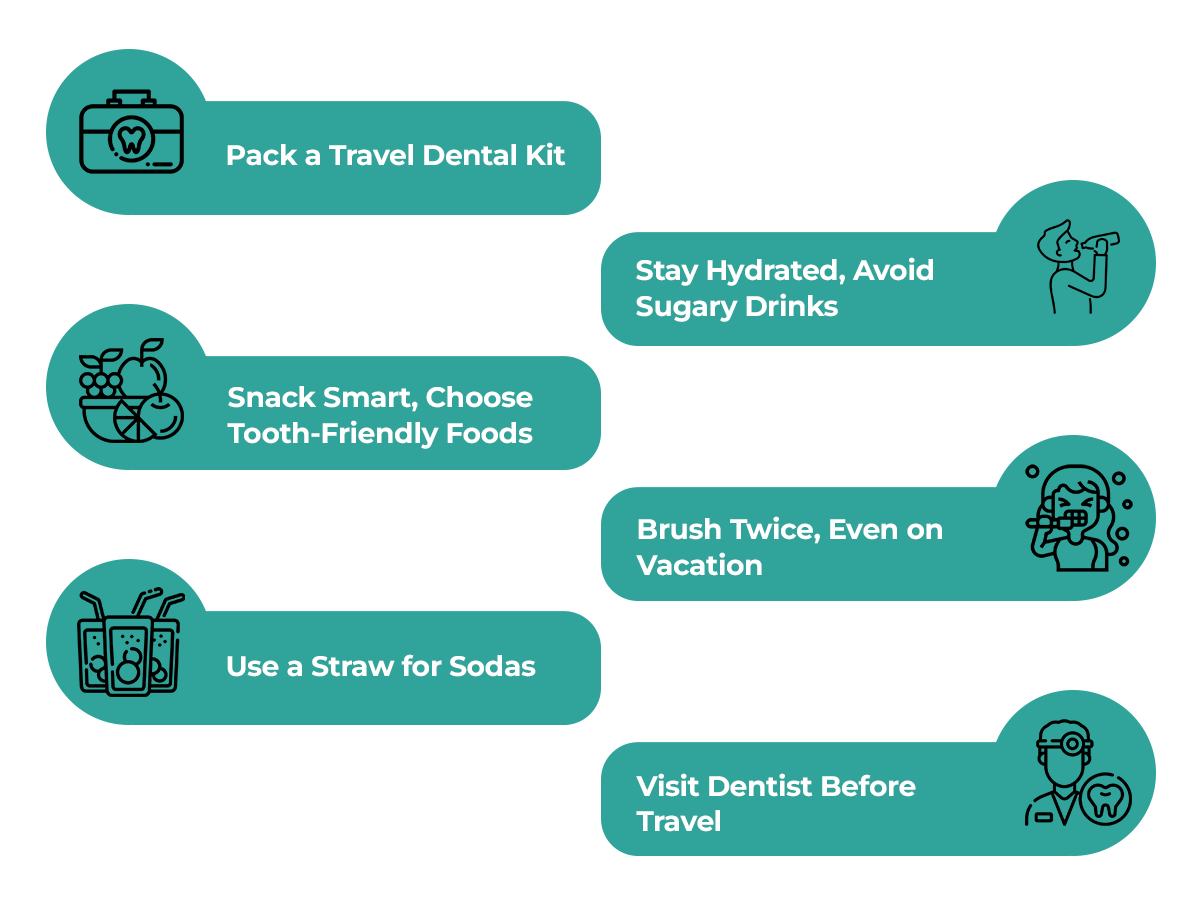
    Top Oral Health Tips for Summer Vacation

    1. Stay Hydrated—But Smartly

    While hydration is crucial, what you drink matters.

    • Best choice: Water, especially fluoridated.
    • Limit: Sugary sodas, fruit punches, and sports drinks—they’re acidic and can erode enamel.
    • Pro tip: Rinse your mouth with water after every acidic or sugary drink.

    2. Pack a Travel-Friendly Dental Kit

    Whether you’re hiking or flying, your oral care should travel with you:

    • Compact toothbrush with a cap
    • Travel-sized toothpaste (preferably with fluoride)
    • Floss picks or dental floss
    • Mouthwash (alcohol-free is gentler on gums)
    • Sugar-free gum (great for boosting saliva when brushing isn’t possible)

    Keep it in your carry-on for easy access on long trips.

    3. Stick to Your Routine—No Matter Where You Are

    Vacations disrupt routines, but dental hygiene should never take a holiday:

    • Brush twice a day for two minutes
    • Floss at least once daily
    • Rinse with mouthwash if brushing isn’t possible

    Even on lazy beach days or hectic sightseeing schedules, prioritize your oral care.

    4. Snack Smart

    Tempted by sugary ice creams or sticky candies? Choose alternatives that are gentle on teeth:

    • Cheese cubes or yogurt (high in calcium)
    • Crunchy fruits like apples or pears (natural teeth cleaners)
    • Nuts (low in sugar and high in nutrients)
    • Sugar-free frozen treats

    Moderation is key. If you indulge, brush after 30 minutes or at least rinse your mouth.

    5. Protect Your Teeth During Sports

    Planning water sports or mountain biking?

    • Wear a mouthguard to protect teeth from injury
    • Avoid chewing ice or opening bottle caps with your teeth

    6. Don’t Skip Dental Appointments Before Traveling

    A pre-vacation visit to a dental clinic in Calicut can ensure:

    • No hidden cavities or gum issues
    • Professional cleaning for a fresh start
    • Preventive tips tailored to your trip

    It’s far better to fix a small problem at home than face a dental emergency abroad.

    Tips to Keep Teeth Healthy in Summer for Children

    Kids love summer treats, but their teeth need extra care:

    • Set brushing reminders (use fun songs or timers)
    • Offer healthy snacks instead of candies
    • Use fun-flavored toothpaste to encourage regular brushing
    • Schedule checkups early in the summer to spot any issues

    Children are more prone to cavities due to their diet, so these small steps go a long way.

    Oral Hygiene Tips for Travelers

    Travelers face unique dental challenges, especially on long trips:

    While Flying:

    • Cabin pressure dries your mouth—chew sugar-free gum
    • Avoid aeroplane snacks high in starch

    While Road-Tripping:

    • Carry dental wipes or portable rinses
    • Don’t leave oral care kits in hot cars (it damages bristles and paste)

    While Camping:

    • Use bottled or purified water to brush
    • Carry biodegradable floss
    • Store toothbrushes in breathable cases

    Good oral hygiene doesn’t require a bathroom—just a little planning.

    Summer Foods That Strengthen Your Teeth

    Not all summer treats are bad! Add these to your diet:

    • Strawberries: High in vitamin C, help gum health
    • Watermelon: Boosts hydration
    • Carrots and celery: Naturally scrub your teeth
    • Leafy greens: Rich in calcium
    • Green tea: Natural anti-bacterial properties

    Things to Avoid for a Healthy Summer Smile

    Be mindful of these habits:

    • Chewing ice: It can crack enamel
    • Skipping night-time brushing: Plaque buildup overnight is harmful
    • Over-whitening: Don’t overuse whitening products—summer sun and chemicals can increase sensitivity
    • Excess citrus fruits: Acidic foods like lemons weaken enamel

    What to Do in Case of a Dental Emergency While Traveling?

    Don’t panic—follow these steps:

    1. Toothache: Rinse with warm saltwater and take an OTC painkiller.
    2. Broken tooth: Rinse, save the piece, and avoid chewing on that side.
    3. Lost filling/crown: Use dental wax or sugar-free gum temporarily.
    4. Bleeding gums: Rinse with saltwater and avoid harsh brushing.

    Consult a local dentist or call your home dentist for advice.

    Subtle Yet Smart Vacation Dental Habits

    • Always carry a reusable straw to limit sugary drink contact with teeth.
    • Choose soft bristles for travel brushes to avoid gum irritation.
    • Use lip balm with SPF—yes, lips are part of oral health!
    • Try natural xylitol mints to freshen breath and fight bacteria.

    Seasonal Checkup Reminder

    Just like your skin needs post-summer recovery, your teeth do too.

    After your vacation, it’s a good idea to:

    • Get a dental checkup and cleaning
    • Address any issues caused by travel diet or routine changes
    • Refresh your oral hygiene tools if worn out during travel

    Booking a post-holiday visit at the best dentist in Kannur ensures your oral health is fully back on track.

    Keep Your Smile Vacation-Ready! 

    Summer should be about sunshine and smiles, not toothaches or sensitivity. By following these tips to keep teeth healthy in summer, you can enjoy every bite, sip, and selfie without worry. Whether you’re relaxing at a beach or hiking through hills, smart oral hygiene is your best companion.

    And if you’re preparing for your next trip, make sure your smile is ready too. A quick visit to Elite Dental Studio can help you head into your holidays with confidence. For those based in Kerala, this trusted dental clinic in Calicut offers preventive care and expert advice to keep your summer carefree and cavity-free.

    Here’s to a season full of healthy grins! Elite Dental Studio—your partner in radiant summer smiles.

    Frequently Asked Questions:

    Why is dental care important during summer vacation?

     Summer often brings changes in diet, hydration levels, and daily routines, all of which can impact oral health. Proper dental care ensures your smile stays healthy, even while you’re enjoying your holidays.

    Can dehydration affect my oral health in summer?

    Yes. Dehydration reduces saliva flow, which is essential for washing away food particles and neutralizing acids that cause tooth decay.

    What snacks are tooth-friendly during summer?

    Opt for cheese, yogurt, apples, nuts, and raw veggies. These are low in sugar and promote better oral health. 

    Is it okay to skip brushing occasionally while on vacation?

    No. Skipping even one night of brushing can allow plaque to build up, increasing the risk of cavities and gum issues.

    What should I do if I have a dental emergency while traveling?

    Rinse your mouth with warm water, manage pain with OTC meds, and seek local dental care. You can also call your regular dentist for guidance.

    When is the best time to visit a dentist if I have travel plans?

    Schedule a dental checkup at least a week before your trip to ensure your oral health is in good shape and to address any issues beforehand.


  • Gum Disease: Stages, Symptoms, and Treatments

    Gum disease, often overlooked until it causes significant damage, is one of the most common yet preventable oral health issues worldwide. Understanding gum disease stages, recognizing its symptoms, and knowing the available gum disease treatments are vital for maintaining lifelong oral health.

    Whether you’re a professional, an influencer, a model or simply someone who cares about dental wellbeing, this guide dives deep into the science and care of gum disease, equipping you with practical knowledge. Plus, it subtly highlights why choosing the right care provider, like Elite Dental Studio, a trusted dental clinic in Calicut, is essential to keep your gums healthy.

    What Is Gum Disease?

    Gum disease, also known as periodontal disease, is an inflammatory condition affecting the tissues surrounding the teeth, primarily caused by bacterial infection. It ranges from mild gum inflammation (gingivitis) to severe damage affecting the bone that supports teeth (periodontitis).

    If left untreated, it can lead to tooth loss, impacting not just your smile but also overall health, as recent studies link periodontal disease with systemic issues such as cardiovascular disease and diabetes.

    Gum Disease Stages, Symptoms, Treatments

    Understanding Gum Disease Stages

    Gum disease progresses through several distinct stages. Early detection at any stage improves the prognosis and can prevent irreversible damage.

    1. Gingivitis – The Initial Stage

    • What happens: Bacteria build-up along the gum line causes inflammation.
    • Symptoms: Red, swollen gums that may bleed during brushing or flossing but no pain yet.
    • Reversibility: Fully reversible with good oral hygiene and professional cleaning.

    2. Early Periodontitis

    • What happens: Inflammation spreads below the gum line causing pockets between teeth and gums to form. Bone loss may begin.
    • Symptoms: Persistent bad breath, gum recession, bleeding gums, and slight discomfort.
    • Treatment: Requires professional cleaning and possible antibiotics.

    3. Moderate Periodontitis

    • What happens: Pockets deepen and more bone loss occurs, leading to tooth mobility.
    • Symptoms: Increased gum bleeding, tenderness, gum recession, and tooth sensitivity.
    • Treatment: Scaling and root planing, possibly more frequent dental visits.

    4. Advanced Periodontitis

    • What happens: Significant bone loss leads to loose teeth and possible tooth loss.
    • Symptoms: Severe pain, gum abscesses, pus discharge, and noticeable tooth mobility.
    • Treatment: May require surgical intervention or tooth extraction in severe cases.

    Key Gum Disease Symptoms to Watch For

    Recognizing gum disease symptoms early can save your teeth and reduce the need for invasive treatments.

    • Red, swollen gums
    • Bleeding while brushing or flossing
    • Persistent bad breath (halitosis)
    • Gum recession exposing tooth roots
    • Loose or shifting teeth
    • Pain or tenderness in gums
    • Pus discharge between teeth and gums
    • Changes in bite or how teeth fit together

    If you experience any combination of these symptoms, it’s crucial to consult a dental professional promptly.

    Why Do Gum Diseases Occur? Key Risk Factors

    Understanding risk factors helps in both prevention and targeted treatment strategies:

    • Poor oral hygiene
    • Tobacco use (smoking or chewing)
    • Genetic predisposition
    • Chronic illnesses such as diabetes
    • Hormonal changes (pregnancy, menopause)
    • Certain medications causing dry mouth or gum overgrowth
    • Stress, which can impair immune response
    • Poor nutrition

    Gum Disease Treatments: A Comprehensive Overview

    The choice of treatment depends on the stage of gum disease. Early intervention ensures minimal disruption, while advanced stages require specialized care.

    Non-Surgical Treatments

    • Professional Dental Cleaning: Removal of plaque and tartar to reverse gingivitis.
    • Scaling and Root Planing: Deep cleaning to remove tartar below the gum line and smooth root surfaces for healing.
    • Antibiotic Therapy: Topical or systemic antibiotics to reduce bacterial infection.

    Surgical Treatments

    • Flap Surgery: Lifting gums to clean deep pockets and secure tissue back in place.
    • Bone and Tissue Grafts: To regenerate lost bone or gum tissue around teeth.
    • Guided Tissue Regeneration: Stimulates regrowth of bone and gum tissue.
    • Laser Therapy: Minimally invasive treatment to reduce bacteria and inflamed tissue.

    Best Practices to Prevent Gum Disease

    • Maintain consistent oral hygiene: brush twice daily and floss daily.
    • Use an antiseptic mouthwash to reduce plaque.
    • Schedule regular dental checkups and cleanings.
    • Avoid tobacco products completely.
    • Manage systemic conditions like diabetes effectively.
    • Maintain a balanced diet rich in vitamins C and D.
    • Stay hydrated to prevent dry mouth.

    Choosing the Right Dental Clinic for Gum Disease Treatment

    Seeking treatment at a reputed dental clinic in Calicut like Elite Dental Studio ensures access to expert care, state-of-the-art technology, and personalized treatment plans. Whether you need routine cleaning or advanced periodontal surgery, a trusted dentist can make the difference between tooth preservation and loss.

    The best dentist in Kochi or Calicut understands that every patient’s condition is unique. They tailor treatments based on clinical findings, patient history, and lifestyle factors, ensuring the best outcomes with minimal discomfort.

    Protect Your Smile by Understanding Gum Disease! 

    Gum disease stages progress from mild inflammation to severe tissue and bone damage if untreated. Recognizing gum disease symptoms early and pursuing timely gum disease treatments is essential for dental and overall health. Preventive care combined with professional dental interventions ensures lasting oral wellbeing.

    For those seeking expert periodontal care, Elite Dental Studio offers comprehensive services with a patient-centric approach in Calicut. Their experienced team and advanced technology provide confidence in managing every stage of gum disease effectively.

    Your gums are the foundation of a healthy smile — don’t wait for symptoms to worsen. Stay informed, stay proactive, and consult the best for your oral health care.