Category: Dental Care

  • Can a Tooth Abscess be Treated with Just Antibiotics?

    Antibiotics reduce swelling and pain, but they cannot cure a tooth abscess because they do not remove the source of infection.  To stop tooth abscess from coming back, a dentist needs to treat the cause.

    Tooth abscess pain feels sharp, deep, and impossible to ignore. It is an infection trapped inside the tooth or under the gums. A dentist in Calicut, at Elite Dental Studio is a good choice to treat tooth abscess because they focus on comfort-led care and have multi-specialty support when a case needs endodontics, surgery, or gum care.

    If you are researching  tooth abscess – diagnosis & treatment, this blog gives you when antibiotics help, why they fail, how dentists confirm the source, and when swelling becomes urgent. 

    Can Antibiotics Treat Tooth Abscess Alone ?

    Most of the time, antibiotics reduce swelling, and  do not remove the infected tissue or drain the abscess, so the problem returns. Antibiotics can lower the heat but they do not remove the fuel. This fuel is trapped infection.

    Why Antibiotics Reduce Swelling But Do Not Remove The Cause?

    A tooth abscess is often a closed-space infection. A tablet cannot physically empty that space. Antibiotics are not capable enough to drain pus under pressure, remove dead nerve tissue from inside the tooth or clean the root canal space and seal it. So yes, you may feel better. But the source can stay.

    When Antibiotics Help And When They Do Not?

    Antibiotics are more useful when you have fever, swelling is spreading beyond the tooth area or immediate dental treatment at the best dental clinic in Calicut is not possible.

    Antibiotics are usually not the main solution when:

    • The pain is from an infected tooth nerve.
    • There is a clear pus pocket that needs drainage.
    • A gum infection needs deep cleaning.

    If you keep taking tablets and delaying the real treatment, you may end up with a bigger flare-up and fewer options.
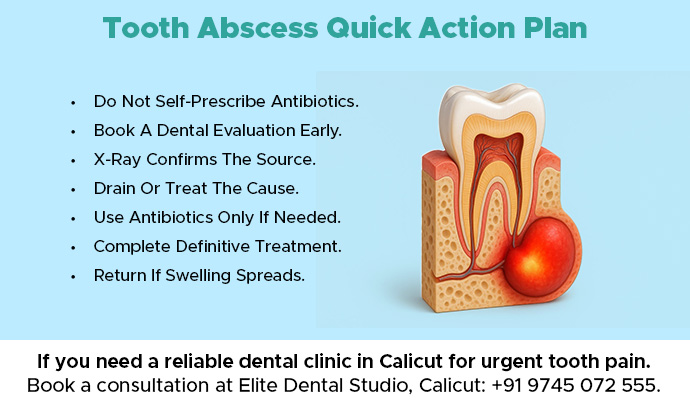
    tooth abscess quick action plan

    Which Antibiotics Are Used For A Tooth Abscess And When?

    A dental clinic in Calicut may prescribe antibiotics when there are systemic signs or when definitive treatment is delayed, but the choice depends on your exam and medical history. Antibiotics support the plan in selected cases. They do not replace drainage, root canal treatment, or gum treatment when those are needed.

    Common Antibiotics Used

    • Amoxicillin: Used for  many dental infections.
    • Clindamycin: Commonly used as an alternative for patients with penicillin allergy.
    • Metronidazole: Added with amoxicillin or penicillin in more severe infections where anaerobic bacteria are suspected.
    • Azithromycin: Another alternative option in certain cases, when allergies limit choices.
    • Co-amoxiclav (Amoxicillin and Clavulanic acid): Sometimes used when broader coverage is needed based on clinical judgement.

    Why Does A Tooth Abscess Come Back After Antibiotics?

    Tooth Abscess comes back because antibiotics can calm the inflammation, but bacteria can remain protected where they need physical cleaning, drainage, and sealing. Dental bacteria often live in a sticky layer that clings to tooth structure. Inside a tooth, infection can sit in tiny canals. Under the gum, it can sit in deep pockets. A tablet cannot scrub those surfaces clean.

    Think of it like grime stuck in a narrow pipe. You can pour something over it and feel a little improvement, but the grime still sticks until the pipe is cleaned properly.

    How Do Dentists Diagnose A Tooth Abscess?

    A  dentist in Calicut, diagnoses a tooth abscess by combining your symptoms with clinical tests and imaging to find the real source and choose the right treatment. A good diagnosis is what stops repeat flare-ups. A dentist typically checks:

    • Which tooth hurts on tapping or biting?
    • Whether there is gum swelling, drainage, or a gum boil?
    • How does the tooth respond to simple tests, if needed?

    X-Ray, What It Shows And Misses?

    X-rays at the best dental clinic in Calicut can show deep decay, bone changes, and infection patterns. Early infection can sometimes look subtle, so match the X-ray with your symptoms.

    CBCT

    A CBCT scan is not needed for every case. It can help when root anatomy is complex, symptoms do not match the regular X-ray or when a clearer map is needed by the dental clinic in Calicut before planning treatment.

    How Dentists Tell Tooth Abscess Vs Gum Abscess?

    A tooth abscess links to the nerve and root tip area. A gum abscess links to gum pockets and gum disease. The treatment plan changes depending on which one it is. If you searched for tooth abscess – diagnosis & treatment, proper diagnosis saves time and pain.

    When Does A Tooth Abscess Become A Medical Emergency?

    Tooth abscess  becomes a medical emergency when infection affects breathing, swallowing, or spreads rapidly with fever and facial swelling. Please do not wait at home if you notice:

    • Difficulty breathing or swallowing.
    • Rapidly increasing facial swelling.
    • High fever, chills, or feeling faint.
    • Trouble opening the mouth.
    • Swelling spreads toward the jaw or neck.

    In these situations, seek urgent medical care first. After you are stable, dental treatment is still needed to remove the infection source.

    Tooth Abscess Diagnosis And Treatment At Elite Dental Studio, Calicut

    If antibiotics are not enough, Elite Dental Studio in Calicut can identify the source and provide definitive treatment so the abscess does not keep returning. You get endodontics care if the tooth can be saved with root canal treatment. Surgical care if drainage or extraction is needed. And gum care if the abscess is linked to periodontal infection.

    Book A Consultation Call Elite Dental Studio, Calicut: +91 9745 072 555.

    FAQs

    Will It Go Away On Its Own?

    The pain may reduce if it drains, but the infection source often remains and can flare again. Thus, definitive treatment prevents repeats.

    How Long Can I Wait?

    Do not wait if pain and swelling are present. Early care reduces spread risk and often makes treatment simpler. If fever or facial swelling starts, treat it as urgent.

    Can The Tooth Be Saved?

    Often yes. Root canal treatment can save a tooth when enough structure remains. The dentist confirms this after an exam and imaging.

    Can Kids Get Abscesses?

    Yes. Deep cavities or trauma can cause abscesses in children too. Early evaluation matters to protect the developing mouth.

    Does A Root Canal Hurt?

    With proper numbing, most people feel pressure, not pain. Mild soreness after treatment can happen for a short time, especially if swelling was present.

  • Cold Sores vs. Canker Sores: Key Differences & How to Treat Them

    Cold sores and canker sores are not the same. Cold sores usually appear on or around the lips, are caused by a viral infection, and can spread through contact. Canker sores appear inside the mouth, are not contagious, and usually happen because of irritation, stress, or other non viral triggers. Once you know which one you have, treatment becomes much easier and more effective.

    Both can hurt, show up suddenly, and make eating or talking uncomfortable. That is why many people confuse them and start using random remedies that do not actually help.

    At Elite Dental Studio, we help patients identify the real cause of mouth sores and choose the right care without confusion. If you are searching for a dental clinic in Calicut or the best dental clinic in Calicut for mouth sore evaluation, this guide will help you un

    What Is the Difference Between a Cold Sore and a Canker Sore?

    The biggest difference is the location, cause, and contagiousness. Cold sores usually form around the lips and are linked to the herpes simplex virus. Canker sores form inside the mouth and are not contagious.

    This is the quickest way to understand Canker Sore Vs. Cold Sore: Spot The Differences:

    Feature Cold Sore Canker Sore
    Usual location On or around the lips Inside the mouth
    Cause Herpes simplex virus Non viral triggers
    Contagious Yes No
    Appearance Small blisters that may crust Round ulcer with white or yellow centre
    Early feeling Tingling or burning Sudden sore spot
    Healing time Often 7 to 10 days Often 1 to 2 weeks

    Where Do Cold Sores and Canker Sores Usually Appear?

    Cold sores usually appear outside the mouth, most often on the lip line or around the lips. Canker sores usually appear inside the mouth, such as on the cheeks, lips, tongue, gums, or soft palate.

    That location difference matters because:

    • A sore on the outside edge of the lips is more likely to be a cold sore.
    • A sore inside the mouth is more likely to be a canker sore.
    • A sore rubbing against the tongue, cheek, or teeth usually fits the canker sore pattern better.

    If the sore does not match either pattern, book your consultation with the expert dentists without concluding the answer on your own.

    What Causes Cold Sores and Canker Sores?

    Cold sores are caused by the herpes simplex virus, usually HSV 1. Canker sores are not caused by herpes and are not usually linked to an infection.

    Common Cold Sore Triggers

    • Stress
    • Fever or illness
    • Sun exposure
    • Fatigue
    • A lowered immune response

    Common Canker Sore Triggers

    • Minor injury from biting or brushing
    • Mouth irritation from sharp teeth or braces
    • Stress
    • Certain foods, especially spicy or acidic foods
    • Nutritional deficiencies in some people

    This is one of the most important parts of Canker Sore Vs. Cold Sore: Spot The Differences because the cause changes the treatment plan.

    How Can You Tell Whether Your Sore Is a Cold Sore or a Canker Sore?

    You can often tell by checking where it is, how it starts, and what it looks like. Cold sores often begin with tingling, then form blisters around the lips. Canker sores usually begin as a painful spot inside the mouth and then turn into an ulcer.

    A practical self check looks like this:

    • Cold sore signs
      • On or around the lips
      • Tingling or burning first
      • Small fluid filled blisters
      • Can spread by contact
    • Canker sore signs
      • Inside the mouth
      • Round or oval ulcer
      • White or yellow centre
      • Red border around the sore
      • Not contagious

    If you are still unsure after checking these points, do not keep trying random products. That usually delays the right care.

    How Are Cold Sores and Canker Sores Treated?

    Cold sore treatment focuses on controlling a viral flare up and reducing spread. Canker sore treatment focuses on reducing pain, irritation, and inflammation while the ulcer heals.

    How are cold sores treated?

    • Start antiviral treatment early if advised by a doctor
    • Avoid touching the sore
    • Avoid kissing or sharing lip products during an active outbreak
    • Use lip protection if sunlight is a trigger

    Cold sores can heal on their own, but early antiviral treatment can shorten the outbreak.

    How are canker sores treated?

    • Use soothing mouth rinses if recommended
    • Apply dentist approved topical gels
    • Avoid spicy, acidic, or very hot foods
    • Use a soft toothbrush
    • Keep the sore area clean without over irritating it

    Most canker sores improve within one to two weeks, but large, severe, or frequent ulcers should be checked.

    What Home Care Helps Mouth Sores Feel Better?

    Home care can reduce pain and irritation, but it should match the type of sore. Helpful steps include:

    • Cold compress for cold sores on the lip line
    • Warm saltwater rinse for canker sores inside the mouth
    • Soft foods for a few days
    • Steady hydration
    • Avoiding alcohol based mouthwashes if they sting
    • Using topical pain relief only as directed

    The key is simple: first identify the sore, then match the care. This is where Canker Sore Vs. Cold Sore: Spot The Differences becomes useful in real life.

    How Can You Prevent Mouth Sores From Coming Back?

    You cannot prevent every sore, but you can lower the chance of repeat flare ups by reducing triggers. Helpful prevention steps:

    • Brush gently and avoid injuring the mouth
    • Manage stress and poor sleep
    • Protect lips from strong sun exposure
    • Stay hydrated
    • Avoid foods that repeatedly trigger mouth ulcers
    • Get recurring sores checked if they happen often

    Cold sore prevention is more about trigger control and reducing spread. Canker sore prevention is more about reducing irritation and managing personal triggers

    When Should You See a Dentist or Doctor for a Mouth Sore?

    Most mouth sores are not an emergency, but some should not be ignored. Mouth ulcers that last more than two to three weeks, keep recurring, or look unusual should be assessed by a dentist or doctor. You should book an evaluation if you notice:

    • A sore lasting longer than 2 weeks
    • Frequent recurrence
    • Severe pain that affects eating or sleeping
    • Fever, dehydration, or widespread irritation
    • A sore that keeps growing
    • A sore that bleeds easily
    • A red or white patch that does not settle

    This matters because not every sore is a cold sore or a canker sore. Persistent lesions need proper diagnosis.

    How Can Elite Dental Studio Help Treat Mouth Sores in Calicut?

    If you are searching for a dental clinic in Calicut or the best dental clinic in Calicut for painful mouth sores, the main thing you need is a clear diagnosis. At Elite Dental Studio, we assess the sore pattern, check for local triggers like sharp tooth edges, braces friction, or repeated cheek biting, and guide you toward the right treatment plan.

    Our team focuses on:

    • Confirming whether the sore looks like a cold sore or a canker sore
    • Checking whether local irritation is making it worse
    • Reducing pain and making eating easier
    • Advising when the sore needs referral or further investigation

    If you are also comparing the best dental implant clinic in Calicut, Elite Dental Studio offers broader restorative and general dental care as well, but for this problem the priority is accurate oral diagnosis and symptom relief first.

    Book An Appointment At Elite Dental Studio For Mouth Sore Evaluation

    If your sore is painful, keeps coming back, or is not healing as expected, book an appointment instead of guessing. At Elite Dental Studio, we help patients understand the real cause of oral sores and choose the right next step.

    If you are looking for the best dental clinic in Calicut for mouth sore evaluation, call Elite Dental Studio at +91 9745 072 555.

    FAQs

    How can I tell if I have a cold sore or a canker sore?

    Check the location first. Cold sores usually appear on or around the lips, while canker sores appear inside the mouth.

    Are cold sores always caused by herpes?

    Most cold sores are linked to the herpes simplex virus. Outbreaks can be triggered by stress, illness, fatigue, or sun exposure.

    How long do canker sores last?

    Most minor canker sores improve within a week and heal in one to two weeks. If a mouth ulcer lasts longer than two to three weeks, it should be checked.

    Can stress cause mouth sores?

    Yes. Stress can trigger cold sore flare ups and may also increase the chance of canker sores in some people.

    Are canker sores contagious?

    No. Canker sores are not contagious. Cold sores can spread through direct contact.

    When is a mouth sore a warning sign?

    A sore that lasts longer than two to three weeks, bleeds easily, grows, or keeps returning should be assessed by a dentist or doctor.

  • How to Stop Teeth Grinding in Sleep Naturally?

    Do you wake up with a tight jaw or a dull headache that wasn’t there the night before? Do your teeth feel sore in the morning? Or has someone told you that you grind your teeth while sleeping?

    You’re not alone.

    Many people grind their teeth at night without even knowing it. And most of them first try to fix it naturally before thinking about dental treatment.

    Here’s the simple answer:
    Mild teeth grinding can reduce naturally, especially if stress is the cause. But if it keeps happening for weeks or months, it can slowly damage your teeth and strain your jaw.

    At Elite Dental Studio, we see this very often. Some patients improve with simple changes. Others need protection before enamel damage starts. This guide will help you understand what you can try at home and when it is time to get checked.

    Let’s go step by step.

    Why Do People Grind Their Teeth at Night?

    Teeth grinding usually happens because your jaw muscles stay tense even when your body is asleep.

    Here are the common reasons.

    • Stress – This is the biggest cause. When you feel stressed during the day, your body carries that tension into the night. Your jaw muscles tighten without you realising it.
    • Daytime clenching – Some people keep their teeth pressed together while working or concentrating. That habit often continues during sleep.
    • Uneven bite – If your upper and lower teeth do not meet properly, your jaw may shift during sleep. That movement can trigger grinding.
    • Poor sleep – Disturbed sleep, snoring, or irregular sleep patterns can increase grinding.
    • Children grinding – Children often grind while their jaws are growing. Many outgrow it naturally.

    Can Teeth Grinding Stop Naturally?

    Yes, sometimes it can.

    If your grinding started during a stressful period and your teeth still look normal, it may reduce once your stress reduces.

    Natural improvement is possible when:

    • Pain is mild
    • Grinding is occasional
    • There is no visible wear on teeth

    But natural remedies may not be enough if:

    • You wake up sore every day
    • Teeth look flatter than before
    • Sensitivity is increasing
    • Headaches are frequent

    The key is knowing which stage you are in.

    How to Stop Teeth Grinding in Sleep Naturally?

    If your grinding is mild, try these steps consistently for a few weeks.

    Relax Before Bedtime

    Even five minutes helps. Try:

    • Slow breathing
    • Light stretching
    • Listening to calming music
    • Avoiding phone use before sleep

    When your mind relaxes, your jaw relaxes.

    Use A Warm Towel On Your Jaw

    Place a warm cloth on both sides of your jaw for 10 to 15 minutes before bed. This relaxes tight muscles.

    Check Your Daytime Jaw Position

    Many people keep their teeth touching all day without knowing. Healthy position:

    • Lips closed
    • Teeth slightly apar
    • Tongue resting gently on the roof of the mouth

    Your teeth should not touch when you are resting.

    Improve Your Sleep Routine

    Good sleep reduces muscle activity. Try:

    • Going to bed at the same time daily
    • Keeping your room dark
    • Avoiding heavy meals before sleep

    Reduce Caffeine And Alcohol

    Both can increase muscle activity at night. Try limiting them in the evening.

    quick natural teeth grinding

    What Happens If You Ignore Teeth Grinding?

    Grinding does not damage teeth overnight. It causes slow damage.

    Over time, it can lead to:

    • Teeth becoming flat
    • Sensitivity to hot or cold
    • Jaw pain
    • Morning headaches
    • Small cracks in teeth

    The earlier you catch it, the easier it is to protect your teeth.

    How Do You Know Natural Methods Are Not Enough?

    You should see a dentist if:

    • Jaw pain happens daily
    • Teeth look worn down
    • Headaches are frequent
    • You hear clicking in your jaw
    • Sensitivity is increasing

    Natural methods reduce tension. They do not protect enamel from heavy pressure.

    What Will a Dentist Actually Do?

    Many people worry that visiting a dentist means complicated treatment.

    That is not true.

    At Elite Dental Studio, the first step is simply checking:

    • Are your teeth worn?
    • Is your bite uneven?
    • Are your jaw muscles strained?

    Sometimes we just advise monitoring and stress control.

    If protection is needed, a custom night guard may be suggested. It protects your teeth while you continue natural stress management.

    How Can Elite Dental Studio Help in Calicut and Kannur?

    If you are searching for the best dental clinic in Calicut or the best dental clinic in Kannur, what you really want is clarity.

    At Elite Dental Studio, we:

    • Find the real reason behind your grinding
    • Check how severe it is
    • Explain everything in simple language
    • Suggest treatment only if needed

    Many patients come in asking how to stop teeth grinding in sleep naturally. We guide them honestly. If natural care is enough, we say so. If protection is needed, we explain why.

    Conclusion

    Mild teeth grinding can improve naturally with stress reduction and better sleep habits. But if grinding continues, it can slowly damage your teeth and strain your jaw.

    You do not need to panic. You also should not ignore it.

    At Elite Dental Studio, we help patients in Calicut and Kannur understand whether their grinding is mild or harmful. A short evaluation can prevent long term problems and give you peace of mind.

    Book a Bruxism Evaluation at Elite Dental Studio

    If jaw pain or headaches are becoming regular, it is better to check early.

    FAQs

    Can teeth grinding go away on its own?

    Yes, mild grinding caused by temporary stress can reduce naturally. Long term grinding usually needs protection.

    Is teeth grinding serious?

    Occasional grinding is not dangerous. Long term grinding can wear down enamel and cause jaw pain.

    How long should I try natural remedies?

    Try consistently for two to three weeks. If pain or sensitivity continues, get a dental check.

    Do children outgrow teeth grinding?

    Many children stop grinding as they grow. If pain or wear is visible, it should be evaluated.

    Is a night guard always required?

    Not always. It is recommended when enamel wear or jaw pain becomes noticeable.

    Can grinding permanently damage teeth?

    Yes. Severe grinding can thin enamel and cause cracks over time. 

  • Is Chewing Gum Good for Teeth?

    Chewing gum is a habit most people share, after meals, during work, or simply to feel fresh. But many still wonder, is chewing gum actually good for teeth, or does it harm them over time?

    Yes, chewing sugar-free gum can be good for your teeth. It boosts saliva flow, neutralizes acids, and helps protect enamel, but only when used in moderation and alongside regular brushing and flossing.

    At Elite Dental Studio, the best dental clinic in Calicut and a trusted dental hospital in Kochi, our dentists often hear this question, whether or not chewing gum good for teeth. The truth lies in what kind of gum you chew, how often you chew it, and how it fits into your overall oral hygiene routine. Let’s break it down.

    Elite dental studio chewing gum

    What Happens Inside Your Mouth When You Chew Gum?

    When you chew, your salivary glands become more active. This extra saliva performs several protective functions for your mouth:

    • Neutralizes acids: It reduces the acid levels created by bacteria after eating, preventing enamel erosion.
    • Cleans tooth surfaces: Increased saliva flow helps wash away food debris and bacteria from hard-to-reach areas.
    • Strengthens enamel: Saliva contains calcium and phosphate, which assist in tooth remineralization, the natural repair of early enamel damage.
    • Freshens breath: It keeps your mouth moist, reducing dryness that often leads to bad breath.

    So, chewing gum can be beneficial when done correctly, especially when you choose sugar-free options.

    What to Look for in a Good Chewing Gum?

    Choosing the right gum is crucial. Keep these quick checks in mind:

    • Look for ADA-approved or dentist-recommended sugar-free gums.
    • Prefer xylitol or natural sweeteners instead of sugar or aspartame.
    • Avoid flavored gums that have added sugar or sticky coatings.
    • Chew moderately, about 10–15 minutes after meals, to get the benefits without overworking your jaw.

    When Chewing Gum Can Harm Your Teeth?

    While sugar-free gum is generally safe, excessive chewing can cause strain. Over-chewing may lead to:

    • Jaw pain or TMJ disorder: Constant chewing can fatigue the jaw muscles and affect the temporomandibular joint (TMJ), leading to soreness or clicking sounds.
    • Muscle fatigue and headaches: Prolonged chewing puts stress on facial muscles, which can cause tension headaches.
    • Digestive discomfort: Gums with polyols like sorbitol or mannitol can lead to bloating or mild diarrhea if consumed in excess.

    If you experience jaw soreness, gum discomfort, or headaches, take a break from chewing and consult a dentist.

    Book Your Dental Appointment at Elite Dental Studio for More Oral Insights!

    If you’re unsure about which chewing habits are right for you, our dentists can guide you with personalized recommendations based on your oral health and lifestyle.

    Whether you’re in Calicut or Kochi, Elite Dental Studio offers expert dental consultations, preventive care, and modern treatments designed for healthy, confident smiles.

    Book your appointment today and get expert-led guidance on smarter oral care habits.

    FAQs

    Q1. Is chewing gum really good for your teeth?

    Yes. Sugar-free chewing gum helps reduce acid, increase saliva flow, and prevent cavities when used in moderation.

    Q2. How long should I chew gum for best results?

    Dentists recommend chewing for about 10–15 minutes after meals to aid acid neutralization and enamel protection.

    Q3. Can chewing gum replace brushing or flossing?

    No. It’s a helpful add-on but not a substitute. Always brush twice daily and floss once a day.

    Q4. What type of gum do dentists recommend?

    Choose xylitol-based sugar-free gum that’s ADA-approved or dentist-recommended. These are safe for daily use.

    Q5. Can children chew gum safely?

    Yes, children above 7–8 years can chew sugar-free gum, but always under parental supervision to prevent choking and overuse.


  • Using Aspirin Directly on a Toothache: Does it Work?

    Tooth pain can stop you in your tracks, whether it’s while eating, talking or even trying to sleep. Out of desperation, many people place aspirin directly on the aching tooth, hoping for fast relief. The reality, however, is that aspirin for toothache works only when swallowed, not when applied topically. In fact, putting it directly on your tooth or gums can do more harm than good.

    This article clears the confusion, explains safe ways to ease pain and shows when it’s time to call your dentist for lasting relief.

    Why Do People Use Aspirin for Toothache Relief?

    It’s easy to understand why people experiment with this remedy. Aspirin is available in almost every household and when toothache strikes suddenly, it feels like a quick solution. The assumption is simple: if aspirin relieves pain when taken orally, it should work faster when placed directly on the tooth.

    Unfortunately, that assumption is misleading. Aspirin is not a numbing agent. Applying it directly only risks burning your gums and worsening your discomfort instead of chasing a quick fix that backfires knowing the right way to use it saves you from unnecessary pain.

    Does Placing Aspirin on the Tooth Actually Work?

    The direct answer: no, it doesn’t. Aspirin only provides relief when absorbed into your bloodstream. Also, placing it on your tooth or gum does not numb pain and often leaves behind burns on delicate oral tissues.

    Think of it this way: rubbing aspirin on your head for a headache won’t ease the pain, your mouth works the same way. Instead of helping, this “home trick” often leaves people with painful ulcers and swollen gums. If your pain feels unbearable along with swallowing the correct dose and calling your dentist is far safer than experimenting with harmful shortcuts.

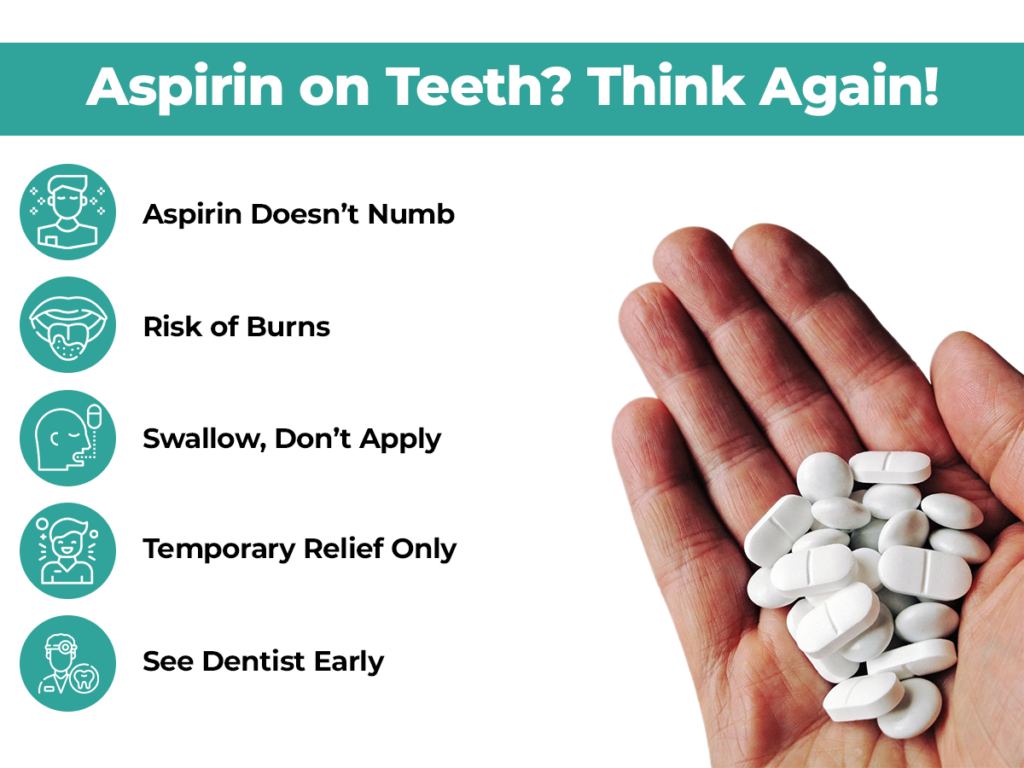
    Aspirin on Teeth? Think Again!

    How Aspirin Works When Taken Correctly?

    When used properly, aspirin can provide temporary relief from toothache:

    • It blocks pain signals to the brain.
    • It reduces swelling around irritated nerves and gums.
    • It manages fever if the pain is linked to infection.

    But here’s the catch: these effects only happen when the tablet is swallowed with water. The disappointment many feel after trying to place it directly on a tooth is simply because aspirin wasn’t made to work that way. If the pain persists even after proper dosage that’s your body’s way of telling you it’s time for a dental check-up.

    Risks of Using Aspirin Directly on a Toothache

    Before you reach for this “hack,” consider the risks:

    • Chemical burns on gums, tongue or inner cheeks.
    • Painful ulcers that can last days.
    • False sense of relief which delays treatment.
    • Worsening infection if the root cause is ignored.

    Every time you try to silence tooth pain without addressing the source you risk turning a small problem into a major dental emergency. A simple cavity left untreated can quickly escalate into severe nerve infection and will cost you more time along with money and discomfort.

    How to Use Aspirin for Toothache Safely?

    If you’re considering aspirin for toothache, here’s the correct way:

    • Step 1: Confirm dosage instructions on the packaging.
    • Step 2: Swallow the pill with water and never press it against the tooth.
    • Step 3: Combine it with supportive relief like a cold compress.
    • Step 4: Contact your dentist to treat the actual cause.

    Trying to bypass these steps by applying aspirin directly is like pouring medicine on your skin for stomach pain; it simply doesn’t work.

    When Toothache Pain Signals Something Serious?

    Not all toothaches are equal. Some are warning signs of conditions that need urgent care. You should seek immediate dental help if you notice:

    • Constant throbbing that painkillers can’t control.
    • Swelling in the jaw, cheeks or gums.
    • Fever, headache or general weakness along with pain.
    • Pus or discharge around the tooth.
    • Difficulty chewing, opening your mouth or swallowing.

    These symptoms usually point to infections that aspirin won’t cure. The longer you wait the higher the risk of spreading infection to surrounding tissues.

    Why is Professional Care the Only Long-Term Solution?

    Painkillers can dull discomfort but they can’t stop decay even reverse gum infection or repair nerve damage. The longer toothache is ignored the greater the risk of tooth loss or severe infection. What starts as mild sensitivity may soon leave you unable to chew or sleep peacefully.

    Visiting a dental clinic in Kochi or a dental clinic in Calicut ensures the real problem is diagnosed and treated early. That way you walk out not just pain-free but also confident that your dental health is protected for the future.

    Why Choose Elite Dental Studio for Toothache Relief?

    At Elite Dental Studio the goal is never just to numb pain temporarily but to restore lasting comfort, confidence and long-term oral health. Whether it’s filling root canal therapy or preventive care every treatment is guided by advanced diagnostics and a gentle approach that helps patients feel at ease. That’s why countless people who once struggled with persistent toothaches have walked out not only pain-free but also reassured with healthier and brighter smiles with a trust that truly sets the clinic apart.

    After all, quick hacks like pressing aspirin against a tooth might seem tempting at the moment but they often leave behind burns, ulcers and disappointment. Real relief doesn’t come from shortcuts, it comes from addressing the root cause with the right care. If tooth pain has been holding you back then now is the time to break free. Book your consultation with Elite Dental Studio today and take the first step towards lasting relief along with the comfort and a confident pain-free smile.

    Frequently Asked Questions

    Can aspirin cure a toothache permanently?

    Ans. No, aspirin cannot cure a toothache. It only helps manage pain temporarily when swallowed but it does not treat the underlying cause such as cavities, infections or gum disease. Permanent relief comes only after a dentist diagnoses and treats the root problem.

    Is it safe to put crushed aspirin on my gums for quick pain relief?

    Ans. No, applying crushed aspirin directly on your tooth or gums can cause chemical burns, painful ulcers and irritation. The safe way to use aspirin for toothache is to swallow the recommended dose with water and not to apply it topically.

    How long does aspirin take to reduce toothache pain after swallowing?

    Ans. Aspirin usually begins to ease pain within 20 to 30 minutes of swallowing. However, if the toothache persists beyond a few hours or keeps returning it means the issue needs professional dental care not just pain management.

    What can I do at home if aspirin isn’t enough for my toothache?

    Ans. You can try rinsing your mouth with warm saltwater applying a cold compress on the outside of your cheek or using over-the-counter painkillers like ibuprofen (if suitable for you). But remember, these are temporary measures and seeing a dentist is essential for lasting relief.

    When should I stop relying on painkillers and visit a dentist?

    Ans. If your toothache is constant and worsens at night it is accompanied by swelling, fever or pus or if painkillers no longer provide relief it’s time to book a dental appointment. These are red flags that point to infections or advanced dental problems needing immediate treatment.

  • Glycerine: A Natural Remedy for Mouth Ulcers

    Mouth ulcers can disrupt your day in an instant, making meals painful, conversations uncomfortable, and your overall oral health harder to manage. If you’re here, you’re already familiar with that sting. What you want is a practical solution that’s safe, fast-acting, and easy to find. Glycerine might just be the natural remedy for mouth ulcers that you’re looking for.

    In this blog, we’ll break down how glycerine works for mouth ulcers, why it’s effective, and how to use it the right way, without overcomplicating things. Read on to explore simple, science-backed relief.

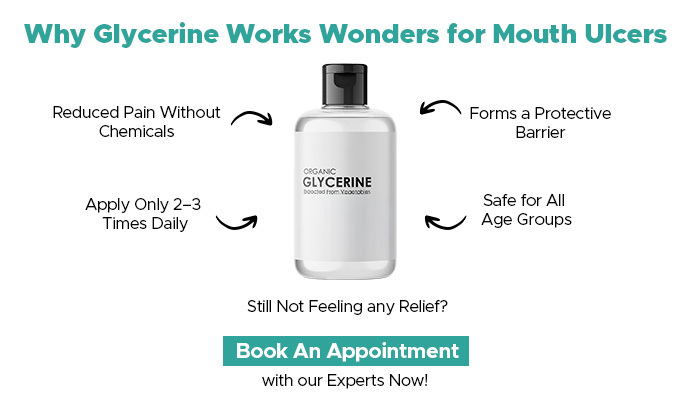
    Glycerine

    Why Glycerine Works for Mouth Ulcers? 

    Glycerine (or glycerol) is a naturally occurring, colorless, and odorless compound with humectant properties, which means it draws in and retains moisture. It’s commonly found in skincare products and oral hygiene solutions, but its real superpower lies in how it interacts with delicate tissues, like the soft lining of your mouth.

    Here’s How Glycerine Helps with Mouth Ulcers! 

    • Hydrates the affected area: Keeps the ulcer moist, which prevents cracking or further irritation and allows tissues to regenerate more quickly.
    • Forms a protective layer: Acts as a gentle coat over the ulcer, shielding it from spicy foods, acidic drinks, and bacterial exposure.
    • Soothes pain and inflammation: Its cooling effect eases redness, swelling, and the raw, burning sensation.
    • Encourages healing: By creating a moist, clean environment, glycerine reduces healing time without introducing chemicals that could irritate the sore.

    Glycerine as a natural remedy for mouth ulcers, especially useful for those with recurring ulcers or sensitive mouths that react badly to synthetic treatments. 

    If you’re experiencing frequent, painful or unmanageable mouth sores, you can also seek guidance from a professional at our dental clinic in Calicut or dental clinic in Kannur for tailored advice.

    How to Use Glycerine Effectively for Mouth Ulcers? 

    Using glycerine doesn’t require any complicated mixing or ingredients. With just a small amount and basic hygiene, you can incorporate it easily into your daily routine.

    Step-By-Step Instructions to Use Glycerine Effectively for Mouth Ulcers: 

    1. Rinse your mouth with clean water to remove food particles and bacteria.
    2. Dry the area gently if possible, using a tissue or by letting your mouth air-dry for a few seconds.
    3. Apply glycerine directly to the ulcer using a clean fingertip or a sterile cotton swab. Ensure it coats the sore fully.
    4. Do not rinse, eat, or drink for the next 20–30 minutes to allow maximum absorption.
    5. Repeat this process 2–3 times a day especially after meals and before bedtime.

    Tip: Nighttime application works best since your mouth stays relatively undisturbed, giving glycerine more uninterrupted contact time with the ulcer.

    Is Glycerine Safe for Everyone?

    Yes; glycerine is generally safe for most people when used topically and in moderation. It is often used in oral care products and even food formulations. However, to ensure maximum safety and effectiveness, follow these usage guidelines:  

    Suitable for:

    • Children: Safe under adult supervision, especially for minor mouth sores or irritation from braces.
    • Adults and seniors: Ideal for recurring ulcers, dry mouth, or post-dental procedure care.
    • Pregnant and breastfeeding women: Typically safe, but it’s always wise to consult a healthcare provider before starting any new remedy.

    Important: Only use pharmaceutical-grade or food-grade glycerine. Avoid industrial or cosmetic glycerine as they may contain additives or chemicals not meant for oral use.

    Why Choose Glycerine Over Other Remedies for Mouth Ulcers?

    There are many options for treating ulcers, including gels, rinses and ointments. But, not all are gentle or effective for every case. Here’s why glycerine stands out:

    Remedy Pros Cons
    Glycerine Natural, gentle, safe for daily use Needs consistent application
    Antiseptic gels Fast relief Often contain alcohol or synthetic agents
    Salt rinses Easy to prepare Can irritate sensitive tissues
    Steroid ointments Strong anti-inflammatory Prescription only, not for mild cases

    If you’re looking for a reliable, chemical-free solution for mouth ulcers, glycerine offers the right balance between relief and safety. 

    Signs Your Mouth Ulcer Needs a Professional Attention! 

    While glycerine offers great relief, not every ulcer behaves the same. It’s important to recognize symptoms that suggest something more serious than a typical sore.

    Pay attention if:

    • The ulcer doesn’t heal after two weeks.
    • It returns to the same spot frequently.
    • It becomes unusually large, discolored, or starts to bleed.
    • You’re facing increased discomfort with eating or talking.

    These symptoms could indicate underlying health issues, ranging from nutritional deficiencies to immune responses. Knowing when to move from home care to expert advice ensures both comfort and safety.    

    Relief Can Be Simple! Book Your Appointment Now! 

    If you’re struggling with mouth ulcers, don’t ignore the pain. Relief is possible, and often without harsh chemicals. Glycerine as a natural remedy for mouth ulcers proves that healing doesn’t have to be complex or chemical-laden.

    Still unsure or dealing with stubborn ulcers? Visit Elite Dental Studio, your trusted dental clinic in Calicut and dental clinic in Kannur for a professional evaluation and long-term relief. 

    Frequently Asked Questions:

    Can I use glycerine for all types of mouth ulcers?

    Ans. Yes, glycerine can be used for most minor mouth ulcers caused by irritation, nutritional deficiencies, or stress. However, if the ulcers are large, persistent, or recurring frequently, it’s best to consult a dental professional.

    How often should I apply glycerine on a mouth ulcer?

    Ans. For best results, apply glycerine 2 to 3 times a day. Let it stay on the ulcer for 20–30 minutes each time without rinsing, eating, or drinking during that period.

    Is it safe to swallow glycerine after applying it?

    Ans. While small amounts of pharmaceutical or food-grade glycerine are generally safe if accidentally swallowed, it’s best to avoid ingesting it in large quantities. Spit out any excess after application when possible.

    How long does it take for glycerine to heal a mouth ulcer?

    Ans. Healing time varies depending on the severity of the ulcer, but regular use of glycerine can help reduce pain and promote healing within 3 to 5 days for most mild to moderate sores.

    Can children use glycerine for mouth ulcers?

    Ans. Yes, children can use glycerine, but it should be applied under adult supervision. Always ensure you’re using food-grade or pharmaceutical-grade glycerine only.

    What should I do if glycerine doesn’t improve the ulcer?

    Ans. If you see no improvement after 7 days of regular application, or if symptoms worsen, it may be time to seek professional evaluation. Persistent ulcers may be linked to nutritional deficiencies, stress, or underlying health conditions.   


  • Dental Care Tips for Your Summer Vacation

    Sunshine, beaches, ice creams, and road trips—summer vacation is a time to unwind and recharge. But while you pack sunscreen for your skin, what are you doing to protect your smile? Warm weather, sugary treats, and travel can all challenge your dental health. That’s why practicing smart oral health tips for summer vacation is just as important as planning your itinerary.

    Let’s dive into simple yet effective ways to ensure your teeth stay healthy and your smile remains photo-ready all summer long.

    Why Does Summer Demands Special Dental Care? 

    Summer introduces unique challenges for oral health:

    • Increased sugar intake: Cold drinks, popsicles, and desserts can spike your sugar consumption.
    • Dehydration risk: Heat leads to reduced saliva, which is essential to protect enamel.
    • Interrupted routines: Vacations often throw off your brushing and flossing schedule.

    Being mindful of these challenges can help you take proactive steps and prevent post-holiday dental regrets.

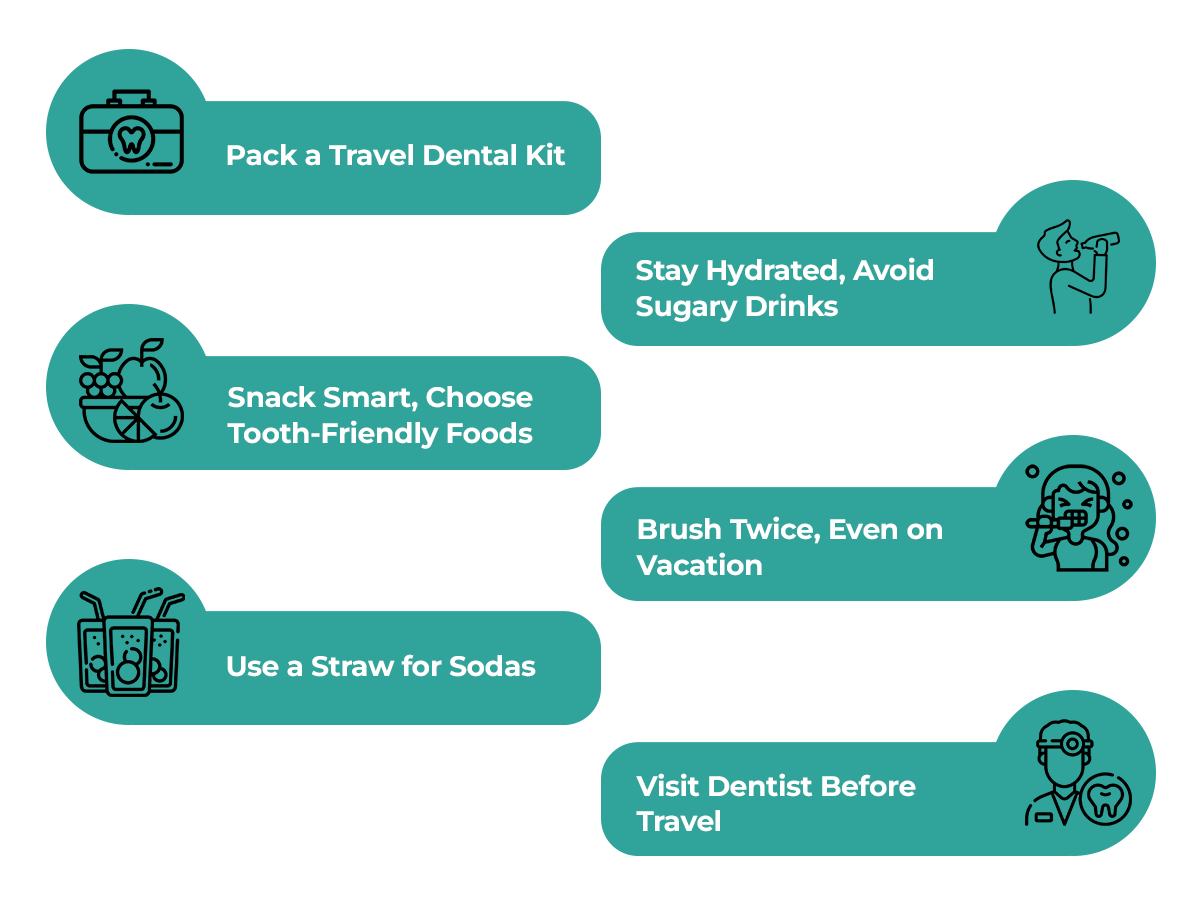
    Tips to Keep Teeth Healthy in Summer

    Top Oral Health Tips for Summer Vacation

    1. Stay Hydrated—But Smartly

    While hydration is crucial, what you drink matters.

    • Best choice: Water, especially fluoridated.
    • Limit: Sugary sodas, fruit punches, and sports drinks—they’re acidic and can erode enamel.
    • Pro tip: Rinse your mouth with water after every acidic or sugary drink.

    2. Pack a Travel-Friendly Dental Kit

    Whether you’re hiking or flying, your oral care should travel with you:

    • Compact toothbrush with a cap
    • Travel-sized toothpaste (preferably with fluoride)
    • Floss picks or dental floss
    • Mouthwash (alcohol-free is gentler on gums)
    • Sugar-free gum (great for boosting saliva when brushing isn’t possible)

    Keep it in your carry-on for easy access on long trips.

    3. Stick to Your Routine—No Matter Where You Are

    Vacations disrupt routines, but dental hygiene should never take a holiday:

    • Brush twice a day for two minutes
    • Floss at least once daily
    • Rinse with mouthwash if brushing isn’t possible

    Even on lazy beach days or hectic sightseeing schedules, prioritize your oral care.

    4. Snack Smart

    Tempted by sugary ice creams or sticky candies? Choose alternatives that are gentle on teeth:

    • Cheese cubes or yogurt (high in calcium)
    • Crunchy fruits like apples or pears (natural teeth cleaners)
    • Nuts (low in sugar and high in nutrients)
    • Sugar-free frozen treats

    Moderation is key. If you indulge, brush after 30 minutes or at least rinse your mouth.

    5. Protect Your Teeth During Sports

    Planning water sports or mountain biking?

    • Wear a mouthguard to protect teeth from injury
    • Avoid chewing ice or opening bottle caps with your teeth

    6. Don’t Skip Dental Appointments Before Traveling

    A pre-vacation visit to a dental clinic in Calicut can ensure:

    • No hidden cavities or gum issues
    • Professional cleaning for a fresh start
    • Preventive tips tailored to your trip

    It’s far better to fix a small problem at home than face a dental emergency abroad.

    Tips to Keep Teeth Healthy in Summer for Children

    Kids love summer treats, but their teeth need extra care:

    • Set brushing reminders (use fun songs or timers)
    • Offer healthy snacks instead of candies
    • Use fun-flavored toothpaste to encourage regular brushing
    • Schedule checkups early in the summer to spot any issues

    Children are more prone to cavities due to their diet, so these small steps go a long way.

    Oral Hygiene Tips for Travelers

    Travelers face unique dental challenges, especially on long trips:

    While Flying:

    • Cabin pressure dries your mouth—chew sugar-free gum
    • Avoid aeroplane snacks high in starch

    While Road-Tripping:

    • Carry dental wipes or portable rinses
    • Don’t leave oral care kits in hot cars (it damages bristles and paste)

    While Camping:

    • Use bottled or purified water to brush
    • Carry biodegradable floss
    • Store toothbrushes in breathable cases

    Good oral hygiene doesn’t require a bathroom—just a little planning.

    Summer Foods That Strengthen Your Teeth

    Not all summer treats are bad! Add these to your diet:

    • Strawberries: High in vitamin C, help gum health
    • Watermelon: Boosts hydration
    • Carrots and celery: Naturally scrub your teeth
    • Leafy greens: Rich in calcium
    • Green tea: Natural anti-bacterial properties

    Things to Avoid for a Healthy Summer Smile

    Be mindful of these habits:

    • Chewing ice: It can crack enamel
    • Skipping night-time brushing: Plaque buildup overnight is harmful
    • Over-whitening: Don’t overuse whitening products—summer sun and chemicals can increase sensitivity
    • Excess citrus fruits: Acidic foods like lemons weaken enamel

    What to Do in Case of a Dental Emergency While Traveling?

    Don’t panic—follow these steps:

    1. Toothache: Rinse with warm saltwater and take an OTC painkiller.
    2. Broken tooth: Rinse, save the piece, and avoid chewing on that side.
    3. Lost filling/crown: Use dental wax or sugar-free gum temporarily.
    4. Bleeding gums: Rinse with saltwater and avoid harsh brushing.

    Consult a local dentist or call your home dentist for advice.

    Subtle Yet Smart Vacation Dental Habits

    • Always carry a reusable straw to limit sugary drink contact with teeth.
    • Choose soft bristles for travel brushes to avoid gum irritation.
    • Use lip balm with SPF—yes, lips are part of oral health!
    • Try natural xylitol mints to freshen breath and fight bacteria.

    Seasonal Checkup Reminder

    Just like your skin needs post-summer recovery, your teeth do too.

    After your vacation, it’s a good idea to:

    • Get a dental checkup and cleaning
    • Address any issues caused by travel diet or routine changes
    • Refresh your oral hygiene tools if worn out during travel

    Booking a post-holiday visit at the best dentist in Kannur ensures your oral health is fully back on track.

    Keep Your Smile Vacation-Ready! 

    Summer should be about sunshine and smiles, not toothaches or sensitivity. By following these tips to keep teeth healthy in summer, you can enjoy every bite, sip, and selfie without worry. Whether you’re relaxing at a beach or hiking through hills, smart oral hygiene is your best companion.

    And if you’re preparing for your next trip, make sure your smile is ready too. A quick visit to Elite Dental Studio can help you head into your holidays with confidence. For those based in Kerala, this trusted dental clinic in Calicut offers preventive care and expert advice to keep your summer carefree and cavity-free.

    Here’s to a season full of healthy grins! Elite Dental Studio—your partner in radiant summer smiles.

    Frequently Asked Questions:

    Why is dental care important during summer vacation?

     Summer often brings changes in diet, hydration levels, and daily routines, all of which can impact oral health. Proper dental care ensures your smile stays healthy, even while you’re enjoying your holidays.

    Can dehydration affect my oral health in summer?

    Yes. Dehydration reduces saliva flow, which is essential for washing away food particles and neutralizing acids that cause tooth decay.

    What snacks are tooth-friendly during summer?

    Opt for cheese, yogurt, apples, nuts, and raw veggies. These are low in sugar and promote better oral health. 

    Is it okay to skip brushing occasionally while on vacation?

    No. Skipping even one night of brushing can allow plaque to build up, increasing the risk of cavities and gum issues.

    What should I do if I have a dental emergency while traveling?

    Rinse your mouth with warm water, manage pain with OTC meds, and seek local dental care. You can also call your regular dentist for guidance.

    When is the best time to visit a dentist if I have travel plans?

    Schedule a dental checkup at least a week before your trip to ensure your oral health is in good shape and to address any issues beforehand.